AerSale Q3 Misses Expectations ASLE Falls 18.5%: Investor Guide
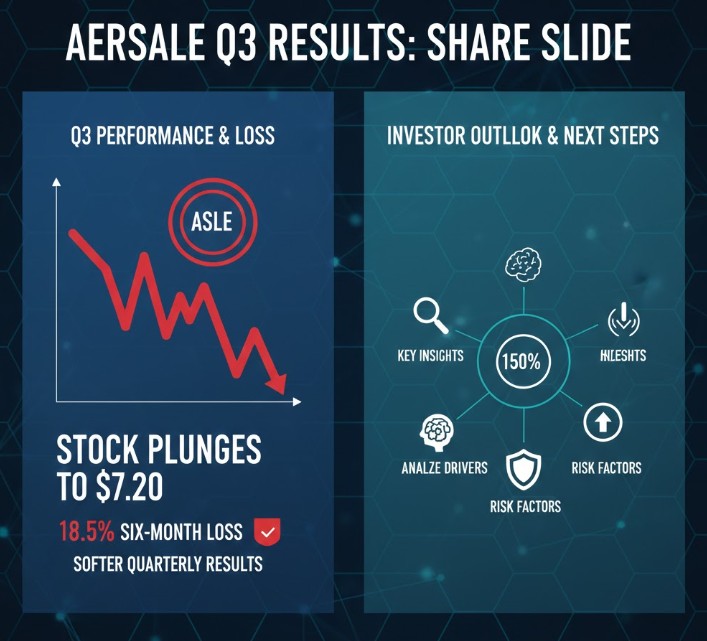
AerSale’s stock has come under pressure after the company reported softer third-quarter results, sending shares to $7.20 and producing an 18.5% decline over the last six months compared with a 5.9% gain for the S&P 500. The move reflects investor concern about near-term margins and demand for aftermarket services, and it raises questions about the trajectory for revenue and cash generation.
Company Background and Recent Performance
AerSale Holdings Inc. is a provider of aftermarket aircraft maintenance, repair and overhaul (MRO) services, as well as parts distribution and surplus aircraft sales. The company generates revenue from maintenance services, parts sales, and aircraft asset transactions, positioning it to benefit when airlines and lessors invest in fleet upkeep and when operators seek spare parts for older aircraft. Over the past year, AerSale’s performance has been mixed as industry demand has normalized following pandemic-era recovery supporting parts and MRO activity but the company has faced pressure from competitive pricing and evolving airline fleet decisions.
Recent Results and the Stock Move
The stock’s decline to $7.20 and the 18.5% six-month drop were driven primarily by AerSale’s softer quarterly results, which undercut investor expectations for immediate margin improvement and revenue growth. Management’s commentary and financial disclosures indicated that topline expansion slowed versus prior quarters and that margin compression was a material near-term issue. Investors reacted to the combination of slowing growth and persistent cost pressures by reducing exposure to ASLE, amplifying downward share price momentum.
Detailed Analysis of the Q3 Event and Implications
Softer quarterly results typically reflect either lower demand, friction in parts supply channels, or higher operating expenses—each with distinct implications. For AerSale, a slowdown in parts sales or delayed aircraft transactions can compress cash flow and raise questions about inventory turns, while rising repair and labor costs can depress margins on MRO work. The significance for investors is twofold: first, the durability of post-pandemic demand for older aircraft and aftermarket services is still being tested; second, AerSale’s ability to manage pricing, inventory, and service margins will determine whether the recent weakness is a transient setback or a signal of deeper operational constraints.
Balance-Sheet and Cash-Flow Considerations
For companies in AerSale’s segment, cash flow from operations and inventory management are central to valuation. If quarterly softness coincides with higher days-sales-outstanding or slower inventory turnover, leverage and liquidity metrics can deteriorate rapidly. Investors should scrutinize AerSale’s most recent balance sheet disclosures for changes in debt covenants, cash balances, and working capital trends. A well-capitalized balance sheet would provide runway to weather cyclical softness; a stretched balance sheet would raise the bar for near-term execution.
Market Reaction and Analyst Commentary
The market reaction was immediate: shares fell following the release of the quarter’s results as investors priced in lower near-term earnings potential and greater execution risk. Sell-side coverage typically differentiates between analysts concerned about cyclical headwinds and those viewing the pullback as a buying opportunity tied to long-term aftermarket demand. Public commentary from the broker community and industry analysts focused on margin compression, inventory levels, and the timing of aircraft disposals factors that will drive forward earnings revisions and guidance updates.
What This Means for Investors Actionable Insights
- Reassess risk tolerance: The move to $7.20 reflects heightened near-term risk; investors must decide whether the current price adequately compensates for operational and cyclical downside.
- Check liquidity and leverage: Review AerSale’s cash balance, debt maturity schedule, and covenant sensitivity to determine financial flexibility.
- Watch backlog and guidance: Future quarterly guidance and order/backlog disclosures will be critical; improvement in backlog or clearer visibility on aircraft sales could signal stabilization.
- Consider valuation vs. peers: Compare AerSale’s enterprise-value-to-EBITDA and price-to-sales metrics with peers in MRO and parts distribution to judge whether the sell-off creates a relative value opportunity.
Risk Factors to Monitor
Key risks include slower airline capex and fleet renewals that reduce demand for parts and MRO, continued margin pressure from wage and input-cost inflation, and potential inventory write-downs if surplus aircraft values decline. Conversely, a recovery in aircraft retirements or a spike in demand for legacy parts could provide upside to revenue and cash flows.
Conclusion and Forward-Looking Perspective
AerSale’s Q3 softness and the subsequent 18.5% decline in its share price highlight the sensitivity of aviation aftermarket names to short-term operational trends. For investors, the immediate priority is to quantify the company’s liquidity and margin trajectory: stabilization of revenues and improved inventory turns would support a constructive view, while continued compression would justify caution. Over the medium term, AerSale’s prospects will hinge on management’s execution in pricing, cost control, and asset dispositions—areas that investors should monitor closely through upcoming earnings calls and operational updates.
Shares fell after AerSale reported softer-than-expected third-quarter results, raising concerns about near-term revenue growth and margin pressure.