AI's Software Reckoning: Why Tech Sell-Off May Be Overdone
AI's Software Reckoning: Why Tech Sell-Off May Be Overdone
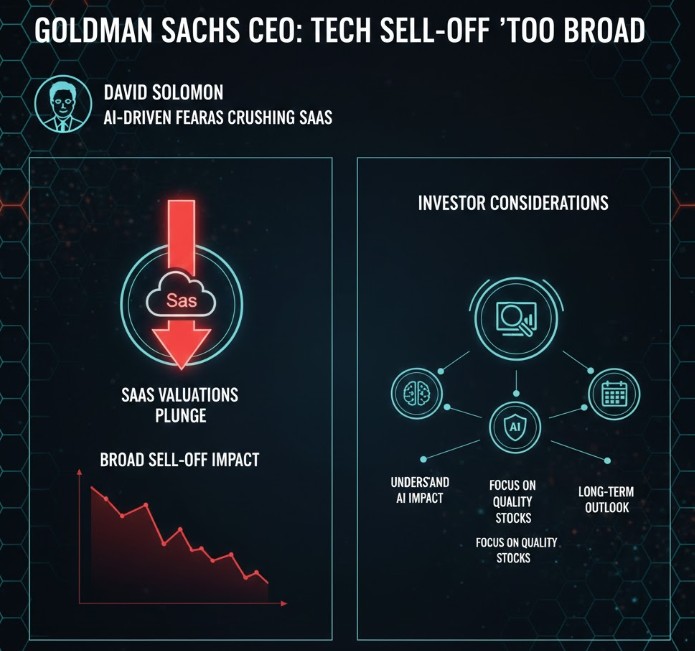
Recent concerns surrounding the transformative power of artificial intelligence have triggered a significant sell-off across the tech and software sectors, dragging major indices lower in recent trading sessions. However, industry experts like Rishi Jaluria, Managing Director on software at RBC Capital Markets, contend that interpreting AI advancements as the "death of software" is a fundamental misjudgment, suggesting the market's current reaction may be an overreaction to the technology's long-term implications. This perspective challenges the prevailing bearish sentiment, highlighting the symbiotic relationship between AI and existing software infrastructure rather than a destructive one.
Background: The Software Sector’s Dominance and AI Anxiety
The technology sector, and particularly software companies, have been at the forefront of market performance for the better part of the last decade. Propelled by accelerating digital transformation initiatives, the widespread adoption of cloud computing, and the robustness of recurring subscription-based business models, software firms have consistently delivered strong growth and profitability.
However, the rapid emergence and widespread adoption of generative AI models in late 2022 and early 2023 introduced a new paradigm that initially fueled a rally in semiconductor and select AI-enabling companies. More recently, however, it has sparked anxieties among investors regarding the future relevance and profitability of traditional software applications.
This apprehension has led to a noticeable contraction in valuations across many established software players, with the NASDAQ Composite (^IXIC) experiencing palpable pressure in recent trading sessions, reflecting broader market unease. The S&P 500 (^GSPC) and Dow Jones Industrial Average (^DJI) have also felt the ripple effect due to the significant weighting of technology and software firms within their compositions.
AI as an Enhancement, Not a Replacement
Rishi Jaluria's assertion that AI is not the "death of software" hinges on a nuanced understanding of how artificial intelligence integrates into and ultimately enhances existing technological ecosystems, rather than replacing them entirely. Instead of a disruptive force that eliminates the need for traditional software, AI is more accurately viewed as a powerful feature layer that makes current applications smarter, more efficient, and ultimately more valuable.
Consider the pervasive nature of software across virtually every industry today:
- CRM software becomes more powerful with AI-driven predictive analytics for sales forecasting, hyper-personalized customer service, and automated lead qualification.
- ERP systems leverage AI for optimized supply chain management, predictive maintenance, and more accurate financial forecasting.
- Cybersecurity platforms integrate AI to detect threats, identify complex attack patterns, and automate responses with greater speed and accuracy.
Rather than replacing existing systems, AI is enhancing their capabilities and expanding their potential use cases.
Why Software Infrastructure Remains Essential
While AI can automate certain repetitive or analytical tasks, the underlying software infrastructure — including operating systems, databases, user interfaces, and APIs remains indispensable. These foundational layers provide the stable, scalable, and secure environment upon which AI models are built, trained, and deployed.
Furthermore, the development and deployment of AI itself require a vast array of specialized software tools and platforms:
- Machine learning frameworks
- Data pipelines
- Model deployment systems
- MLOps (Machine Learning Operations) solutions
AI also relies heavily on structured data, which is typically managed and secured by existing enterprise software. In addition, the creative and human-centric aspects of software development — such as understanding business logic, designing user experiences, and ensuring compliance — remain beyond the reach of even advanced AI systems.
As a result, companies are far more likely to embed AI capabilities into existing platforms, creating "AI-powered software" rather than building entirely new systems that render previous software stacks obsolete. This signals evolution and reinvestment, not extinction.
Market Reaction: Overreaction or Structural Shift?
The market’s reaction to the perceived threat of AI has been swift and often punitive, leading to a pullback in valuations across various software stocks. Investors, perhaps recalling past technological shifts that rendered industries obsolete, have adopted a cautious stance.
This sell-off has impacted a broad spectrum of software companies from foundational infrastructure providers to specialized application developers reflecting widespread apprehension about AI’s disruptive potential.
However, a growing chorus of analysts and industry experts, led by voices like Rishi Jaluria, are pushing back against this narrative. They suggest that the current market response may be an emotional overswing rather than a rational, long-term assessment.
Many believe the indiscriminate sell-off presents potential buying opportunities for investors who can distinguish between companies that may genuinely face disruption and those positioned to integrate AI successfully and strengthen their market position.
Investor Takeaways: Where to Look for Opportunity
For investors navigating this evolving technological landscape, a key distinction must be made between true disruption and short-term fear-driven market reactions.
High-quality software companies with strong competitive advantages, robust recurring revenue models, and established customer bases combined with clear AI integration strategies — warrant close examination.
Investors should focus on:
- Companies that clearly articulate how AI enhances their existing solutions
- Firms using AI to unlock new capabilities and improve operational efficiency
- Businesses leveraging AI to create stronger customer value, not replace their core platforms
Diversification within the technology sector remains essential. While some niche software providers may face pressure if their functions are fully automated, broader segments like enterprise software, cloud infrastructure, and cybersecurity are likely to benefit from AI adoption.
AI’s computational demands will drive cloud growth, and its integration into enterprise environments will require increasingly sophisticated software ecosystems.
A Sector That Has Always Evolved
Long-term investors should consider the historical resilience of the software industry, which has successfully adapted through multiple technological transitions from client-server models to the internet era and later to cloud computing.
Technological revolutions have consistently created new markets and opportunities rather than simply destroying existing ones. AI appears to be following the same pattern.
Patience, a focus on intrinsic value, and a deep understanding of company-specific strategies will be critical in identifying future winners during this period of volatility.
Conclusion
The debate surrounding AI's impact on the software industry marks a pivotal moment for technology investors. While the initial market response has been characterized by fear and widespread sell-offs, a more measured perspective suggests a path of symbiotic evolution rather than destruction.
AI is poised to redefine software by making it smarter, more efficient, and more capable, opening new avenues for growth and innovation. Investors who can look beyond short-term sentiment and identify companies effectively integrating AI into their existing strengths may find compelling long-term opportunities.
The future of software is not threatened by AI it is being intelligently augmented. Tech and software stocks experienced a sector-wide sell-off due to investor concerns that artificial intelligence advancements could render traditional software obsolete, despite expert opinions suggesting the reaction may be overdone.