Amazon Earnings Miss Deepens Tech Rout, Sparking Broader Market Concerns

In a significant blow to market sentiment, Amazon.com Inc. (AMZN) reported earnings that largely disappointed investors, triggering a sharp decline in its shares and sending shockwaves across the broader Technology+Sector" title="More analysis on Technology Sector">technology sector.
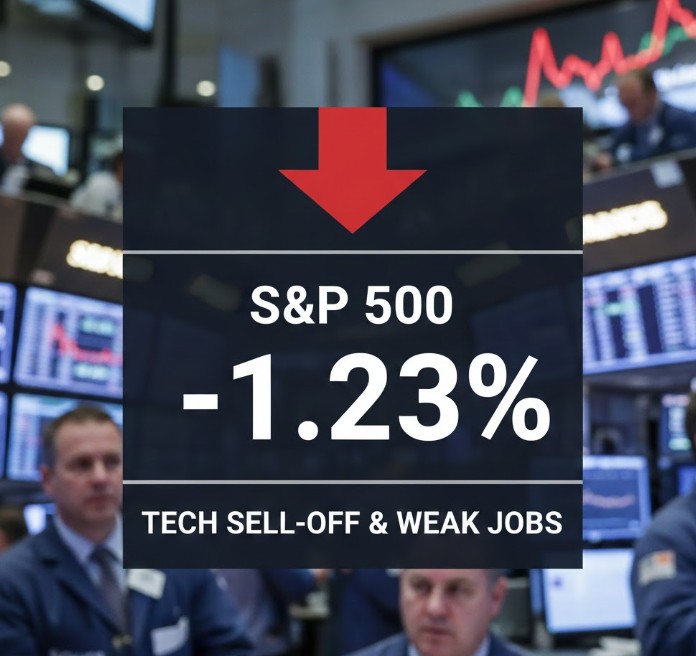
This "earnings flop," as described by market commentators, has been identified as a primary catalyst deepening an ongoing tech rout, with futures for the Dow, S&P 500, and Nasdaq plummeting in pre market trading. The downturn underscores persistent investor anxieties surrounding tech valuations and the increasing scrutiny of AI related expenditures across the industry.
Amazon, a global behemoth in e commerce, cloud computing (Amazon Web Services or AWS), digital advertising, and entertainment, stands as one of the world's most valuable companies. Its sheer scale and diversified operations often position it as a bellwether for both consumer spending and enterprise technology adoption. In recent quarters, Amazon had shown resilience, navigating macroeconomic headwinds with strategic cost controls and continued growth in its high margin AWS segment. However, the latest financial disclosures have cast a shadow, challenging the optimistic outlook that had largely buoyed mega cap tech stocks for much of the preceding period. Investors had been closely watching for signs of sustained profitability and efficient capital allocation, particularly in the competitive landscape of generative AI development.
The core of the market's concern stems from Amazon's latest earnings report, which, while specific details are awaited, broadly failed to meet elevated analyst expectations. The "flop" suggests either lower than anticipated revenue growth, tighter profit margins, or a weaker outlook for upcoming quarters. For a company of Amazon's magnitude, even a slight deviation from consensus estimates can have an outsized impact on investor confidence, especially given the company's high valuation multiples. This underperformance is likely being interpreted by the market as a sign of either decelerating core business growth or increasing operational costs, which include significant investments in nascent technologies like artificial intelligence.
The narrative around AI spending has become a critical focal point for tech investors. While the long term potential of AI is widely recognized, the immense capital expenditure required for research, development, and infrastructure like advanced data centers and specialized chips has started to weigh on current profitability for many tech giants. Amazon's report likely highlighted the delicate balance between aggressive investment in AI to maintain competitive edge and the immediate impact on the bottom line. Investors are increasingly demanding clear pathways to monetization and a tangible return on these substantial AI bets, rather than just promises of future innovation. If Amazon's results indicate that AI spending is impacting margins more severely than expected, it sets a cautionary precedent for other tech companies embarking on similar capital intensive AI strategies.
Immediately following the news, market futures reacted sharply, signaling a significant opening downturn for the major indices. Nasdaq 100 futures, heavily weighted towards technology stocks, saw the steepest declines, reflecting the direct impact of Amazon's performance on the sector. This contagion effect quickly spread to broader market indices, with Dow Jones Industrial Average and S&P 500 futures also losing ground. The sell off is indicative of a broader flight to safety as investors reassess their exposure to growth oriented tech stocks, particularly those with lofty valuations. Analysts are quick to point out that this is not an isolated event but rather an acceleration of a trend where investors are becoming more discerning, punishing companies that fail to deliver on ambitious growth forecasts or demonstrate sustainable profitability amid heavy investment cycles.
Industry experts and market strategists are now urging a careful re evaluation of tech portfolios. While Amazon's robust market position and leadership in cloud computing remain undisputed long term strengths, its short term earnings miss reinforces the idea that even the most dominant tech players are not immune to market pressures or the challenges of navigating rapid technological shifts. Many analysts anticipate increased volatility in the tech sector, especially as other major tech firms prepare to release their earnings. The consensus among some strategists suggests that investors should brace for a period of heightened scrutiny on corporate balance sheets, cash flow generation, and the return on investment for strategic initiatives, including AI.
For investors, this latest development from Amazon carries several actionable insights. Firstly, it underscores the importance of diversification and avoiding overconcentration in a single sector, even one as dynamic as technology. Secondly, it highlights the renewed focus on fundamentals. Companies with strong cash flows, sustainable business models, and clear paths to profitability, even amidst heavy R and D, may prove more resilient. Investors should critically assess the long term implications of AI investments, distinguishing between strategic, value accretive spending and expenditures that merely chase trends without clear economic returns. This period of correction could also present opportunities for long term investors to acquire shares in quality companies at more attractive valuations, but careful due diligence is paramount.
In conclusion, Amazon's earnings disappointment serves as a potent reminder that even tech giants face significant hurdles in a rapidly evolving economic and technological landscape. The immediate market reaction reflects a broader recalibration of expectations for the technology sector, driven by both earnings performance and the cost benefit analysis of AI investments. While the long term trajectory of AI and digital transformation remains compelling, the path forward is likely to be characterized by increased volatility and a premium placed on companies that can demonstrate not just innovation, but also efficient execution and disciplined capital management. Investors navigating this environment will need to prioritize strategic allocation, fundamental analysis, and a discerning eye for value to thrive in the shifting tides of the tech market. Amazon's disappointing earnings report triggered a significant sell off in its shares and broader tech futures, driven by concerns over decelerating growth, operational costs, and the immediate profitability of AI investments.