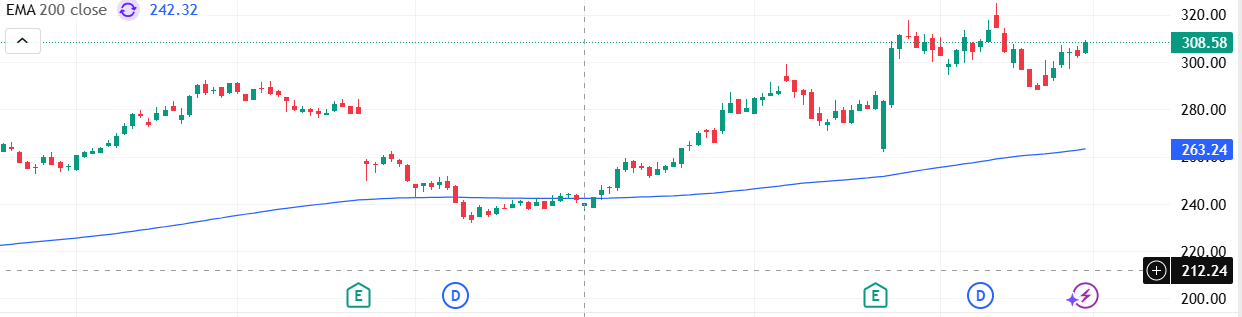
Amazon Shares Tumble on Capital Spending Spree, Raising Investor Questions
Seattle, WA – Amazon (AMZN) shares experienced a notable decline following revelations of substantial capital expenditures, prompting market jitters and pushing the tech giant’s stock lower even as broader market futures pared some losses. This significant investment outlay, while potentially paving the way for future growth, has raised immediate questions among investors regarding its near term impact on profitability and free cash flow, underscoring a cautious sentiment in the current economic landscape. The move signals Amazon’s unwavering commitment to long term strategic initiatives, yet the short term market reaction reflects investor apprehension concerning the immediate financial implications of such aggressive spending.
Company Background and Recent Performance
Amazon.com Inc., a global e commerce and cloud computing behemoth, has transformed from an online bookseller into a diversified technology powerhouse. Its operations span three primary segments: North America (e commerce, subscriptions, advertising), International (e commerce, subscriptions, advertising outside North America), and Amazon Web Services (AWS), its highly profitable cloud computing division. AWS has been a consistent engine of growth and profitability, effectively subsidizing investments in other, often less profitable, ventures.
In recent years, Amazon has navigated a dynamic economic environment, facing headwinds from inflation, supply chain disruptions, and a post pandemic normalization of e commerce growth. Despite these challenges, the company has continued to invest heavily in its logistics network, technological innovation, and new business lines, maintaining its competitive edge. Recent financial reports have shown mixed signals, with AWS consistently outperforming expectations while the retail segments have faced pressures on margins. The company’s stock performance has largely mirrored broader tech sector trends, experiencing significant rallies during periods of growth optimism and pullbacks during times of economic uncertainty or interest rate concerns.
Detailed Analysis of Capital Spending and Its Implications
The recent dip in Amazon’s stock is directly attributed to market concerns surrounding its "huge capital spending." While specific figures were not immediately detailed in the short news brief, this typically refers to substantial investments in property, plant, and equipment (PP&E), as well as technological infrastructure. For Amazon, such spending is primarily directed towards expanding its global fulfillment network, enhancing its transportation capabilities, and, most critically, building out its data centers and infrastructure for Amazon Web Services (AWS). Additionally, significant capital is being deployed into emerging technologies such as artificial intelligence (AI), machine learning, and satellite internet (Project Kuiper).
From a strategic perspective, these investments are crucial for Amazon's long term dominance. Expanding fulfillment capacity allows the company to reduce delivery times and costs, improving the customer experience and fending off competitors. Investments in AWS infrastructure are vital to maintain its leadership in the booming cloud computing market, catering to the ever increasing demand for scalable and reliable computing services. Furthermore, aggressive spending on AI and and other cutting edge technologies positions Amazon at the forefront of future innovation, potentially unlocking new revenue streams and efficiencies across its diverse businesses.
However, from a short term financial perspective, massive capital expenditures can be a double edged sword. Such spending often compresses free cash flow, as significant outlays reduce the cash available after operating expenses and investments. This can lead to investor apprehension, particularly when interest rates are higher and capital is more expensive. Investors often weigh the immediate impact on earnings and cash flow against the potential for future returns. In Amazon’s case, the market reaction suggests that some investors are currently prioritizing short term profitability metrics, viewing the extensive spending as a drag on near term financial performance rather than solely as a foundation for future growth. The challenge for Amazon lies in effectively communicating the long term value creation potential of these investments to assuage short term market anxieties.
Market Reaction and Analyst Commentary
The news of Amazon’s substantial capital spending coincided with a broader cautious market sentiment, as Dow Jones futures also fell and the stock market broke key technical levels. This confluence of events amplified the negative reaction to Amazon's news. While Bitcoin showed a slight bounce, the overall mood reflected a risk off environment, where high growth, capital intensive stocks like Amazon might face closer scrutiny.
Following the news, analysts quickly weighed in, with some expressing nuanced perspectives. Bullish analysts reiterated that Amazon’s history is replete with periods of heavy investment that ultimately yielded substantial returns, pointing to AWS as a prime example. They argue that these investments are necessary to sustain market leadership and capture future growth opportunities, particularly in high growth areas like generative AI and cloud expansion. Conversely, more cautious analysts voiced concerns about the near term margin pressure and the duration required for these new investments to translate into tangible profits. They highlighted the competitive landscape and the sheer scale of the spending, suggesting that the return on investment might take longer to materialize than previously expected, especially in a higher interest rate environment where the cost of capital is elevated. The market’s immediate response indicates that the latter sentiment prevailed, at least initially, with investors opting for prudence in the face of significant outlays. The stock's tumble underscores the market's current demand for clear pathways to profitability and efficient capital allocation, rather than unfettered growth at any cost.
What This Means for Investors: Actionable Insights
For investors holding or considering Amazon stock, this news presents a crucial inflection point. It is imperative to differentiate between short term financial noise and long term strategic vision.
1. Evaluate Long Term Thesis: Investors should revisit their long term investment thesis for Amazon. Do these capital expenditures align with the company's stated strategic goals and reinforce its competitive advantages in e commerce, cloud, and emerging technologies? If the answer is yes, then a short term dip due to investment spending might represent a buying opportunity for those with a long term horizon.
2. Monitor Capital Allocation Efficiency: Pay close attention to Amazon's future earnings calls for updates on the productivity and efficiency of these capital investments. How quickly are these investments translating into new revenues, improved margins, or enhanced operational efficiencies? Management commentary on return on invested capital (ROIC) will be key.
3. Understand Free Cash Flow Impact: Be prepared for potential short term pressure on free cash flow. While Amazon is a cash generating machine, significant CapEx can temporarily reduce this metric. Investors should look at adjusted free cash flow or operating cash flow trends in conjunction with CapEx to get a complete picture.
4. Consider Broader Market Context: Amazon’s performance is also tied to broader market sentiment, particularly within the tech sector. A general market downturn or increased risk aversion can amplify stock movements, regardless of company specific news. Diversification remains a prudent strategy.
5. Focus on AWS Growth: Given that a significant portion of capital spending is likely directed towards AWS, continued robust growth and profitability in this segment will be crucial to offset investments elsewhere and reassure investors.
Professional Conclusion with Forward Looking Perspective
Amazon's decision to embark on a substantial capital spending program is a testament to its aggressive growth strategy and its intent to solidify its market leadership across multiple critical sectors. While the immediate market reaction reflects a degree of investor caution regarding the short term impact on financial metrics, this kind of investment is often a prerequisite for long term value creation and sustained competitive advantage.
The challenge for Amazon will be to demonstrate a clear and timely return on these investments, particularly as the cost of capital remains elevated. As the company continues to innovate in areas like AI, expand its global logistics footprint, and reinforce its dominant position in cloud computing, investors will be closely watching for signs that these significant outlays are indeed building the foundation for future profitability and market expansion. The coming quarters will be critical in determining whether this capital expenditure spree is perceived as a prudent strategic move or an overly aggressive gambit in a volatile economic climate. Ultimately, Amazon’s success will hinge on its ability to execute on these ambitious plans and translate investment into sustained, profitable growth, a narrative that has historically defined the company’s trajectory.