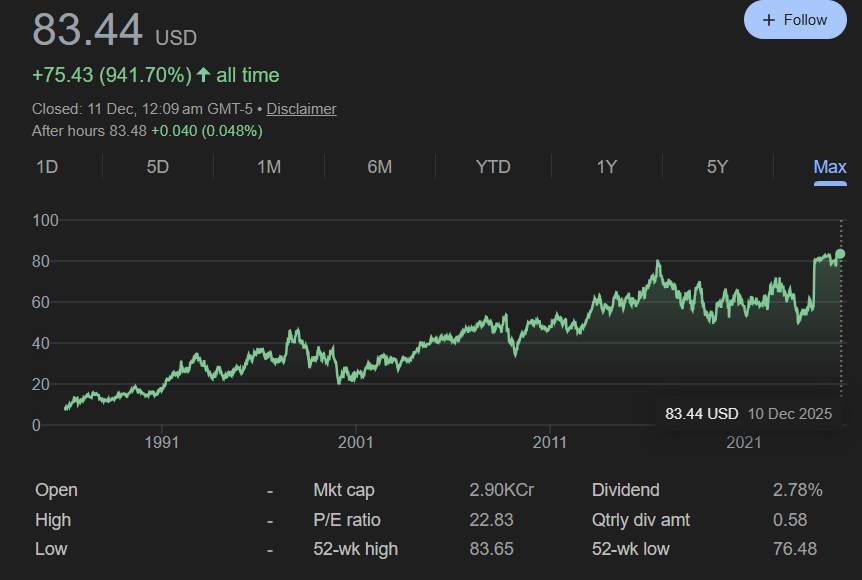
Analysts Back Kimberly‑Clark Despite Stock Lag: Outlook Steady

Analysts continued to back Kimberly Clark (KMB) this week despite the company’s recent stock underperformance, signaling confidence in the consumer products giant’s long term fundamentals and cash generation profile. The renewed analyst attention matters because it frames investor expectations around dividend sustainability, cost reduction programs and the pace at which management can rebuild margins after a period of pressure.
Kimberly Clark is a leading global consumer products company best known for brands such as Kleenex, Huggies and Kotex. The company operates across North America, Latin America, Europe and Asia, supplying consumer tissue, baby and child care, and feminine care categories.
Over recent quarters the stock has lagged broader staples and the S&P 500 amid softer end market demand in some categories, elevated input costs that pressured margins, and currency headwinds in international markets. Management has highlighted cash flow resilience and shareholder returns as priorities, continuing a long history of dividend payments and share repurchase programs that are central to the investment thesis for income focused holders.
At the same time, investors have been focused on margin restoration targets, pricing versus promotion dynamics at major retailers, and the effectiveness of productivity initiatives designed to offset cost inflation. Those operational levers are now the primary drivers analysts cite in maintaining constructive ratings.
The recent wave of analyst notes reiterating buy or hold ratings in many cases followed a period during which the stock underperformed due to a combination of cyclical and company specific factors. Analysts emphasized the strength and resilience of the company’s brand portfolio, its pricing power in certain markets, and the historical ability to translate cost discipline into margin recovery. Where some investors see near term softness, analysts appear to view current levels as an opportunity to own a cash rich, dividend paying consumer staples leader at a more attractive entry point.
Market reaction to the analyst commentary was measured: trading volumes showed modest upticks on days notes were published, and intraday volatility eased relative to prior distribution days. Institutional investors typically use analyst guidance to calibrate position sizing, and sustained analyst support can limit headline driven selling by reinforcing the story that near term earnings fluctuations do not change the company’s long term cash generation outlook. That said, the market will continue to price new macro data, retailer inventory adjustments, and any company specific updates that alter the margin recovery timeline.
Analysts who remain constructive point to several concrete drivers that could validate their stance: continued pass through of pricing to offset commodity inflation, cost savings and productivity programs that should incrementally improve margins, and stable free cash flow that underpins dividends and buybacks. Those bullish elements are balanced by clear risks: slower consumer demand in discretionary categories, competitive promotions that compress gross margins, and foreign exchange volatility in emerging markets. Investors should watch upcoming quarterly results and management’s commentary for signs the margin improvement is tracking to guidance.
For investors, the situation presents a classic defensive income tradeoff. Income focused holders who prioritize dividend yield and capital preservation amid market volatility may view continued analyst backing as supportive of a buy on weakness approach, particularly if the company’s payout remains secure and buyback activity continues. More growth oriented investors, or those seeking immediate upside, should require clearer evidence of margin reacceleration and organic revenue stability before increasing exposure. In either case, attention to valuation relative to the sector, the dividend coverage ratio, and upcoming earnings cadence is prudent.
Looking ahead, the company’s near term trajectory will hinge on execution: managing commodity and supply chain cost pressures, navigating retail channel dynamics, and sustaining market share across geographies. Analysts’ continued support suggests consensus expectations remain that management’s structural initiatives will restore profitability over time, even if the recovery path is gradual. For investors, the key questions are timing and risk tolerance whether to lean into a defensively positioned, dividend paying company during a temporary pullback, or to wait for clearer operational progress before committing new capital.
In summary, analyst endorsements of Kimberly Clark amid its recent stock lag reinforce the investment case built on durable brands, predictable cash flows and shareholder friendly capital allocation. The debate now shifts to how quickly margins recover and whether top line stability returns across key markets. Investors should monitor earnings updates, margin metrics, and guidance revisions closely; those with a focus on income and capital preservation may find the risk reward profile appealing, while growth seeking investors will likely demand more tangible evidence of a sustained operational turnaround.
Analysts reiterated support and framed expectations for margin recovery and dividend stability, which helped stabilize sentiment despite the stock’s recent underperformance.