AWS CEO Dismisses Space Data Centers: Focus on Earth-Based AI Solutions
AWS CEO Dismisses Space Data Centers: Focus on Earth-Based AI Solutions Amidst AI Boom
Amazon Web Services (AWS) CEO Matt Garman recently delivered a definitive stance on the much-discussed concept of space-based data centers, asserting their current impracticality and uneconomical nature. This declaration provides crucial clarity for investors regarding Amazon.com, Inc.'s (NASDAQ:AMZN) strategic infrastructure investments amidst an unprecedented surge in demand for computing power driven by artificial intelligence (AI).
Company Background and Recent Performance
Amazon.com, Inc. stands as a global titan in e-commerce, cloud computing, digital streaming, and artificial intelligence. Its cloud arm, Amazon Web Services, is the undisputed market leader, consistently driving a significant portion of Amazon's operating income and overall profitability.
In its most recent earnings report, Amazon showcased robust performance, with AWS revenue growing by 17% year-over-year to $25.0 billion in the first quarter of 2024, accelerating from previous quarters. This growth underscored renewed enterprise spending and the escalating need for AI infrastructure.
The accelerating adoption of AI technologies, from large language models to complex machine learning applications, has placed immense pressure on existing data center infrastructure. Cloud providers like AWS are grappling with skyrocketing requirements for computing power, electricity, and advanced cooling systems. This demand has not only stretched the limits of traditional land-based data centers but has also ignited interest in unconventional and futuristic solutions to these growing challenges.
Detailed Analysis of the News Event and Its Implications
Matt Garman's comments directly address a topic that has periodically surfaced within the tech and space industries, particularly given Amazon founder Jeff Bezos's well-known passion for space exploration through Blue Origin. The theoretical appeal of space-based data centers lies in the potential for natural cooling in a vacuum, access to solar energy without atmospheric interference, and the possibility of enhanced data isolation for security purposes.
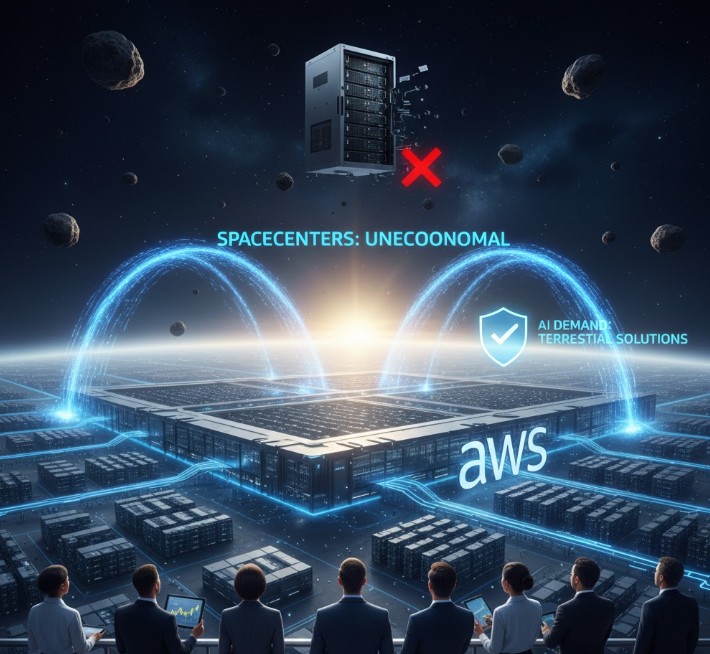
However, Garman's assessment cut through the speculative excitement, grounding the conversation firmly in economic and practical realities. His statement that the idea of putting data centers in space remains impractical and uneconomical serves as a pragmatic guidepost for AWS's immediate and medium-term infrastructure strategy.
This indicates that while long-term visions of space utilization may continue to exist, Amazon's core cloud business will prioritize tangible, cost-effective solutions for its vast global customer base. The current technological hurdles including the enormous cost of launching, maintaining, and upgrading complex hardware in orbit, along with managing latency for Earth-bound applications present formidable barriers that far outweigh potential benefits at this stage.
For AWS, this means a reinforced focus on optimizing its expansive global network of terrestrial data centers. This strategy includes:
- Continued investment in cutting-edge cooling technologies
- Advancements in power efficiency
- Leveraging renewable energy to mitigate environmental impact and operational costs
- Developing proprietary silicon like Graviton processors to enhance performance per watt
It also signals a deeper commitment to modular and rapidly deployable data center solutions that can scale efficiently on Earth to meet the dynamic demands of the AI era.
Market Reaction and What Analysts/Experts Are Saying
The market's immediate reaction to such a strategic clarification is generally positive, though not dramatic, as it reinforces a fiscally prudent approach. While futuristic projects can sometimes capture investor imagination, a clear emphasis on practicality and economic discipline tends to build confidence around capital allocation.
Analysts are likely to interpret Garman's comments as a sign of mature, responsible leadership focused on sustainable growth within AWS. Experts widely acknowledge the immense infrastructure challenges posed by AI. While some niche applications may explore extreme environments, the consensus among major cloud providers remains firmly rooted in terrestrial innovation.
This stance aligns with broader industry efforts to maximize the efficiency and sustainability of existing ground infrastructure. It suggests that Amazon is not diverting significant capital to speculative, high-risk projects but is instead channeling resources into proven methods for scaling its core profit engine.
What This Means for Investors – Actionable Insights
For investors in Amazon, Garman's remarks offer several key insights.
Focused Capital Allocation:
AWS's capital expenditure, while substantial due to AI demand, is likely to
remain centered on efficient expansions and technological improvements within
its established global data center footprint. This reduces risks tied to
speculative, high-cost ventures like orbital infrastructure.
Operational Efficiency as a Growth Lever:
The company’s continued innovation in cooling, energy management, and custom
chip development will be central to maintaining strong margins in a highly
competitive cloud market. These areas are critical drivers of long-term
scalability and profitability.
Strategic Discipline:
This clarification reinforces Amazon's leadership in the cloud space by
demonstrating a pragmatic approach to meeting future demand. While competitors
may occasionally promote more ambitious concepts, AWS appears focused on
delivering reliable, high-performance, and economically viable solutions to
enterprise customers.
Conclusion
Amazon Web Services CEO Matt Garman's unequivocal statement regarding the uneconomical nature of space-based data centers provides a clear strategic directive for the company’s path forward. In an era where AI is rapidly transforming computing needs, AWS is choosing a grounded, pragmatic approach that prioritizes efficiency, scalability, and economic viability within its robust terrestrial infrastructure.
This decision is not merely about avoiding costly hypotheticals; it represents a concentrated effort to innovate where it matters most for customers and shareholders on Earth. By focusing on optimizing existing data center technologies and sustainably expanding its global footprint, Amazon is strategically positioning AWS to continue its dominance in the cloud market.
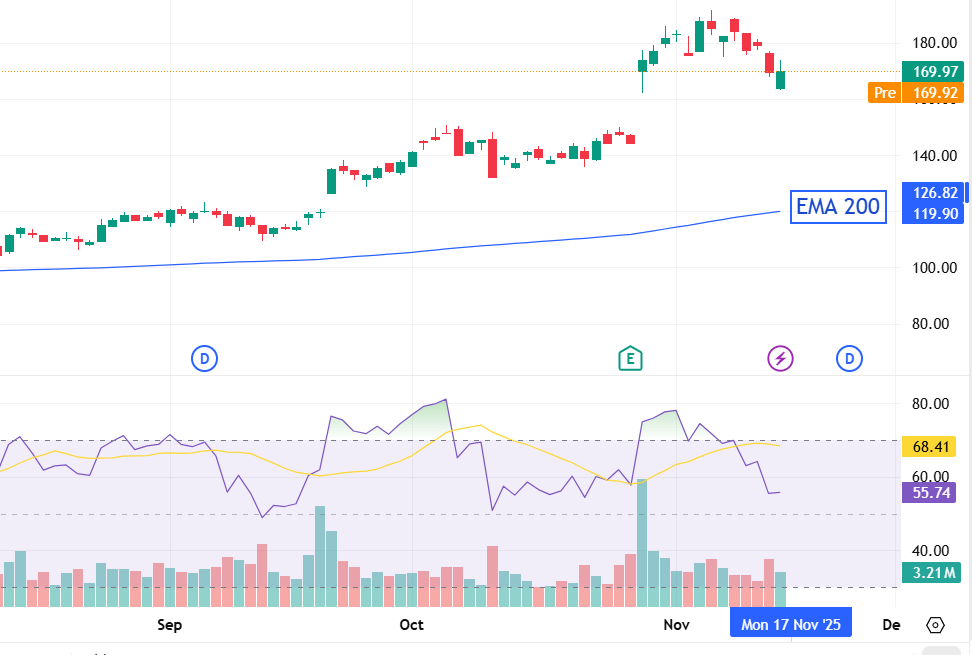
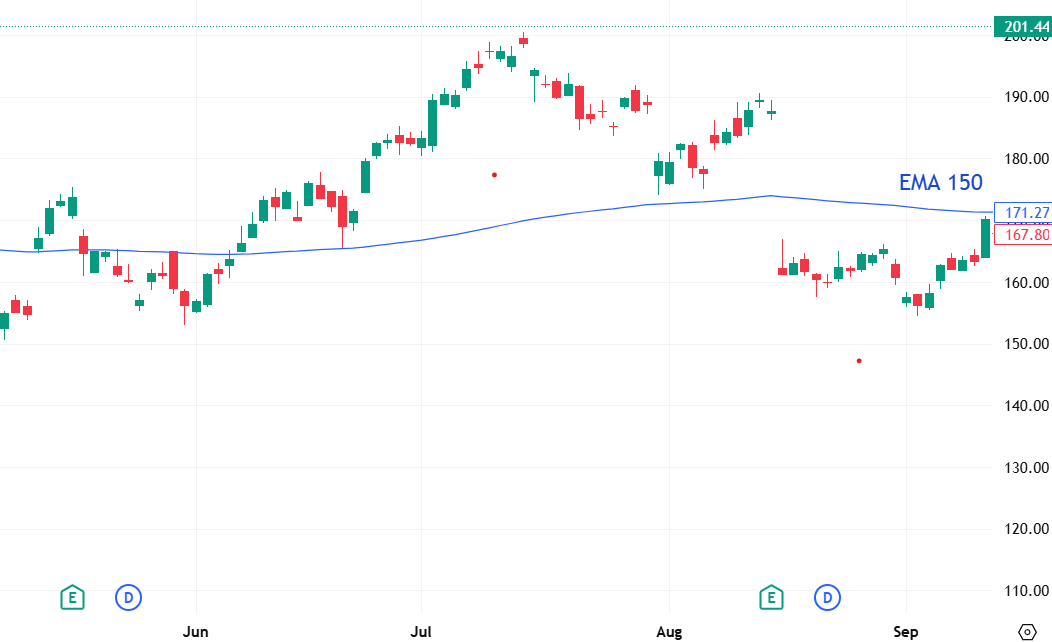
Amazon's stock movement reflects investor confidence in AWS's practical strategy to meet booming AI demand through optimized land-based data centers rather than pursuing costly and uneconomical space-based alternatives, signaling fiscal discipline and long-term value creation.