Big Tech Powers Dow Futures; Investors Eye Risk-Reduction Moves
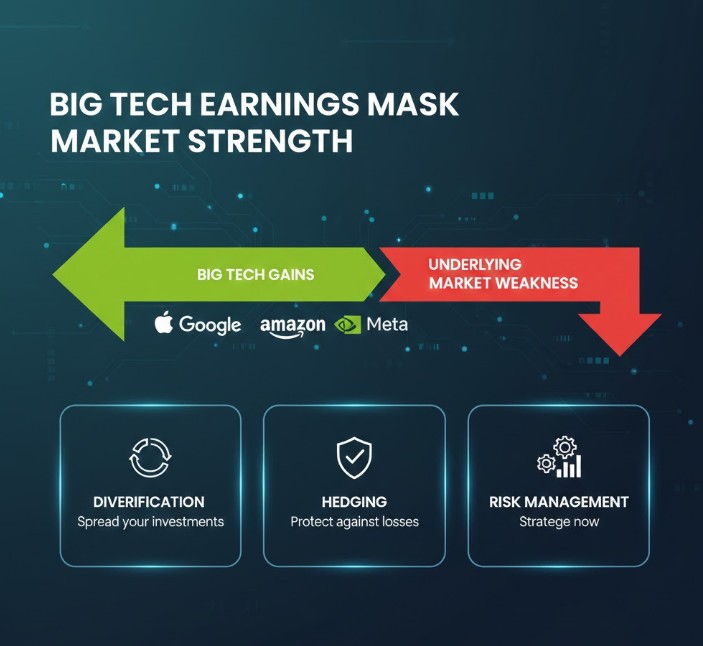
Mega-cap technology stocks including Apple, Alphabet
(Google), Amazon, Meta Platforms, and Nvidia drove a
cautious rally in U.S. futures as investors sought shelter amid heightened
market risk. The concentration of market gains in a handful of large-cap growth
names has masked broader weakness, prompting strategists to recommend
risk-reduction measures including diversification and hedging.
Company Background and Recent Performance
Apple sits at the center of investor attention. Over the past year, the company has continued to deliver steady revenue from iPhone sales, services, and wearables, while returning cash to shareholders through buybacks and dividends.
Alphabet, Amazon, Meta, and Nvidia have similarly contributed outsized gains for indices, supported by advertising recovery, cloud adoption, and artificial intelligence spending. That performance has helped prop up major indices even as smaller-cap stocks and cyclical sectors lag.
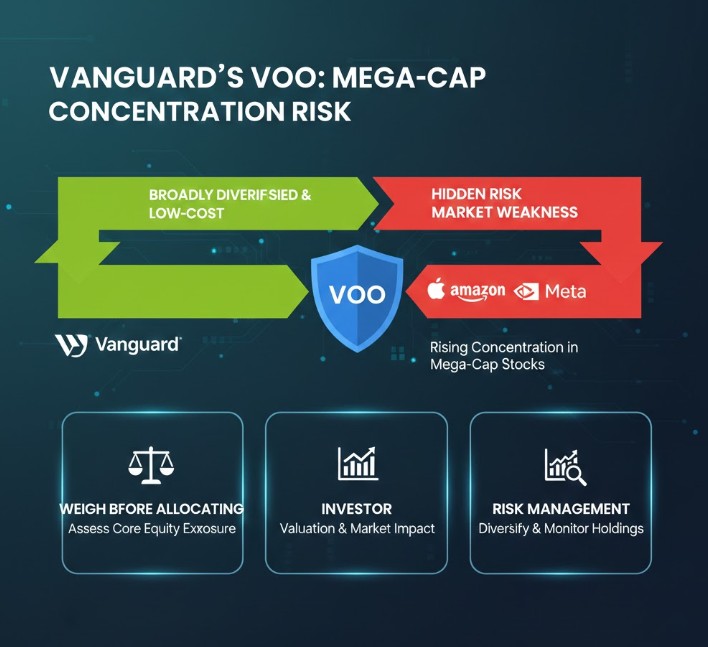
The recent note that these five companies are “masking some underlying strength” reflects a market structure in which leadership is narrow. When a small group of companies accounts for a meaningful share of index performance, headline moves in major benchmarks can conceal dispersion underneath. For investors, that raises two issues: concentration risk and potential vulnerability to sector-specific shocks, particularly around regulatory pressure, consumer demand, or semiconductor cycles.
Detailed Analysis of the News Event
From a technical and flow perspective, the rally in futures was driven by risk-on positioning into mega-cap names ahead of upcoming earnings and macro prints. Portfolio managers rotated into highly liquid stocks that offer both growth exposure and perceived safety, a dynamic amplified by low benchmark volatility and heavy passive investing flows.
At the same time, implied volatility measures for single large-cap equities and the broad market suggested investors were buying insurance selectively rather than exiting equity exposure wholesale.
Analysts and strategists have flagged valuation and positioning as central considerations. Some sell-side teams emphasize that while revenue growth for the top tech names remains robust in areas like cloud, advertising, and AI infrastructure, valuations already price in a premium for sustained outperformance. Others note that earnings momentum and strong free cash flow provide a cushion, allowing these companies to invest in new initiatives and maintain shareholder returns.
Market technicians point to relative strength in mega-cap stocks versus the rest of the market as a warning sign that breadth is deteriorating.
Market Structure and Risk Considerations
For investors, the current market backdrop argues for a measured approach:
- Reassess portfolio concentration. Heavyweight exposure to mega-cap tech can boost returns in a narrow rally but increase drawdown risk if leadership reverses.
- Consider tactical hedges such as options collars, modest put protection, or selling covered calls on concentrated holdings to guard against abrupt swings.
- Look for diversification across market-cap, sector, and geographic lines. Small- and mid-cap value and international equities may offer exposures less correlated with U.S. mega-cap performance.
Asset allocation decisions should also account for liquidity and tax considerations. Liquid, high-cap names are attractive for short-term defensive rotations, but long-term investors should evaluate whether current valuations align with expected returns and risk tolerance.
Rebalancing toward target allocations, harvesting losses where appropriate, and using systematic rules to trim winners can reduce the behavioral impulse to chase momentum.
What This Means for Investors — Actionable Insights
Institutional investors will watch upcoming earnings reports and macro data jobs, inflation prints, and central bank commentary for cues that could widen market breadth or exacerbate concentration.
A positive surprise in consumer spending, stronger-than-expected ad growth, or continued AI-related capital expenditures could reinforce mega-cap leadership. Conversely, disappointing results or regulatory setbacks could trigger sharper, more concentrated declines.
Practical steps for investors include:
- Setting explicit rebalancing rules to prevent overconcentration
- Using exchange-traded funds to achieve broad exposure without single-stock dependency
- Increasing allocations to fixed income or cash equivalents if risk tolerance is limited
- Using sector or factor ETFs to capture diversification
- Applying options-based strategies such as collars or time-limited put protection to mitigate downside while preserving upside
Active investors should also monitor options-implied skew and unusual volumes as early warning signals of concentrated positioning. Tax-aware strategies like loss harvesting and long-term holding can improve after-tax returns.
Conclusion
The move in futures driven by Apple, Alphabet, Amazon, Meta, and Nvidia highlights a market where leadership is narrow and risk is asymmetric. Investors should neither ignore the growth and cash generation at the largest tech names nor underestimate the systemic risk posed by concentration.
A balanced posture combining selective exposure to mega-caps with disciplined diversification and tactical hedging can help manage downside while retaining participation in potential upside.
Looking ahead, monitoring corporate earnings trends, forward guidance, valuation trajectories, and market breadth indicators will offer early signals if leadership shifts or the broader market begins to catch up. For now, the largest tech names remain focal points for both rally drivers and potential inflection points in the market cycle.
Summary: Dow futures rose as investors rotated into mega-cap tech names like Apple and Nvidia, using highly liquid growth stocks to shelter portfolios amid broader market weakness.