Clearway Energy Shares Dip Amid Broader Market Rally: What Investors Need to Know
Clearway Energy Shares Slip Despite Broader Market Strength
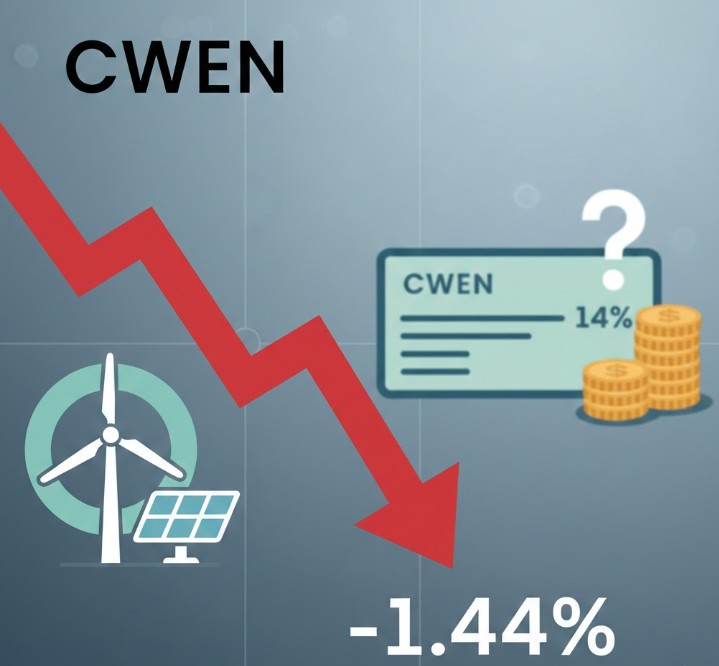
Clearway Energy (CWEN) shares declined 1.44% to close at $35.63, underperforming the broader market on a session that generally favored gains across U.S. equities. While the move was modest, the divergence drew attention given Clearway’s positioning as a renewable energy yieldco and a core holding for income-focused investors.
The decline appeared to occur in the absence of company-specific news, suggesting that broader market dynamics rather than fundamentals were the primary drivers of the day’s price action.
Company Overview: A Renewable Energy Yieldco
Clearway Energy, Inc. is a leading owner and operator of clean energy assets in the United States, with a diversified portfolio spanning wind, solar, and conventional generation facilities. The company operates under a yieldco structure, acquiring assets backed by long-term power purchase agreements (PPAs) that generate predictable and contracted cash flows.
This business model allows Clearway to distribute a significant portion of its available cash to shareholders in the form of dividends, making the stock particularly attractive to income-seeking investors. CWEN has consistently positioned itself as a hybrid investment combining the defensive characteristics of a utility with exposure to long-term growth driven by the energy transition.
Over the past year, the company has reiterated its commitment to dividend growth, targeting annual dividend per share increases of approximately 5–8%. This objective is supported by a visible development pipeline, disciplined capital allocation, and ongoing portfolio optimization efforts.
Understanding the Stock’s Underperformance
A single-day decline of 1.44% is not unusual for an equity like Clearway Energy, particularly given its sensitivity to macroeconomic factors. However, the fact that the stock fell on a day when broader markets advanced suggests several potential influences.
Interest Rate Sensitivity
Yieldcos are often valued based on the stability and yield of their cash flows, making them particularly sensitive to interest rate expectations. Even subtle shifts in bond yields or perceptions around the Federal Reserve’s policy path can impact investor appetite for dividend-paying stocks. When rates rise — or are expected to remain higher for longer income-oriented equities can lose relative appeal compared with fixed-income instruments.
Sector Rotation
The move may also reflect sector rotation. During periods of market optimism, capital often flows toward higher-beta growth stocks, while defensive or income-oriented names see temporary outflows. In such environments, utilities and yieldcos can lag even when their underlying fundamentals remain unchanged.
Profit-Taking and Market Rebalancing
Clearway Energy has delivered relatively stable performance over time, and minor pullbacks can result from routine profit-taking or portfolio rebalancing rather than a reassessment of the company’s outlook.
In the absence of operational updates, earnings releases, or regulatory developments, the decline appears more consistent with these broader market forces than with any deterioration in company-specific fundamentals.
Analyst and Market Perspective
Market reaction to Clearway Energy’s modest pullback has been largely muted. Institutional investors and analysts typically view daily volatility of this magnitude as noise, particularly for a company whose investment appeal is rooted in long-term contracted cash flows.
Analyst coverage of CWEN tends to focus on:
- Dividend sustainability and growth visibility
- Balance sheet strength and leverage metrics
- Asset-level performance and availability
- The size and quality of the company’s development pipeline
Consensus sentiment on Clearway Energy often falls in the “Buy” to “Hold” range, reflecting confidence in the yieldco model and the company’s role in the broader clean energy transition. At the same time, analysts consistently flag interest rate exposure and regulatory risk as structural considerations for the sector.
A 1.44% decline, even on a positive market day, would not typically prompt changes to price targets or investment ratings unless accompanied by a meaningful shift in macro conditions or company guidance.
What This Means for Investors
For existing shareholders, the dip serves as a reminder to periodically revisit the underlying investment thesis rather than react to short-term price movements.
Key considerations include:
- Dividend Outlook: The core question remains whether Clearway can continue delivering on its stated dividend growth targets. As long as cash flow visibility and payout coverage remain intact, the long-term income thesis is largely unchanged.
- Interest Rate Environment: Investors should monitor interest rate trends and Federal Reserve messaging, as these have an outsized impact on yield-oriented equities.
- Portfolio Positioning: Minor pullbacks can create opportunities for disciplined investors to add exposure, provided CWEN remains aligned with their income and risk objectives.
- Diversification: Yieldcos can play a valuable role in a diversified portfolio, but concentration risk should be managed carefully.
For prospective investors, daily price action should take a back seat to deeper analysis of Clearway’s earnings reports, debt structure, asset mix, and long-term growth pipeline.
Bottom Line: Fundamentals Over Fluctuations
Clearway Energy’s 1.44% decline on a broadly positive trading day appears driven by macro and sector-level dynamics rather than company-specific concerns. For a stock primarily held for income and long-term asset value, such moves are best viewed in context.
The company’s investment case continues to rest on stable, contracted cash flows, disciplined capital allocation, and consistent dividend growth all within a sector supported by long-term clean energy demand and policy tailwinds.