Coca-Cola Falls 1.5% After Revenue Miss; Fed Cut Hopes Lift Stocks

Coca-Cola Slides 1.5% After Revenue Miss as Softer Consumer Spending Clouds Outlook
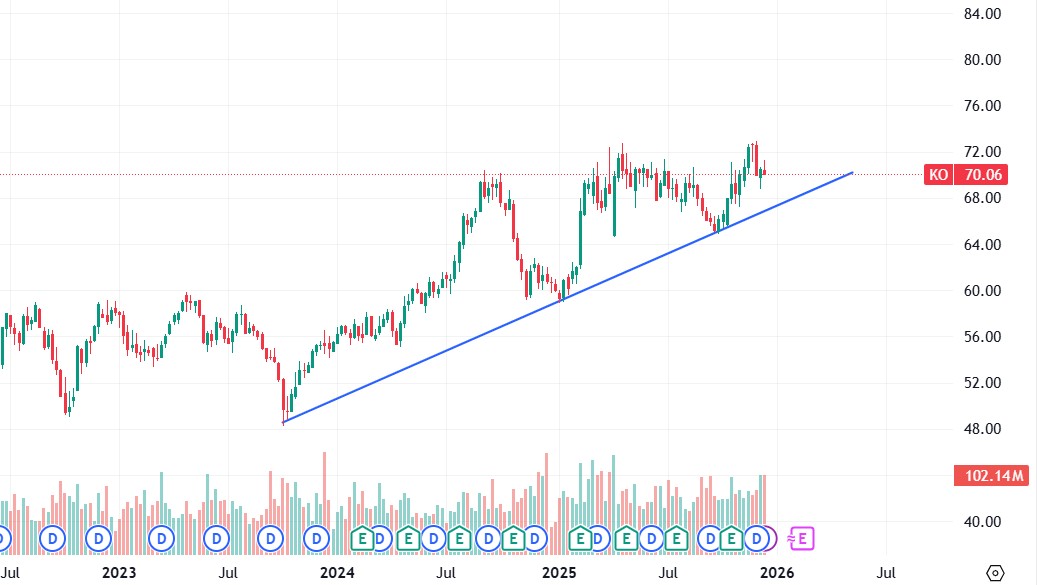
Coca-Cola shares fell 1.5% in the latest session after the beverage giant reported quarterly revenue that came in below analyst expectations, reinforcing investor concerns that consumer demand is cooling across key markets. The decline came even as broader markets reacted positively to weaker U.S. consumer-spending data, which raised expectations that the Federal Reserve could cut interest rates later this year.
The contrasting moves highlight a key theme in the current market environment: macro optimism around potential rate relief does not automatically offset company-specific fundamental weakness.
Revenue Miss Rekindles Demand Concerns
The Coca-Cola Company, a 137-year-old global beverage leader and a cornerstone of many income-focused portfolios, has long been viewed as a defensive stalwart. Its diversified brand portfolio, steady free cash flow generation, and multi-decade history of dividend increases have helped it outperform more cyclical sectors during periods of economic uncertainty.
However, the latest quarterly results pointed to continued top-line pressure. Revenue fell short of consensus estimates, a signal investors often interpret as emerging demand softness. Slower consumer spending in parts of North America and select international markets, coupled with currency headwinds and shifting consumer preferences toward low- and no-sugar beverages, have weighed on growth momentum.
Management indicated that promotional activity and elevated bottling costs in certain regions may constrain margins in the near term. For investors, revenue misses are particularly concerning when they suggest underlying volume weakness rather than temporary pricing or foreign-exchange distortions.
Macro Backdrop Adds Complexity
The reaction unfolded against a shifting macroeconomic landscape. A weaker-than-expected U.S. consumer-spending report prompted traders to dial back expectations for immediate monetary tightening. Markets increasingly priced in the possibility of Federal Reserve rate cuts later in the year, a scenario that typically supports equity valuations and rate-sensitive assets.
Yet Coca-Cola’s stock moved lower, reflecting a stock-specific reassessment rather than a broad sector rotation. While defensive consumer staples often benefit during periods of economic uncertainty, sustained top-line softness can offset the appeal of stable cash flows and dividends.
The broader market response remained mixed, with investors awaiting additional clarity from upcoming U.S. employment and inflation data that could further shape Fed policy expectations.
Dividend Strength vs. Growth Headwinds
Coca-Cola’s investment case continues to rest on three pillars: brand strength, pricing power, and consistent capital returns. The company has demonstrated resilience over decades by navigating changing consumption patterns and global economic cycles.
Still, repeated revenue disappointments could pressure earnings-per-share trajectories and limit the pace of future dividend growth. Although management has not indicated any shift in its capital allocation strategy, investors will closely monitor whether softer volumes begin to erode operating leverage.
Sell-side analysts noted that a single-quarter miss does not materially alter Coca-Cola’s long-term cash-generating profile. However, the magnitude of the shortfall and any revisions to forward guidance will determine how aggressively valuation multiples adjust.
Key Metrics to Watch
For investors evaluating the stock, several indicators will be critical over the coming quarters:
- Unit-case volume growth across North America and emerging markets
- Price/mix contribution to offset slower volumes
- Bottling-partner performance and margin trends
- Foreign-exchange impacts on reported revenue
- Free cash flow trajectory and dividend coverage ratios
Emerging markets remain particularly important, as Coca-Cola derives meaningful growth and volume contributions from developing economies. Demand elasticity in those regions will be closely scrutinized if consumer confidence weakens further.
Strategic Positioning for Investors
The 1.5% decline appears to reflect prudent portfolio rebalancing rather than a wholesale reassessment of Coca-Cola’s long-term prospects. For long-term income investors, the stock’s dividend yield and defensive characteristics remain attractive, particularly if macro volatility persists.
However, a disciplined approach is warranted:
- Reassess position sizing if revenue misses extend into multiple quarters.
- Monitor guidance revisions for signals of structural demand weakness.
- Evaluate relative valuation versus peers such as PepsiCo and Keurig Dr Pepper.
- Consider incremental accumulation only if valuation metrics compensate for slower growth.
Importantly, potential Fed rate cuts later this year could support equity multiples broadly, including consumer staples. Yet monetary easing alone cannot reverse company-specific execution risks if demand continues to soften.
Outlook: Balancing Stability with Caution
Looking ahead, Coca-Cola’s trajectory will hinge on consumption trends, cost discipline, and pricing resilience. While the company’s global footprint and brand equity provide structural advantages, near-term top-line pressures may limit upside momentum.
The upcoming quarterly release will be pivotal. Investors will look for clarity on unit volumes, promotional intensity, and bottling margins, as well as any adjustments to full-year guidance.
In summary, Coca-Cola’s 1.5% decline following a revenue miss underscores the sensitivity of even defensive, dividend-oriented stocks to changing consumer dynamics. While long-term fundamentals remain intact, investors should closely track demand indicators and margin commentary to determine whether the recent weakness represents a temporary slowdown or the beginning of a more prolonged moderation in growth.