Elmwood Adds to Goldman Sachs GPIX ETF: What Investors Should Know
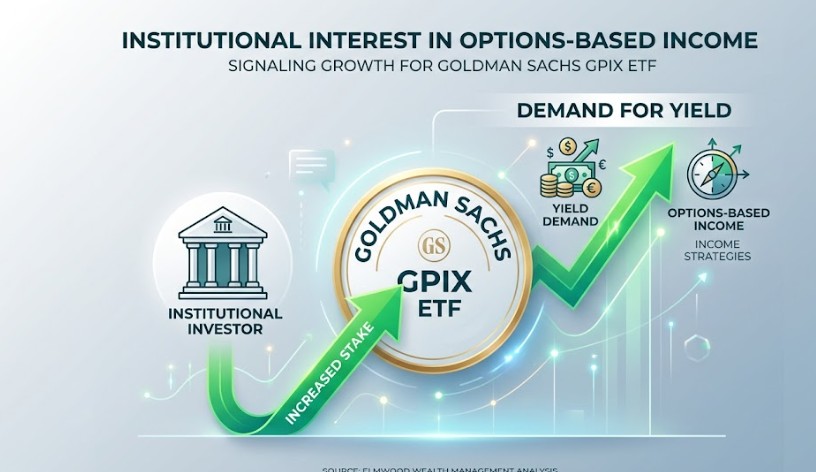
Goldman Sachs S&P 500 Premium Income ETF (GPIX) Gains Attention After Elmwood Wealth Management Increases Stake
Lead
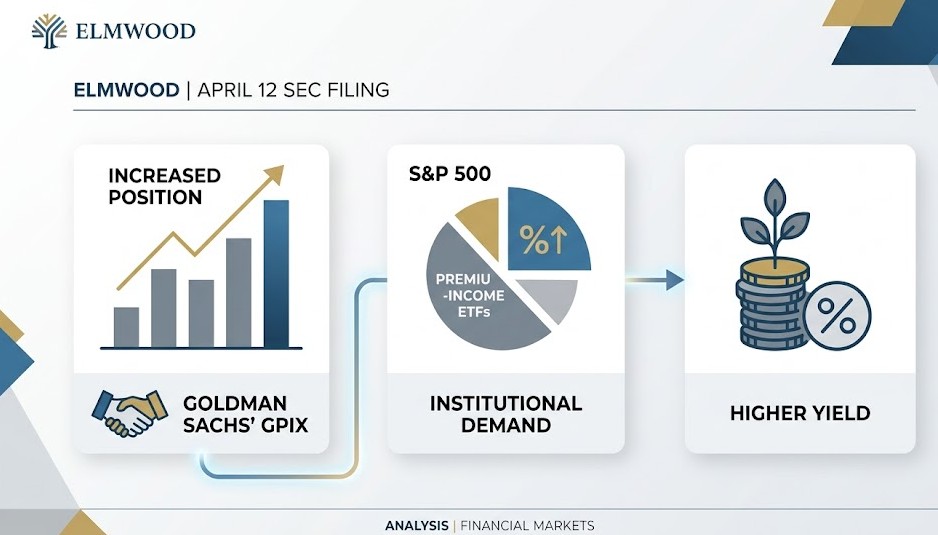
Elmwood Wealth Management disclosed in an April 12, 2026 SEC filing that it added to its position in the Goldman Sachs S&P 500 Premium Income ETF (GPIX), an ETF that blends S&P 500 exposure with an options overlay to generate income. The move underscores growing institutional attention to yield-oriented equity strategies as investors weigh income against capital appreciation.
Company Background and Recent Performance
GPIX is a Goldman Sachs ETF designed to deliver S&P 500 equity exposure while generating incremental income through an options overlay strategy, typically selling call options on portions of the portfolio to collect premiums. Unlike traditional S&P 500 index funds, GPIX's returns reflect both the underlying equity performance and the income, and potential limitations, introduced by option writing.
Since its launch, the ETF has drawn interest from yield-seeking investors who prefer predictable premium income and some downside cushion in volatile markets. Goldman Sachs, the ETF sponsor, is a major market participant with extensive experience in derivatives and structured products. The firm's ETF lineup targets investors seeking differentiated exposures, including active and rules-based strategies that combine equities with derivatives.
In the current low-to-moderate yield environment, products such as GPIX can be viewed as complementary to dividend-focused allocations, particularly for investors focused on income generation rather than pure capital appreciation.
Analysis of the SEC Filing and Its Implications
The SEC filing by Elmwood is significant primarily as an indicator of institutional appetite. Registered investment advisers, family offices, and other institutional investors disclose holdings through filings that other market participants monitor for signals of demand. An increase in a position by a recognized institution suggests conviction in the strategy or a tactical shift toward income-producing allocations.
An options-overlay ETF like GPIX behaves differently from a plain-vanilla S&P 500 fund. Selling call options generates premium income that can boost total returns in flat or mildly down markets and provide a cushion during drawdowns. However, because call writing effectively caps upside above strike prices, such funds can lag during sharp equity rallies.
Institutional additions to GPIX therefore reflect a view that income and downside mitigation are priorities relative to maximizing upside capture.
From a portfolio-construction perspective, Elmwood's purchase could signal rebalancing toward higher-yielding equity vehicles amid expectations of muted equity returns or continued market volatility. For other institutional and retail investors, this filing serves as a prompt to reassess exposure to income-generating ETFs, evaluate how options overlays fit with risk tolerance, and consider tax and liquidity implications that differ from standard index products.
Market Reaction and Analyst Perspective
SEC filings do not always produce immediate price moves, but they can influence flows and investor sentiment. In cases where multiple firms add positions in the same ETF, increased buying can lift assets under management and narrow bid-ask spreads, improving liquidity.
Market commentators typically view institutional accumulation as a validation of product design and demand for yield strategies. Analysts who follow ETF flows and options-based products note a few consistent tradeoffs: enhanced income at the cost of limited upside, sensitivity to implied volatility, and potential tracking differences relative to the S&P 500.
For investors focused on income generation, GPIX's structure is attractive. For growth-oriented investors expecting a strong bull market, a cap on upside could be costly. Financial advisers often recommend balancing options-overlay ETFs with plain-index exposures to maintain upside participation while harvesting income from the overlay sleeve.
What This Means for Investors: Actionable Insights
- Reassess objectives: Investors seeking steady income with partial downside protection should consider the role of an options-overlay ETF within a diversified portfolio, while growth investors should account for capped upside.
- Check costs and structure: Review GPIX's expense ratio, turnover, and the specific options strategy to understand fee drag and how premiums are generated.
- Monitor volatility: Premium income is linked to option premiums, which rise with implied volatility. Higher volatility can increase income but also signal higher market risk.
- Understand tax treatment: Option premiums and ETF distributions may have different tax treatments than qualified dividends. Investors should consult a tax adviser regarding taxable accounts.
- Position sizing and rebalancing: Use institutional filings as one signal among many and avoid over-weighting a single strategy based solely on one manager's filing.
Conclusion and Forward-Looking Perspective
Elmwood's April 12 filing to increase its stake in GPIX spotlights a broader investor theme: demand for income-generating equity solutions that offer some mitigation against market swings. For investors and advisers, the filing is a reminder to evaluate how options-overlay ETFs fit within overall objectives, fee budgets, and tax situations.
As markets navigate interest-rate dynamics and episodic volatility, strategies that generate yield while managing downside risk are likely to remain in focus. Investors should weigh the tradeoffs between income and upside participation, monitor ETF flows and implied volatility, and consider blending overlay products with core equity holdings to achieve a balanced risk-return profile.
GPIX attracted investor attention after Elmwood Wealth Management disclosed an increased position, highlighting institutional demand for income-generating equity strategies that combine market exposure with options-based premium income.