Elmwood Adds to Goldman Sachs S&P 500 Premium Income ETF (GPIX)
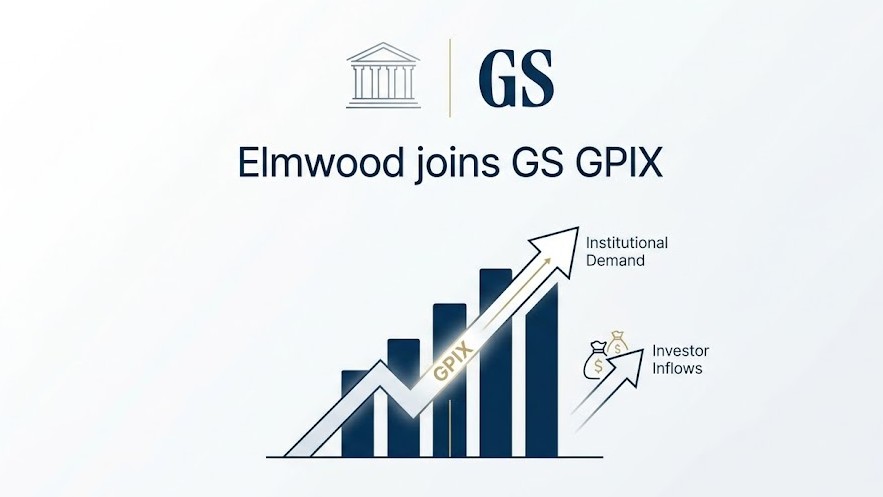
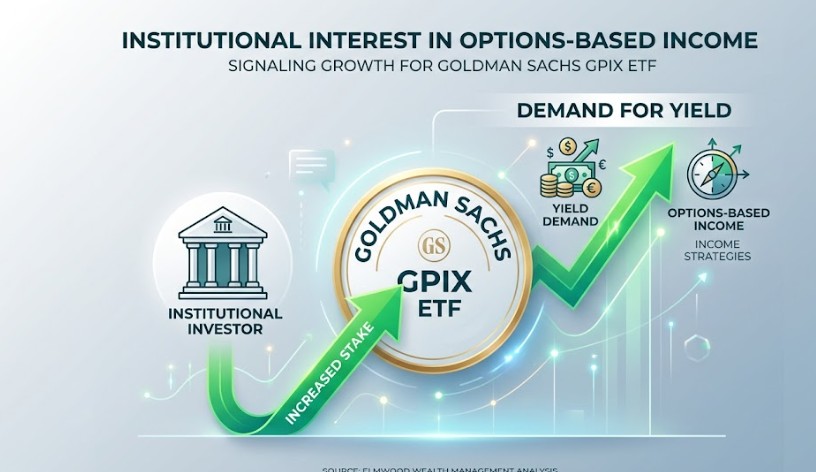
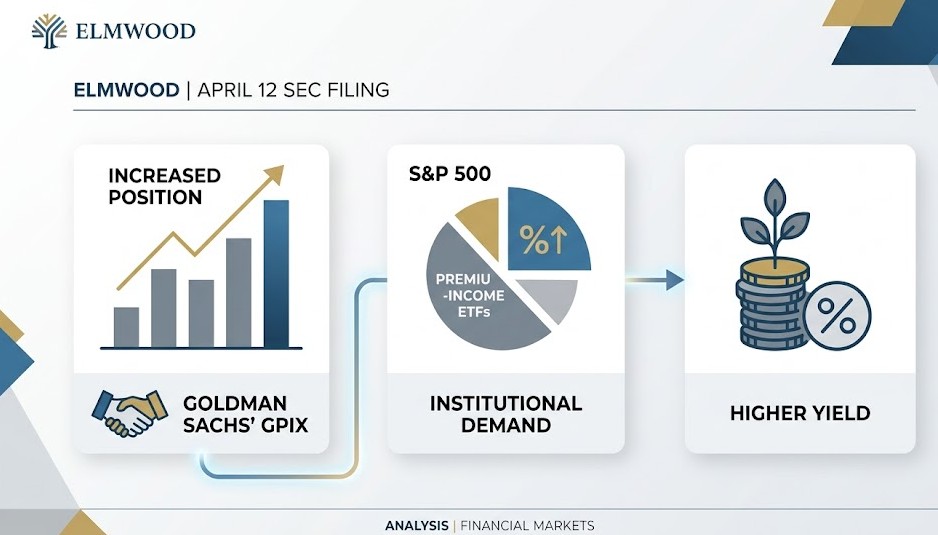
Elmwood Wealth Management disclosed an increased position in the Goldman Sachs S&P 500 Premium Income ETF (GPIX) in a recent SEC filing, signaling institutional interest in the ETF’s income-focused strategy. The move is notable because GPIX combines S&P 500 equity exposure with an options overlay designed to generate higher yield, and institutional buying can often support investor sentiment and future fund inflows.
Background and Fund Structure
The Goldman Sachs S&P 500 Premium Income ETF (GPIX) is structured to provide broad exposure to the S&P 500 while using a covered-call or options-income strategy to enhance distributions.
Unlike a traditional index fund, GPIX generates additional income through option premiums. This approach can increase yield for investors but may limit upside participation during strong market rallies. In exchange, the options overlay can help cushion volatility during weaker market periods.
Income-oriented ETFs using covered-call strategies have gained popularity as investors search for consistent cash distributions in an environment of lower real yields and elevated equity valuations.
Institutional Buying and Why It Matters
The SEC filing from Elmwood Wealth Management does not specify the exact size of the position in the public summary, but institutional accumulation is often interpreted as a sign of confidence in the fund’s strategy.
Advisor purchases can influence market perception, particularly in specialized ETFs, as other institutional and retail investors may view them as validation of the product’s income-generating approach.
The move also suggests growing interest in defensive equity-income strategies, potentially reflecting expectations for moderate equity returns or increased market volatility.
Understanding the GPIX Strategy
The mechanics of GPIX are central to evaluating the investment case.
By writing call options against its S&P 500 holdings, the ETF collects premium income that can support higher distributions. However, this strategy limits participation during strong upward moves in the equity market because gains above certain levels may be capped.
This trade-off appeals primarily to investors seeking income generation and reduced volatility rather than maximum capital appreciation.
Market Impact and Analyst Perspective
Institutional buying disclosures can influence ETF flows and investor positioning, particularly when markets are focused on income-producing assets.
ETF strategists note that demand for option-overlay products often rises when investors seek yield enhancement and downside mitigation. However, performance outcomes depend heavily on market conditions and volatility levels.
Analysts caution that covered-call ETFs tend to underperform the broader market during strong bull runs but may outperform during flat or moderately declining markets due to the steady premium income generated by options strategies.
What This Means for Investors
Investors considering GPIX should evaluate how the ETF fits within their broader portfolio objectives.
The fund may appeal to income-focused investors willing to sacrifice some upside potential in exchange for higher distributions and lower volatility. Comparing GPIX with alternatives such as dividend-focused ETFs, corporate bond funds, or traditional S&P 500 index funds can help determine whether the trade-off is appropriate.
Investors should also consider tax implications, as option-related distributions may be treated differently than qualified dividend income.
Risk Considerations
Option-overlay strategies are closely tied to volatility conditions. Rising volatility can increase option premium income, potentially boosting distributions, but it may also signal greater market stress and larger equity drawdowns.
Liquidity is another important factor. Investors should review average daily trading volume, assets under management, and bid-ask spreads before establishing positions.
Because GPIX will not behave identically to the S&P 500, it is generally more suitable as a complement to core index exposure rather than a direct replacement.
Performance and Due Diligence
Historically, covered-call strategies have tended to lag during strong bull markets due to capped upside participation. However, they often perform comparatively better during sideways or mildly negative market environments because of consistent income generation.
Investors should evaluate metrics such as Sharpe ratio, drawdown history, correlation to the S&P 500, expense ratio, tracking error, and distribution consistency when comparing GPIX with peer funds.
Reviewing whether distributions are generated from option premiums or return of capital is also important, as this affects long-term sustainability and tax treatment.
Scenario Analysis
If the S&P 500 delivers strong double-digit annual returns, GPIX is likely to underperform a traditional index fund because the written call options limit upside capture.
In more stable or mildly negative market environments, the additional income generated by the options strategy can potentially produce stronger total returns relative to the broader index.
Higher implied volatility can increase option premiums and support larger distributions, although this often coincides with elevated market uncertainty.
Conclusion
Elmwood Wealth Management’s increased position in GPIX reflects continued institutional interest in income-generating, option-overlay ETFs as part of diversified portfolio strategies.
The filing highlights growing demand for equity-income solutions that offer yield enhancement and reduced volatility characteristics. Investors should carefully evaluate the trade-offs between income generation, capped upside, volatility sensitivity, and tax implications before allocating capital.
The institutional purchase also suggests that investor appetite for hedged equity-income products remains strong amid evolving market conditions and interest rate expectations.