Elmwood Adds to Goldman Sachs S&P 500 Premium Income ETF Stake
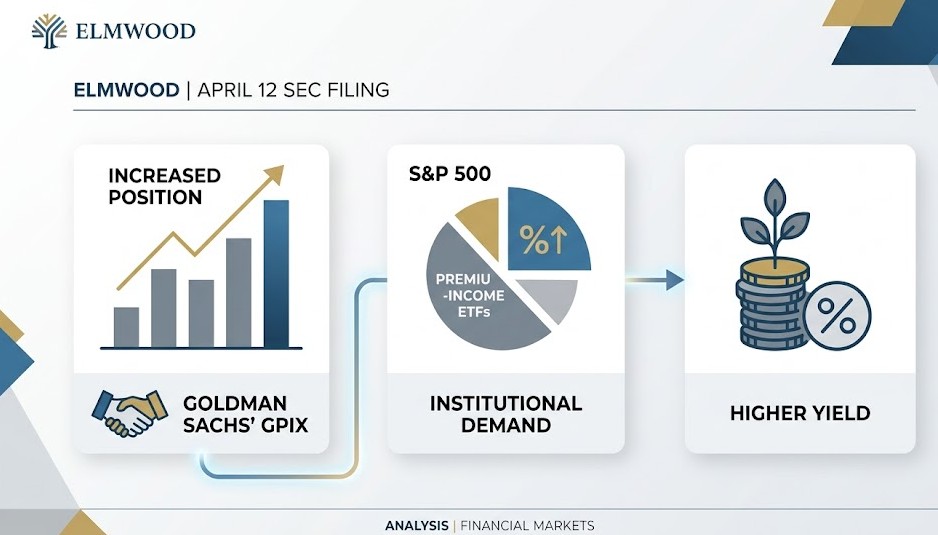
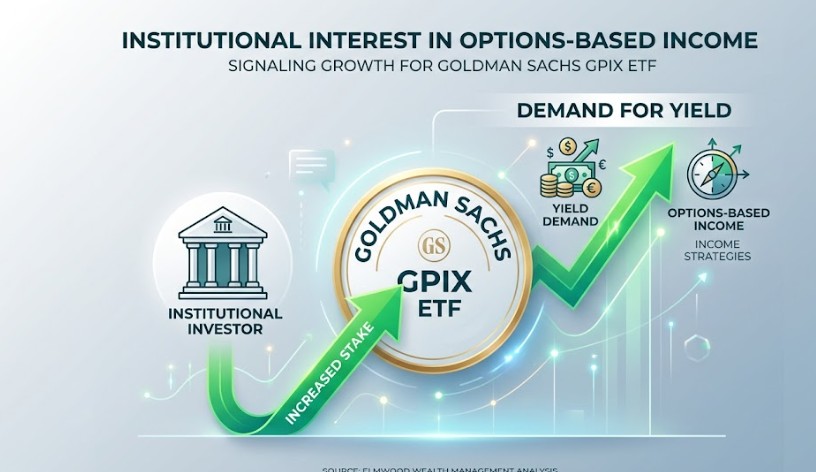
Elmwood Wealth Management disclosed an increased position in the Goldman Sachs S&P 500 Premium Income ETF (GPIX) in an SEC filing dated April 12, 2026, underscoring institutional interest in income-focused equity strategies.
The filing, while not large enough to alter the ETF's market capitalization dramatically, highlights demand for products that blend S&P 500 equity exposure with options overlays to generate yield.
For investors, the move signals that some managers are prioritizing income generation and downside mitigation as market volatility persists.
Background and product overview
The Goldman Sachs S&P 500 Premium Income ETF (GPIX) is an actively managed exchange-traded fund that seeks to deliver S&P 500 equity participation while augmenting returns through an options strategy, typically selling call options or using other premium-generating overlays.
Because GPIX combines equity exposure with an options overlay, its return profile can diverge materially from a traditional S&P 500 index fund: it tends to provide higher income in sideways or modestly rising markets, while capping upside during strong rallies.
Launched by Goldman Sachs Asset Management, the product targets investors seeking yield with core equity exposure and competes with a growing set of covered-call and premium-income ETFs.
Market context and institutional flows
In recent quarters, premium-income ETFs have attracted flows as investors hunt for yield amid low bond yields and expectations of rangebound equity markets.
While Goldman Sachs has not disclosed that Elmwood's addition will materially change GPIX's holdings, any institutional accumulation can serve as a signal that portfolio managers find the ETF's risk-return tradeoff attractive.
The SEC filing provides transparency about who holds the security and can affect sentiment among other managers and retail investors evaluating similar strategies.
Strategy mechanics and implications
The mechanics behind GPIX are important for understanding why institutional buyers might add to the ETF.
By selling option premium, the fund generates income that is distributed to shareholders or reinvested, smoothing total returns when equity markets are flat or mildly positive.
However, in periods of strong S&P 500 advances, the options overlay can limit upside because call premiums sold reduce participation in rallies.
Investors and managers weigh this tradeoff: higher current income and lower volatility against potential missed gains in bull markets.
Risk considerations
From a risk perspective, premium-income ETFs still carry equity market exposure and are subject to the same macro risks that affect the S&P 500, including interest rate moves, earnings cycles, and geopolitical developments.
The options overlay introduces counterparty and implementation risks, and fee structures for active overlays can be higher than plain-vanilla index ETFs.
That said, institutional allocations to GPIX suggest some managers are accepting these tradeoffs in exchange for a steadier income stream and lower realized volatility.
Note on filings and timing
The disclosure by Elmwood arose through a periodic SEC filing typically a Form 13F that institutional investment managers submit quarterly and that records holdings as of the end of the reported quarter.
These filings lag real-time trading, so additions disclosed on April 12 reflect positions built earlier and may not represent ongoing buying.
Nonetheless, they remain an important transparency tool: advisors, ETF strategists and competing managers scan 13Fs for signals about demand trends.
For ETFs, visible institutional accumulation can influence secondary-market liquidity and investor sentiment but does not directly change the ETF's portfolio construction unless the manager of the ETF itself alters holdings.
Ultimately, the filing provides a window into how some managers are positioning portfolios, not a contemporaneous trade blotter.
Market reaction and analyst view
Market reaction to the filing was measured rather than dramatic.
ETFs often have deep liquidity and large asset bases, so a single manager's filing does not necessarily create outsized price moves unless the position is very large.
However, the disclosure can influence peer behavior: other asset managers tracking filings may reassess allocations to comparable income strategies, potentially fueling incremental flows into premium-income products.
Analysts who follow income-oriented equity vehicles typically emphasize that flows and yield levels drive performance differentials versus plain index funds over intermediate horizons.
What this means for investors
First, consider whether an income-oriented S&P 500 exposure fits your portfolio objective: GPIX is designed for income and volatility reduction, not pure cap-weighted index replication.
Second, examine the ETF's yield history, expense ratio, tracking approach, and option implementation details before reallocating capital.
Third, assess tax implications and distribution consistency, since option income can generate different tax treatment than dividends.
Finally, use position sizing to manage the tradeoff between current yield and upside participation — premium-income ETFs may complement core equity positions but should not fully replace growth-oriented exposures for long-term investors.
Forward-looking perspective
Looking forward, institutional interest noted in SEC filings will remain one of several inputs investors should monitor, alongside fund flows, yield spreads, and macro signals.
If ranges persist and volatility remains elevated, products like GPIX could continue to attract capital from managers seeking convexity and yield.
Conversely, a sustained equity rally could highlight the opportunity cost of capped upside and shift flows back into traditional growth-oriented ETFs.
For now, Elmwood's addition is a reminder that income-centric equity strategies occupy a meaningful place in many portfolios as investors balance yield needs against market uncertainty.
Elmwood's SEC disclosure signaled institutional demand for GPIX's income-focused strategy, drawing investor interest in the ETF.