GLD vs. IAU: Navigating Gold ETF Choices for Portfolio Optimization
For investors seeking exposure to the enduring appeal of gold, the choice between the SPDR Gold Shares (GLD) and the iShares Gold Trust (IAU) presents a nuanced decision. While both exchange traded funds (ETFs) aim to track the price of physical gold, critical distinctions in their expense ratios, underlying structures, and overall fund sizes create distinct profiles that cater to varying investor priorities and long term portfolio strategies. Understanding these differences is paramount for informed allocation in the precious metals market.
Background: Gold's Role and ETF Landscape
Gold has historically served as a critical asset in diverse portfolios, often lauded for its role as a safe haven during economic uncertainty, a hedge against inflation, and a store of value. Its appeal tends to intensify during periods of geopolitical tension or currency devaluation, attracting investors looking to preserve capital. For many years, direct ownership of physical gold, with its associated storage and security costs, was the primary method of gaining exposure. However, the advent of gold ETFs revolutionized access to the yellow metal, offering a liquid, cost effective, and convenient alternative to holding bullion.
The SPDR Gold Shares (GLD), launched in 2004, quickly became the benchmark for gold ETFs, establishing itself as the largest and most widely recognized fund in the category. It is sponsored by State Street Global Advisors. Following in its footsteps, the iShares Gold Trust (IAU), launched in 2005 and managed by BlackRock, emerged as a strong contender, often positioned as a more cost efficient alternative. Both ETFs hold physical gold bullion in secure vaults, typically in London, and issue shares representing fractional ownership of that gold. Their primary objective is to reflect the performance of the price of gold less their expenses.
Detailed Analysis: Expense Ratios, Fund Size, and Risk Profiles
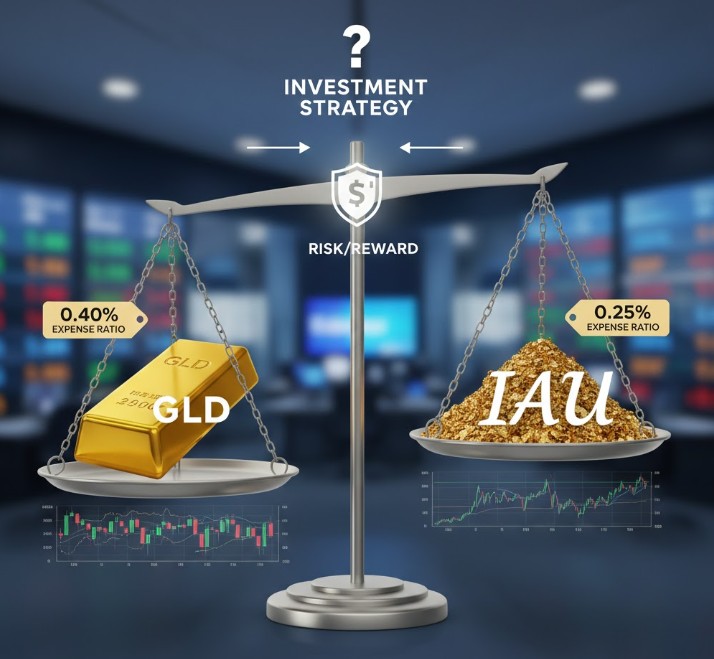
The fundamental differentiators between GLD and IAU lie in their operational specifics. The most frequently cited difference is the expense ratio. IAU typically boasts a lower expense ratio, often around 0.25%, compared to GLD's approximately 0.40%. This seemingly small difference can accrue significantly over long investment horizons, particularly for substantial capital allocations. For an investor holding $10,000 in an ETF for ten years, a 0.15% annual difference in expense ratios could translate into hundreds of dollars in saved fees, impacting net returns. This cost efficiency makes IAU particularly attractive to long term buy and hold investors who prioritize minimizing drag on their returns.
Conversely, fund size and liquidity often favor GLD. With assets under management (AUM) frequently exceeding $50 billion, GLD is considerably larger than IAU, which typically manages AUM in the range of $25 to $30 billion. A larger fund size generally translates into deeper liquidity in the secondary market, meaning tighter bid ask spreads and easier execution of large trades without significantly impacting the price. This superior liquidity makes GLD a preferred choice for institutional investors, active traders, and those who foresee needing to enter or exit positions frequently or in large volumes. While IAU is also highly liquid, GLD's scale offers an edge in extreme market conditions or for very large block trades.
Regarding risk profiles, both ETFs are generally considered safe given their backing by physical gold. However, subtle differences in their trust agreements and custodians can exist. Both funds engage major financial institutions as custodians (e.g., HSBC for GLD, JPMorgan Chase for IAU) to hold the gold. The primary "risk" beyond gold price fluctuations itself often revolves around the operational integrity of the trust, regulatory compliance, and the security of the physical gold. While incidents of major custodian failure or loss of gold are exceptionally rare for reputable funds like GLD and IAU, understanding the specific details of their trust indentures can provide additional comfort for discerning investors. Both ETFs publish daily lists of their gold holdings and bar weights, providing transparency into their physical backing.
Market Reaction and Analyst Commentary
Market participants and financial analysts widely acknowledge the merits of both GLD and IAU, often recommending them based on an investor's specific needs. Analysts frequently highlight IAU for its cost advantage, making it a staple recommendation for retail investors or those accumulating gold exposure over extended periods. Conversely, GLD is often cited as the preferred vehicle for institutional allocations, hedge funds, and sophisticated traders due to its unparalleled liquidity and fungibility.
There is no "movement" in the traditional sense based on this ongoing comparison, but rather an informed allocation decision. The broader market's reaction to gold ETFs is, of course, driven by macroeconomic factors, inflation expectations, interest rate outlooks, and geopolitical events that influence the price of gold itself. Expert consensus generally supports holding physical gold via these ETFs as a strategic component for diversification. Commentators at Bloomberg and CNBC regularly feature discussions on gold's role, with the understanding that GLD and IAU serve as the primary conduits for public market access. The choice between them rarely sparks debate over gold's fundamental value, but rather over the most efficient method of exposure given an investor's individual circumstances.
What This Means for Investors: Actionable Insights
For investors, the decision between GLD and IAU boils down to a clear assessment of priorities. If cost efficiency and long term holding are paramount, IAU with its lower expense ratio typically presents a more compelling option. The cumulative savings over decades can significantly enhance overall returns. This makes IAU suitable for retirement accounts, long term savings, or as a foundational gold position within a diversified portfolio.
However, if liquidity, ease of large scale trading, and market depth are critical, GLD remains the gold standard. Its larger size and trading volume ensure that large orders can be executed with minimal market impact, which is crucial for active portfolio managers, institutional funds, or high net worth individuals who may frequently rebalance their gold positions. Investors should also consider the spread difference. GLD's typically tighter bid ask spreads can partially offset its higher expense ratio for very active traders.
Ultimately, investors should perform due diligence beyond just expense ratios and AUM. Reviewing the specific prospectus for each fund, understanding the nuances of their underlying trust structures, and ensuring alignment with personal investment goals and time horizons are crucial steps. Some investors might even consider a blend, using IAU for core long term holdings and GLD for tactical, shorter term plays if large transaction sizes are anticipated.
Conclusion: Tailoring Gold Exposure to Your Portfolio
The choice between SPDR Gold Shares (GLD) and iShares Gold Trust (IAU) is not about which is inherently "better," but rather which is "better for you." Both ETFs offer excellent, transparent exposure to physical gold, a vital asset for diversification and wealth preservation. GLD's superior liquidity caters to active and institutional investors, while IAU's lower expense ratio appeals to cost conscious, long term holders.
As global economic landscapes continue to evolve, gold is expected to maintain its allure, and these ETFs will remain indispensable tools for investors to integrate this precious metal into their financial strategies. Prudent selection, guided by a clear understanding of personal investment objectives and risk tolerance, will ultimately determine the most effective path to harnessing gold's potential. The news highlights differentiating factors like expense ratios and fund size, which influence investor allocation decisions between GLD and IAU for gold exposure, rather than a specific price movement of either ETF.