Investors Brace as Iran Talks Collapse Threaten Oil Volatility
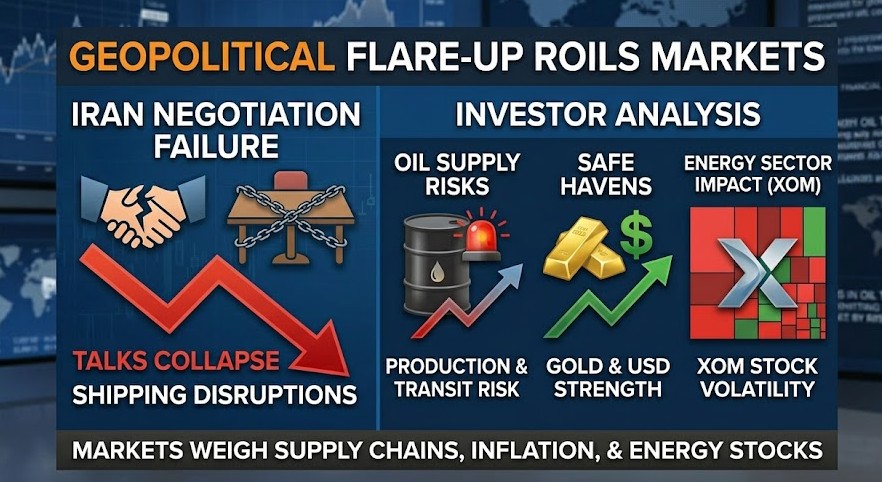
Exxon
Mobil in Focus as U.S.-Iran Tensions Renew Oil Supply Concerns
Markets turned cautious this week after
negotiations between the United States and Iran failed to produce a lasting
agreement, increasing the possibility of renewed conflict and potential
disruptions to oil flows through the Strait of Hormuz.
The breakdown reintroduced a geopolitical risk
premium into energy markets, prompting investors to reassess exposure to crude
oil, shipping and related sectors while increasing volatility across financial
markets.
Exxon
Mobil's Position in the Energy Market
Exxon Mobil is one of the world's largest
integrated energy companies, with operations spanning:
- Upstream
oil and gas production
- Refining
- Chemicals
- Marketing
and distribution
The company has consistently generated strong
cash flows through disciplined capital allocation, solid downstream performance
and shareholder-friendly policies that include dividends and share repurchases.
Recent quarters have also demonstrated
resilient production levels and improving margins, with the stock generally
moving alongside broader energy sector trends and changes in crude oil prices.
Hormuz
Blockade Raises Oil Supply Risks
The immediate catalyst for market concern was
the collapse of diplomatic negotiations followed by statements indicating a
blockade of the Strait of Hormuz.
The waterway handles a significant portion of
global seaborne oil shipments, making it one of the most strategically
important energy transit routes in the world.
Any credible threat to shipping through the
region increases uncertainty surrounding global supply and typically pushes oil
prices higher as markets incorporate additional risk.
For companies like Exxon Mobil, higher oil
prices can improve upstream revenue and cash flow, but prolonged geopolitical
instability may also introduce operational and economic challenges.
Higher Oil
Prices Can Produce Mixed Effects
The relationship between geopolitical tensions
and corporate earnings is not always straightforward.
In the short term:
- Higher
crude prices generally support upstream profitability.
- Energy
producers may benefit from improved realizations and stronger cash
generation.
However, if elevated prices persist for an
extended period:
- Global
economic growth could slow.
- Fuel
demand may weaken.
- Refining
margins could become pressured.
- Chemical
businesses may experience softer demand.
As a result, integrated energy companies often
experience both positive and negative effects depending on the duration and
severity of market disruptions.
Market
Reaction Reflects Rising Uncertainty
Financial markets responded by increasing
volatility across both equities and commodities.
Oil futures incorporated a larger geopolitical
premium, while hedging activity increased among producers, refiners and
institutional investors seeking protection against further price swings.
Analysts generally describe two possible
scenarios:
- A
short-term supply disruption could boost upstream earnings and support
energy stocks.
- A
prolonged conflict could weaken global demand and eventually offset some
benefits from higher oil prices.
Many investment firms continue to emphasize
balance-sheet quality and dividend sustainability as important factors when
evaluating integrated energy companies during uncertain periods.
What
Investors Should Consider
Evaluate
Oil Price Exposure
Companies involved in exploration and
production typically have greater earnings sensitivity to rising crude prices,
while integrated firms face more balanced impacts across multiple business
segments.
Focus on
Cash Flow and Capital Returns
Businesses with:
- Strong
free cash flow
- Investment-grade
balance sheets
- Sustainable
dividends
- Ongoing
share repurchase programs
are generally better positioned to navigate
volatile commodity markets.
Consider
Portfolio Risk Management
Investors with concentrated exposure to energy
stocks may wish to evaluate hedging strategies or rebalance positions if recent
gains have significantly increased portfolio concentration.
Watch
Shipping and Insurance Markets
Changes in tanker rates, shipping costs and
insurance premiums can provide early signals about the severity and duration of
supply disruptions.
Maintain a
Long-Term Perspective
For long-term shareholders of companies like
Exxon Mobil, temporary geopolitical events may create opportunities to add
exposure during periods of market weakness rather than fundamentally altering
the long-term investment thesis.
Outlook
The collapse of U.S.-Iran negotiations and
renewed concerns surrounding the Strait of Hormuz have once again placed
geopolitical developments at the center of energy market pricing.
Near-term volatility is likely to remain
elevated as investors evaluate scenarios ranging from temporary disruptions to
more prolonged regional instability.
For Exxon Mobil and other integrated energy
producers, the ultimate impact will depend on whether supply interruptions
remain short-lived or evolve into sustained disruptions that materially affect
global demand and economic growth.
Investors should continue monitoring oil
prices, shipping activity, corporate capital allocation plans and broader
macroeconomic indicators while maintaining disciplined, data-driven portfolio
management rather than reacting solely to headlines.
Exxon Mobil shares have attracted renewed attention as rising geopolitical tensions and concerns over potential disruptions in the Strait of Hormuz increase uncertainty around global oil supplies and energy market volatility.