Investors Brace as Iran Talks Fail; Markets Face New Volatility

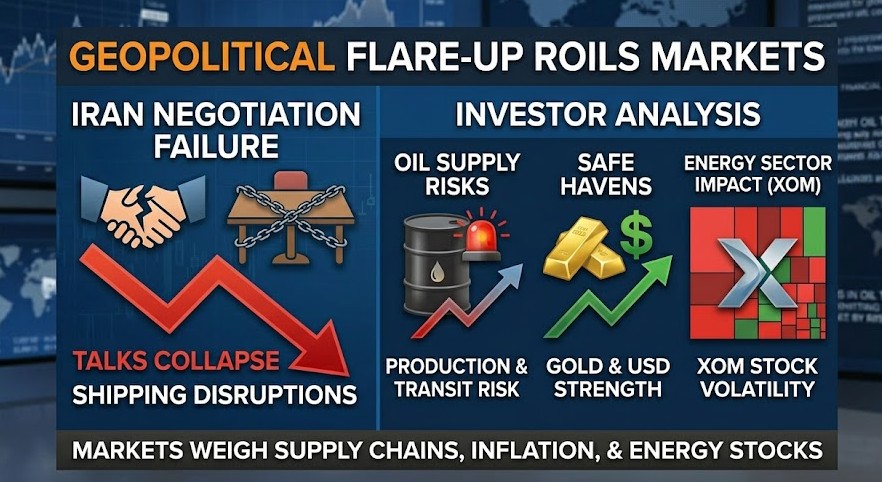
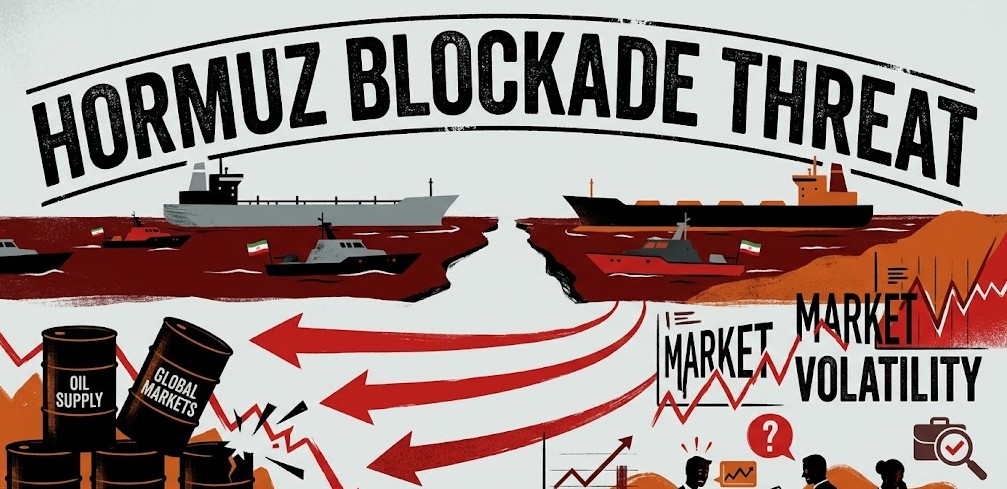
Global markets turned cautious after weekend talks between the United States and Iran failed to produce a lasting accord, reviving the threat of renewed military activity in the Gulf. The breakdown in negotiations, along with President Donald Trump’s announcement of a blockade of the Strait of Hormuz, has pushed investors to reassess energy and geopolitical risk, with immediate implications for oil prices, shipping insurance, and equities.
Company Background and Recent Performance
Exxon Mobil Corp. (XOM), the largest publicly traded U.S. oil major, sits at the center of energy markets and geopolitical developments. The company reported steady upstream production gains over the past year and has benefited from stronger cash flow as crude prices rallied in earlier periods.
Like peers Chevron and Shell, Exxon’s earnings and capital allocation strategies are closely tied to fluctuations in crude prices and disruptions in maritime routes that influence tanker rates and global supply chains.
Why the News Matters
The Strait of Hormuz is a critical chokepoint through which roughly one-fifth of global seaborne oil supply passes. Any blockade or escalation in the region has immediate implications for global energy markets, including higher freight costs, increased insurance premiums, and potential supply disruptions affecting key oil benchmarks.
Markets initially showed a fragile risk-on response following a brief ceasefire, with equities rising and oil prices easing. However, sentiment quickly reversed as negotiations collapsed, triggering renewed risk-off positioning.
For oil majors, higher crude prices can support revenue and free cash flow, but increased volatility introduces uncertainty around capital allocation and can weigh on equity valuations in broader risk-off environments.
Detailed Analysis and Implications
Even a partial or temporary blockade of the Strait of Hormuz would raise the perceived probability of supply disruptions, even if physical oil flows are not immediately impacted. In such scenarios, traders often react by adjusting the term structure of oil markets, pushing near-term prices higher and increasing backwardation.
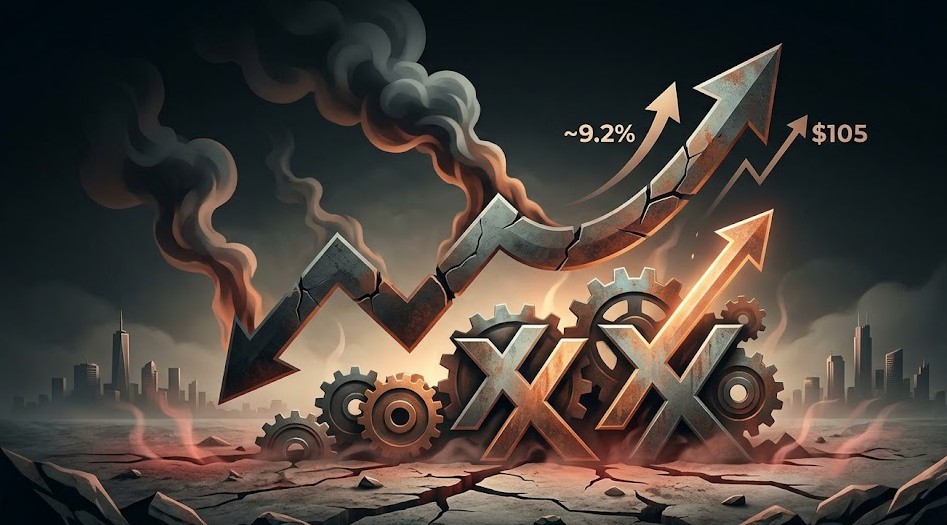
For integrated energy companies like Exxon, higher near-term oil prices can boost upstream earnings. However, the overall impact on stock performance depends on how investors balance improved commodity pricing against broader macroeconomic and market risks.
Secondary effects are also significant. Heightened geopolitical risk typically increases demand for safe-haven assets such as U.S. Treasuries and gold, while reducing investor appetite for risk assets. Rising marine insurance costs and tanker rerouting expenses can increase fuel delivery costs, particularly in import-dependent regions, and compress margins for downstream operations.
Certain sectors may respond differently. Defense contractors and insurance providers often benefit from increased geopolitical tensions, while shipping companies and airlines may face pressure due to higher operating costs and logistical challenges.
Market Reaction and Analyst Commentary
Market movements have been mixed, reflecting shifting sentiment. Risk assets initially rallied on hopes of de-escalation but reversed as talks failed. Analysts have cautioned that disruptions to Gulf shipping could lead to sharp, localized price movements in energy markets.
Equity strategists note that cyclical sectors such as energy, materials, and industrials may experience increased earnings variability in the coming quarters. Credit analysts are also monitoring exposure within the insurance sector and trade finance channels for potential stress linked to disruptions in Persian Gulf trade routes.
What This Means for Investors
Investors should reassess exposure to commodity-sensitive equities. Those with concentrated positions in oil producers may consider hedging strategies or gradually taking profits if crude prices rise sharply.
Diversified energy ETFs and integrated oil companies offer some resilience compared to pure exploration and production firms, but all remain exposed to volatility driven by geopolitical developments.
Defensive allocations may also be considered. Assets such as U.S. Treasuries, high-quality bonds, and gold can help mitigate downside risk during periods of market stress. Tactical opportunities may arise in sectors like defense and aerospace, which have historically shown resilience during geopolitical uncertainty.
Key Indicators to Monitor
Shipping and insurance metrics will be critical indicators of market stress. Investors should track tanker insurance rates, routing changes, and refining margins in regions dependent on imported energy. Sustained increases in logistical costs can offset gains from higher crude prices.
Maintaining discipline around investment horizons and liquidity is essential. While short-term volatility may present opportunities, reacting impulsively to headlines can increase risk. Investors should adhere to risk management strategies, including stop-loss levels and portfolio rebalancing.
Conclusion and Forward Looking Perspective
The failure of U.S.-Iran talks and the announcement of a blockade in the Strait of Hormuz have increased the likelihood of intermittent disruptions in global energy markets. For Exxon Mobil and other integrated energy companies, higher oil prices may enhance earnings potential in the near term, but stock performance will depend on broader market sentiment and the duration of any disruption.
Investors should prepare for elevated volatility, focus on risk management, and closely monitor developments in shipping and insurance markets as leading indicators of stress. If tensions persist, sharper movements in cyclical sectors and divergence between commodity-driven earnings and broader equity valuations are likely.
The breakdown in negotiations has prompted a reassessment of geopolitical risk, leading investors to reprice energy exposure and market volatility.