Jobs Data and Big Tech Send S&P 500, Nasdaq Tumbling
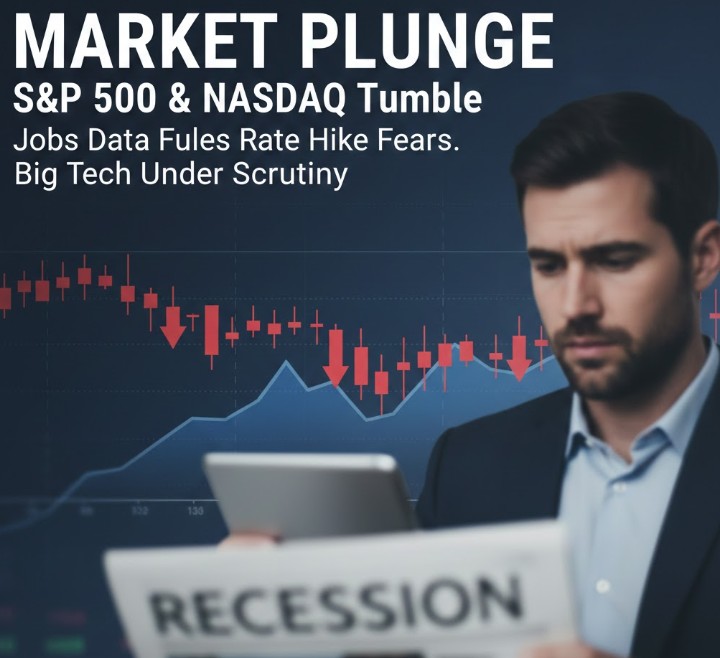
The U.S. stock market experienced a significant downturn, with the S&P 500 and technology-heavy Nasdaq Composite retreating sharply, including drops of 1.2% and 1.6% respectively on February 5th. This market decline was primarily catalyzed by stronger-than-expected jobs data, which fueled concerns about persistent inflation and a more aggressive Federal Reserve, alongside renewed investor apprehension regarding the valuation and future growth prospects of "big tech" giants. The confluence of macroeconomic indicators and sector-specific pressures has effectively shifted market sentiment, leading investors to re-evaluate risk and growth trajectories.
Background: A Market at a Crossroads
Prior to the recent sell-off, the stock market had been navigating a period of uncertainty, often described as being "at a crossroads." Investors were grappling with mixed signals: persistent inflation data on one hand, and resilient corporate earnings and economic growth on the other.
The S&P 500 had been attempting to sustain upward momentum, with the Nasdaq benefiting from the perceived stability and innovation of large technology companies. However, this delicate balance was predicated on a benign outlook for inflation and interest rates, which now appears to be under threat.
The technology sector, in particular, had enjoyed a robust period of growth, often leading broader market rallies, making it especially sensitive to shifts in the economic narrative.
Detailed Analysis: The Dual Catalysts for Decline
The primary drivers behind the market's recent retreat stem from two interconnected forces: robust jobs data and a re-evaluation of the "big tech" sector.
Firstly, recent employment figures have indicated a surprisingly resilient labor market, far exceeding economists' expectations. While strong employment numbers typically signal a healthy economy, in the current inflationary environment, they paradoxically become a source of concern for investors.
A tight labor market often translates to higher wage growth, which can, in turn, contribute to persistent inflation. This strengthens the case for the Federal Reserve to maintain or even accelerate its hawkish monetary policy stance, potentially leading to further interest rate hikes.
Higher interest rates increase the cost of borrowing for companies and consumers, cool economic activity, and reduce the present value of future earnings, hitting growth-oriented sectors like technology particularly hard. The market's fear is that the Fed might be compelled to engineer a "hard landing" to curb inflation, a scenario that significantly increases the risk of a recession.
Secondly, the "big tech" sector, which comprises the largest and most influential technology companies, played a crucial role in the market's decline. These companies, often characterized by high growth potential and significant market capitalization, are particularly sensitive to interest rate fluctuations due to their valuation models heavily relying on future earnings projections.
As interest rates rise, the discount rate applied to these future earnings increases, diminishing their present value and making their current stock prices appear less attractive. Furthermore, concerns about regulatory scrutiny, slowing growth in certain segments post-pandemic surge, and intensified competition are all contributing factors.
While specific company news was not cited, the general apprehension around the sustainability of "big tech" valuations in a rising rate environment spurred widespread selling pressure across the sector, given its substantial weighting in indices like the Nasdaq Composite and, increasingly, the S&P 500. The market's dependency on these giants means that any weakness in their performance or investor sentiment towards them can have an outsized impact on the broader market.
Market Reaction and Expert Commentary
The immediate market reaction to these catalysts was swift and decisive. The S&P 500's 1.2% drop and the Nasdaq's 1.6% decline on February 5th underscore the sensitivity of investor sentiment to both macroeconomic data and sector-specific headwinds.
Analysts across Wall Street have begun to articulate a more cautious outlook, emphasizing the challenges posed by a hawkish Federal Reserve and potentially stretched valuations in certain growth sectors. Many strategists now point to the need for investors to recalibrate their expectations regarding the trajectory of interest rates.
"The robust jobs report has essentially pushed back the timeline for any potential Fed pivot, suggesting that 'higher for longer' is still the prevailing mantra," noted one prominent economist.
Furthermore, investment banks are issuing revised price targets for technology stocks, with some analysts highlighting that even fundamentally strong companies may face headwinds purely from a valuation perspective in a rising rate environment. The consensus appears to be shifting towards a recognition that the market may experience increased volatility as it digests the implications of sustained inflation and a determined central bank.
What This Means for Investors: Actionable Insights
- Re-evaluate Growth Stock Exposure: Investors with significant exposure to high-growth technology stocks should assess their risk tolerance and potentially consider rebalancing portfolios. While long-term growth stories remain compelling, near-term volatility driven by interest rate sensitivity could persist.
- Focus on Fundamentals and Value: In a rising rate environment, companies with strong balance sheets, consistent free cash flow, and more reasonable valuations may offer greater resilience. A shift towards value-oriented stocks or dividend-payers could provide a defensive posture.
- Monitor Economic Data Closely: Employment reports, inflation figures (CPI, PPI), and Fed commentary will continue to be paramount. These data points will directly influence monetary policy and, consequently, market direction.
- Consider Diversification Beyond Equities: Investors might explore diversifying into assets that traditionally perform well during periods of inflation or rising rates, such as commodities or certain real estate sectors, although careful due diligence is essential.
- Embrace Long-Term Perspective: While short-term volatility can be unnerving, maintaining a long-term investment horizon and sticking to a well-defined financial plan is crucial. Panic selling during downturns often leads to missed opportunities during subsequent recoveries.
Conclusion: Navigating a Volatile Landscape
The recent market sell-off, driven by unexpected strength in the labor market and renewed anxieties surrounding "big tech" valuations, serves as a potent reminder of the complex interplay between macroeconomic forces and market performance.
As the Federal Reserve continues its battle against inflation, the path forward for equity markets is likely to remain volatile, characterized by periods of uncertainty and sharp corrections. Investors must remain vigilant, adapting their strategies to an environment where interest rates are likely to stay elevated for longer than previously anticipated, and where sector leadership may evolve.
A disciplined approach, grounded in fundamental analysis and prudent risk management, will be paramount for navigating these evolving market dynamics and securing long-term financial success. The ability to identify resilient companies and diversify effectively will be key to weathering the ongoing macroeconomic headwinds.
The U.S. stock market declined due to strong jobs data fueling fears of persistent inflation and aggressive Federal Reserve rate hikes, alongside renewed concerns over big tech valuations.