JPMorgan Earnings Kickoff: Trading Strength Offsets Consumer Pain
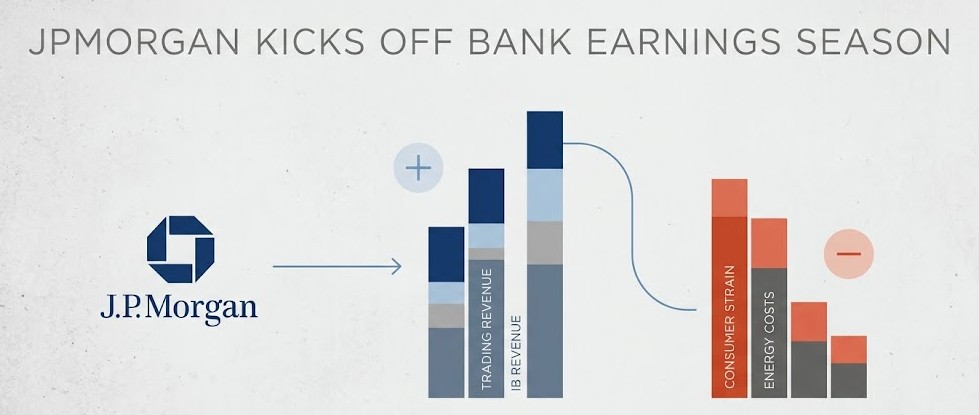
JPMorgan Chase kicks off the U.S. bank earnings season with first-quarter results expected to show resilient investment banking and trading revenue, even as higher energy costs weigh on consumers. The report will be closely read as a gauge of whether banks can deliver fee-driven growth to offset pressure on consumer spending and loan performance.
Company Background and Recent Performance
JPMorgan Chase & Co., the largest U.S. bank by assets, operates a diversified franchise spanning consumer banking, corporate and investment banking, asset and wealth management, and treasury services.
Over the past year, the firm has benefited from wider net interest margins as the Federal Reserve raised interest rates. At the same time, its corporate advisory and markets businesses have fluctuated in line with deal activity and Volatility" title="More analysis on Market Volatility">market volatility. Investors will be watching whether this mix continues to support solid revenue growth and whether management updates guidance on credit trends and expense control.
Key Drivers Heading Into Earnings
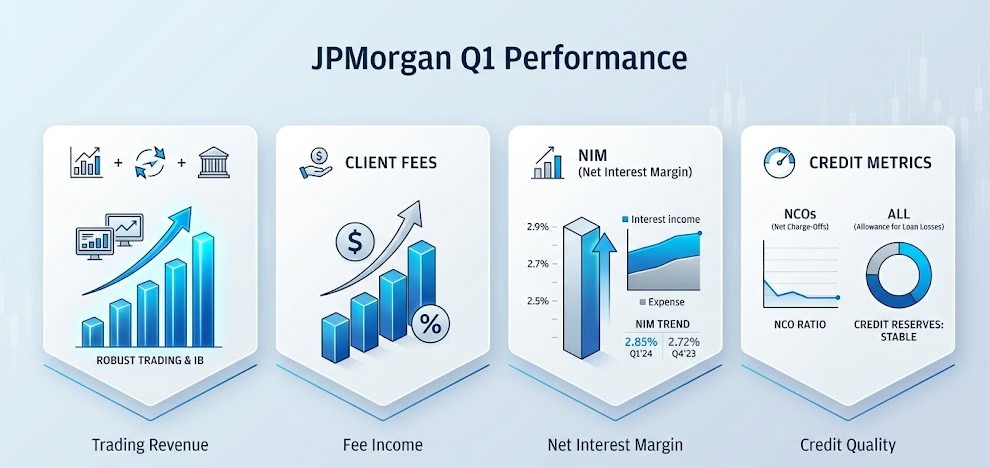
The primary catalyst for investor attention is the bank’s investment banking and trading performance. Strong equity and debt underwriting, merger advisory fees, and activity in fixed income and equities trading can significantly boost quarterly revenue, particularly during periods of heightened market activity.
However, rising energy prices and increased consumer costs present a counterbalancing risk. These factors can reduce discretionary spending and increase delinquencies on consumer loans and credit cards, creating headwinds for retail banking operations.
Analyst Expectations and Market Positioning
Analysts approach the earnings season with cautious optimism. Many expect strength in trading and underwriting fees to offset softness in consumer card spending, resulting in a net positive impact on revenue.
That said, estimates remain sensitive to management guidance on net interest income, loan growth, and provisions for potential credit losses. Commentary on corporate deal pipelines, treasury flows, and consumer credit trends will likely influence stock performance in the days following the release.
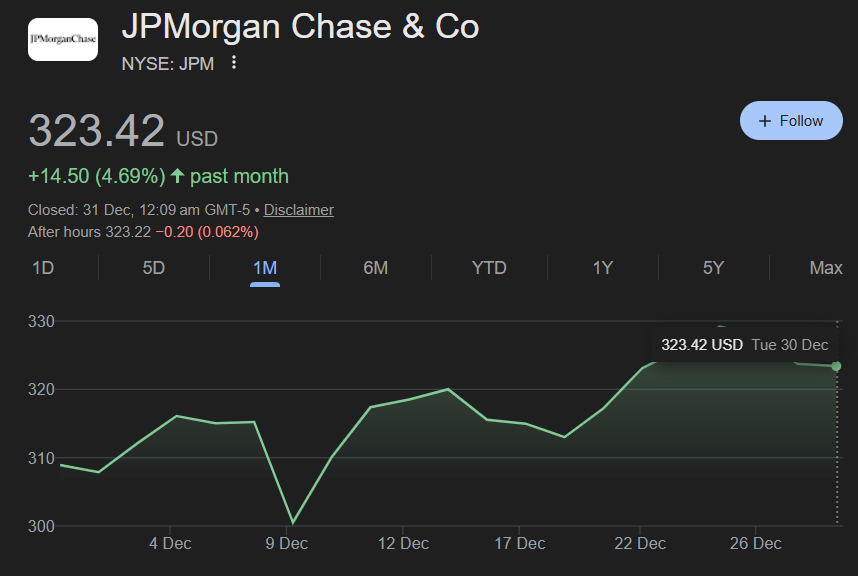
Market behavior so far reflects a balance between optimism in wholesale banking and concern over consumer health. Bank stocks have rallied when strong trading results were anticipated but have also pulled back when lenders flagged weakening retail trends or increased credit provisions.
Key Metrics to Watch
Beyond headline figures, several critical metrics will shape investor interpretation of the results.
Net interest income remains a central driver, with its trajectory dependent on loan growth and deposit pricing dynamics. Trading revenue, while potentially strong, tends to be volatile, making year-over-year comparisons more meaningful than sequential changes.
Credit quality indicators, including charge-off rates, delinquency levels, and loan loss reserves, will provide insight into whether rising costs are translating into financial stress for consumers.
Expense management is another focal point. JPMorgan has invested heavily in technology and compliance, and while these investments support long-term growth, sustained profitability requires disciplined cost control. Any indication of rising expenses could weigh on sentiment, while signals of margin stability would be viewed positively.
Capital Allocation and Strategic Focus
Investors will also look for clarity on capital management, including share buybacks and dividend policy. JPMorgan’s strong capital position, reflected in its CET1 ratio and liquidity levels, has historically supported shareholder returns. Any changes in capital allocation strategy will be closely scrutinized.
Additionally, fee-based and digital businesses such as asset management and card processing provide recurring revenue streams that help offset cyclicality in trading and lending operations.
Investor Considerations
Investors approaching the earnings release have several strategic options. Conservative investors may choose to wait for full results and management commentary before adjusting positions, reducing exposure to short-term volatility.
More active investors anticipating strong trading performance may consider modest position sizing or hedging strategies to manage downside risk while retaining upside potential.
Long-term investors focused on income and capital returns should evaluate the sustainability of dividends and buybacks as indicators of financial strength and management confidence.
Risks and Outlook
Key risks include elevated energy prices and persistent inflation, which could weaken consumer credit performance and lead to higher loan loss provisions. Broader macroeconomic uncertainty, including slowing growth or market disruptions, may also impact the bank’s performance.
On the upside, continued strength in corporate deal activity or increased market volatility could drive stronger-than-expected trading revenue.
Conclusion and Forward Looking Perspective
JPMorgan’s first-quarter results will serve as an early indicator of how the banking sector is navigating a complex economic environment. The balance between trading and investment banking strength, net interest income trends, and consumer credit conditions will be central to the outlook.
While fee-based and trading revenue can offset consumer-related pressures in the near term, the sustainability of this balance will determine whether JPMorgan can maintain steady earnings growth in the quarters ahead.
Market focus remains on whether strong trading and investment banking performance can counter consumer pressure from rising energy costs and shape first-quarter revenue and forward guidance.