JPMorgan Earnings Preview: Trading Strength vs Consumer Strain
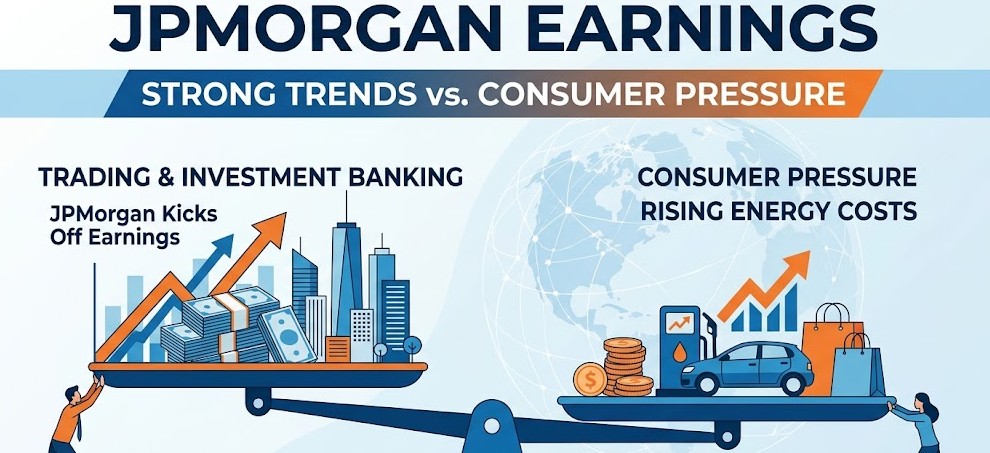
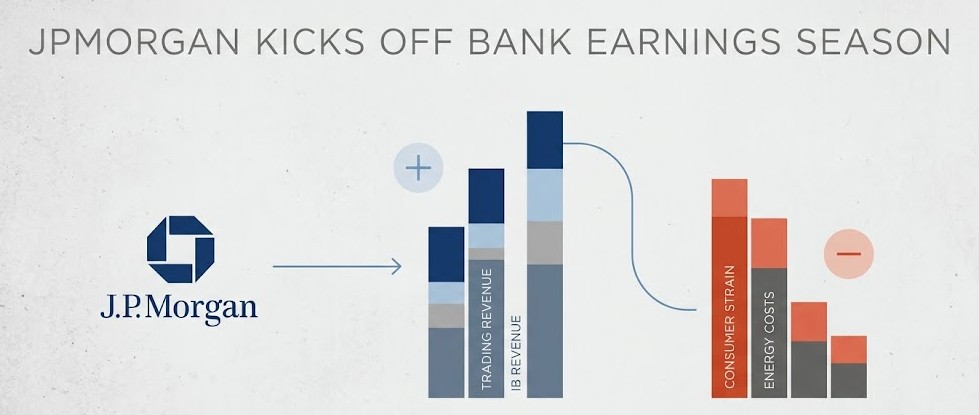
JPMorgan Chase (JPM) heads into first-quarter reporting with investors focused on whether strong trading and investment banking results can offset pressure on consumers from rising energy prices and higher living costs.
The bank’s performance will be closely watched as a bellwether for the U.S. financial sector. Robust wholesale banking revenue could support earnings growth, while signs of consumer stress may lead to higher credit provisions and weaker fee income.
JPMorgan's Diversified Business Model Remains a Key Strength
As the largest U.S. bank by assets, JPMorgan benefits from a highly diversified business model spanning:
- Consumer and community banking
- Commercial lending
- Asset and wealth management
- Investment banking and capital markets
During periods of Volatility" title="More analysis on Market Volatility">market volatility and interest-rate uncertainty, trading desks and investment banking operations often generate outsized revenue, helping offset fluctuations in net interest margins and deposit dynamics.
Over the past year, higher interest rates have generally supported net interest income. However, the environment has also intensified competition for deposits and compressed yields across certain asset classes.
While JPMorgan's credit quality remains relatively strong, the bank is not immune to the impact of inflation and rising energy costs on households and small businesses.
Two Key Forces Driving Q1 Expectations
Investors are currently weighing two opposing factors that could shape first-quarter results.
Investment Banking and Trading Activity
Investment banking fees typically rise when capital markets remain active, supporting advisory and underwriting revenue.
Trading operations also benefit from:
- Increased market volatility
- Higher trading volumes
- Wider bid-ask spreads
A strong quarter across these businesses could drive revenue above expectations and improve overall profitability metrics.
Consumer Pressure From Higher Energy Costs
At the same time, rising fuel and energy costs increase pressure on household budgets.
This can lead to:
- Slower consumer spending
- Rising credit card delinquencies
- Increased consumer loan defaults
- Lower transaction-based fee income
If these trends accelerate, JPMorgan may need to increase provisions for credit losses, reducing overall profitability.
Credit Quality Will Be Closely Scrutinized
One of the most important areas investors will examine is credit performance.
Key metrics include:
- Provision for credit losses
- Nonperforming asset levels
- Consumer loan delinquencies
- Credit card performance
Any signs of deterioration could indicate that inflation and higher living costs are beginning to affect consumer financial health more materially.
Investors will also look for commentary regarding exposure to energy-sensitive industries and regions that may be disproportionately affected by higher fuel prices.
Net Interest Income Remains Another Critical Focus
Net interest income and margin trends will remain central to the earnings discussion.
While elevated interest rates allow banks to earn more on new loans, these benefits can be offset by:
- Higher deposit costs
- Increased competition for customer deposits
- Slower loan growth
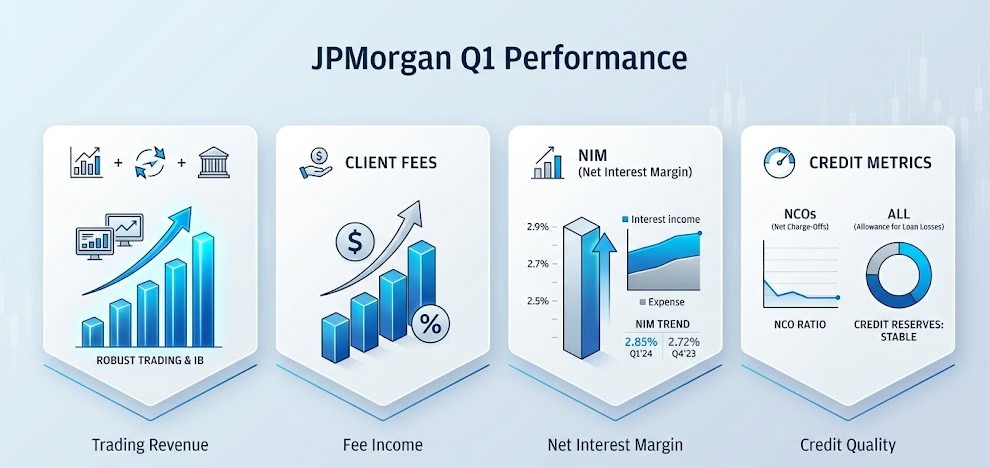
Investors will closely evaluate reported net interest margin (NIM) figures and management's outlook regarding funding costs and lending demand.
The sustainability of interest income growth remains a major factor in JPMorgan's valuation.
Capital Returns Could Influence Investor Sentiment
Capital return plans will also be under the spotlight.
If trading and investment banking operations deliver strong results, management could:
- Reaffirm dividend growth plans
- Expand share repurchase programs
- Signal confidence in future earnings power
However, if management adopts a more cautious stance on credit quality or consumer activity, expectations for buybacks could become more restrained.
Market Expectations and Analyst Views
Leading into the earnings release, analysts generally expect trading and investment banking operations to be the primary drivers of upside potential.
At the same time, Wall Street remains focused on broader macroeconomic concerns, including:
- Higher energy prices
- Persistent inflation
- Consumer spending fatigue
- Geopolitical uncertainty
Many analysts expect JPMorgan to outperform peers in trading revenue due to its scale and market share. However, they caution that consumer-facing metrics could weaken if elevated energy costs persist.
Key Takeaways for Investors
Investors should focus on several important areas when reviewing the earnings report:
1. Trading and Investment Banking Revenue
Strong results in these businesses could serve as the biggest catalyst for positive stock performance.
2. Credit Provisions and Loan Quality
Higher provisions may indicate growing consumer stress and could weigh on future earnings expectations.
3. Net Interest Margin Trends
Management commentary regarding deposit costs and loan growth will help determine whether interest income gains remain sustainable.
4. Capital Return Plans
Updates regarding dividends and share repurchases will provide insight into management's confidence in the business outlook.
5. Relative Competitive Position
JPMorgan’s scale and leadership in capital markets often position it more favorably than smaller regional banks during volatile market environments.
Conclusion
JPMorgan’s first-quarter earnings report will provide an important assessment of the resilience of U.S. bank earnings amid a challenging macroeconomic backdrop.
Strong trading and investment banking performance could drive earnings upside and support continued capital returns. However, investors must balance that optimism against signs of consumer pressure from rising energy costs and inflation, which could lead to higher provisions and slower fee growth.
For long-term investors, the report will offer valuable insight into the durability of JPMorgan’s diversified business model. Strength in wholesale banking operations would reinforce confidence in the franchise, while any meaningful deterioration in consumer credit metrics could warrant a more cautious outlook.
Ultimately, JPMorgan’s results are likely to influence not only its own stock performance but also broader sentiment toward the U.S. banking sector as investors evaluate the balance between market-driven revenue growth and consumer-related risks.
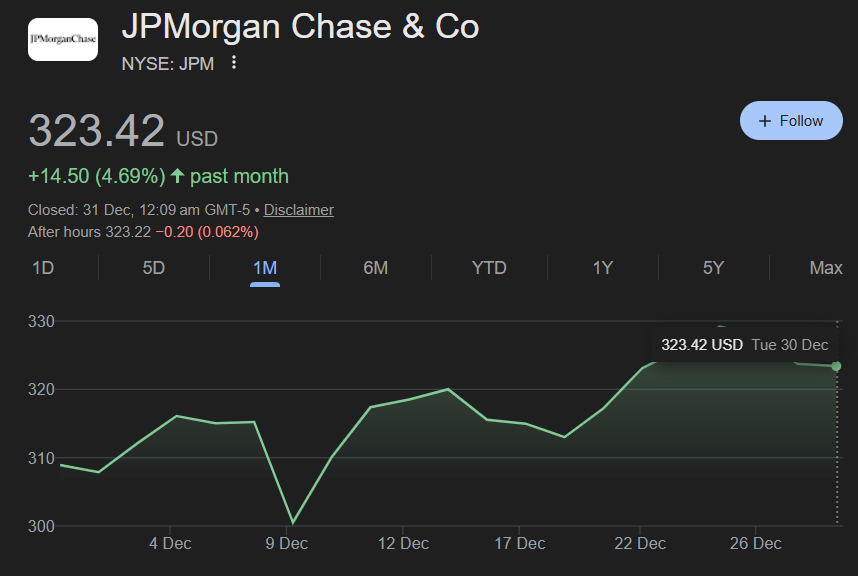
JPMorgan shares moved as investors anticipated that strong trading and investment banking revenue could offset pressure on consumers from higher energy costs, shaping expectations for earnings and credit provisions.