Leveraged ETFs: Should Investors Avoid Double- and Triple-Levered Funds?
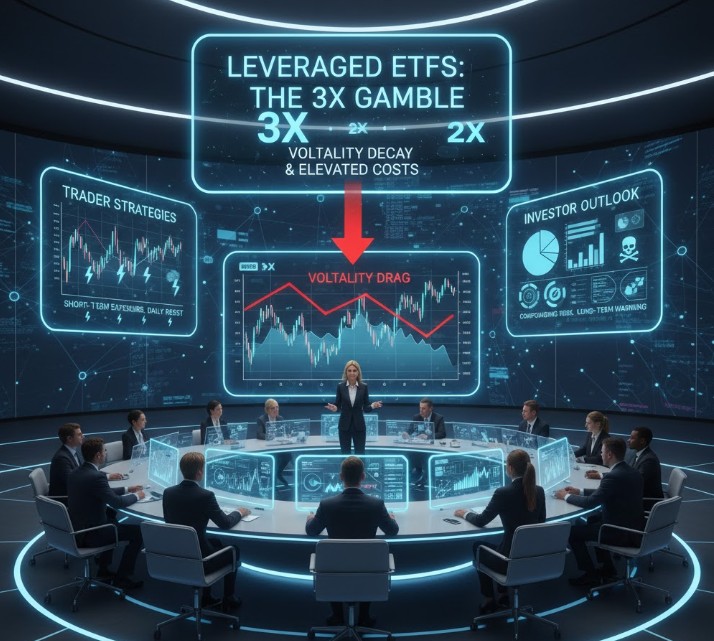
Leveraged ETFs: Powerful Trading Tools With Structural Risks
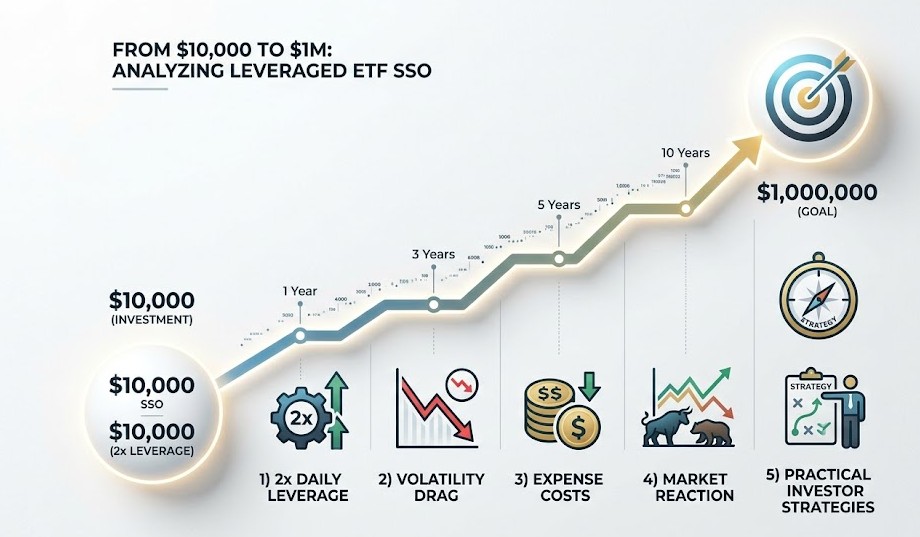
Leveraged exchange-traded funds (ETFs) promise investors the ability to capture two- or three-times the daily return of an index. However, that amplification comes with material risks that can erode gains over time.
For tactical traders, leveraged ETFs can deliver outsized short-term performance. For buy-and-hold investors, they often produce unexpected losses due to daily rebalancing, volatility decay and higher fees.
Product Structure and Industry Overview
Leveraged ETFs are offered by major ETF sponsors, including:
- ProShares
- Direxion
- Other specialized ETF issuers
These products are designed to provide 2x or 3x (and inverse) exposure to a benchmark on a daily basis.
They achieve this through:
- Futures contracts
- Swaps and total return swaps
- Frequent intraday rebalancing
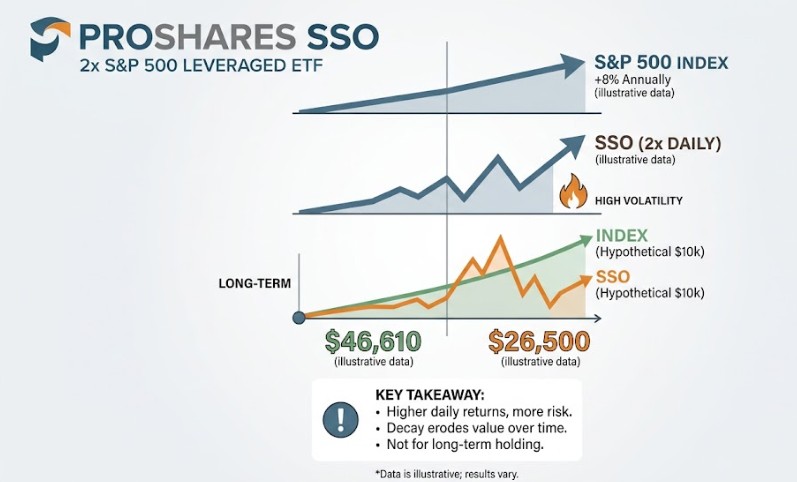
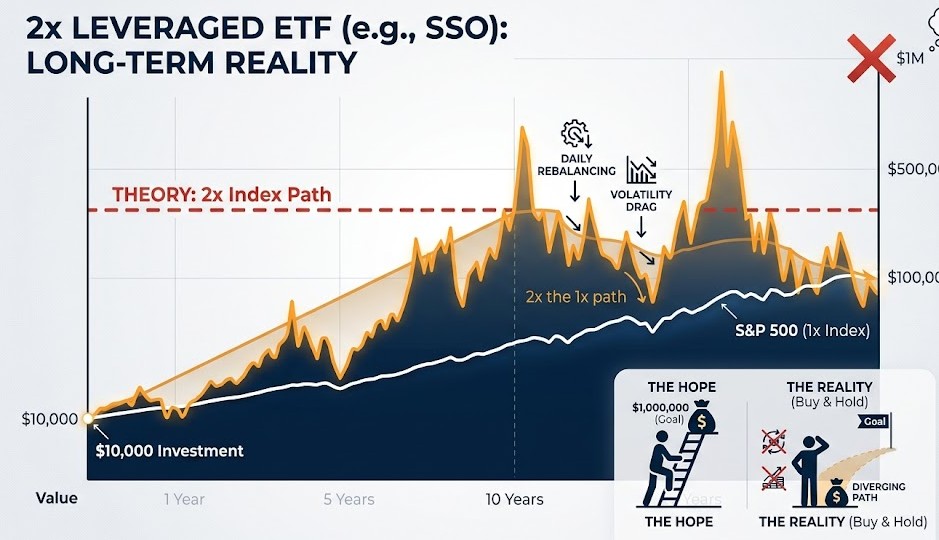
The headline appeal is straightforward: double or triple market moves. However, performance over periods longer than one trading day often diverges from 2x or 3x the underlying index return due to compounding effects.
Since gaining traction in the 2010s, assets under management in leveraged and inverse ETFs have climbed into the tens of billions of dollars. Demand has come from:
- Active traders
- Institutions hedging exposures
- Retail investors seeking amplified returns
Expense ratios are significantly higher than those of traditional index ETFs. Typical fees range from roughly 0.95% to 1.5% or more, reflecting derivative costs and active daily management.
Why Performance Diverges: Daily Reset and Volatility Drag
The central structural feature investors must understand is the daily reset mechanism.
Leveraged ETFs rebalance each day to maintain their target exposure. Gains and losses compound on a new base every morning.
Trending Markets
In strong, directional markets, compounding can amplify returns in the investor’s favor.
Volatile or Sideways Markets
In choppy markets, volatility drag can significantly erode returns relative to the expected multiple of cumulative index performance.
Illustrative Example
Assume:
- An index falls 5% on day one
- The index rises 5% on day two
- A leveraged ETF targets 2x daily exposure
Day one: the ETF declines roughly 10%.
Day two: it rises roughly 10%, but on a reduced base.
Even though the index finishes roughly flat across two days, the leveraged ETF ends below its starting value.
The higher the leverage multiple and the greater the volatility, the larger the long-term divergence.
Additional Structural Considerations
Beyond volatility drag, investors should account for:
1. Financing and Derivative Costs
Leveraged ETFs incur derivative-related costs and collateral management expenses, increasing their overall expense ratios.
2. Liquidity and Spreads
Bid-ask spreads can be wider, particularly in less actively traded leveraged funds.
3. Tax Implications
Active trading may generate short-term capital gains, increasing tax burdens for some investors.
Market Commentary and Professional Perspective
Market observers and sell-side analysts consistently advise that leveraged ETFs are best suited for:
- Short-term tactical trades
- Hedging strategies
- Intraday or multi-day directional views
Financial advisors emphasize investor education:
- Read the prospectus
- Understand daily reset mechanics
- Stress-test performance under different volatility regimes
Some portfolio managers use leveraged ETFs tactically to gain exposure without using margin accounts or futures contracts, citing operational simplicity. Others caution that retail investors may misunderstand the compounding math and misapply these products as long-term investments.
What This Means for Investors: Actionable Guidelines
1. Limit Holding Period
Use leveraged ETFs for short horizons intraday to several days unless actively rebalancing daily.
2. Manage Position Size
Keep allocations small relative to overall portfolio size and implement defined stop-loss or profit-target rules.
3. Compare Alternatives
Experienced traders may evaluate options, futures or margin strategies and compare total costs, including spreads and financing.
4. Understand the Mechanics
Review the prospectus carefully, including:
- Daily reset methodology
- Collateral management
- Worst-case volatility scenarios
Simulate performance under volatile and flat markets before allocating capital.
5. Plan for Taxes and Liquidity
Expect higher turnover, possible short-term capital gains and ensure liquidity for timely adjustments.
Professional Conclusion and Forward-Looking Perspective
Leveraged ETFs occupy a legitimate niche in modern markets as efficient, exchange-traded vehicles for magnified exposure when used properly.
However, their structural design makes them unsuitable as passive, long-term holdings for most retail investors.
As volatility remains a key determinant of leveraged ETF performance, investors should treat these instruments as trading tools, not core portfolio building blocks.
Regulators and advisors are likely to continue emphasizing transparency and investor education. For disciplined traders who understand compounding dynamics, manage position size and account for higher fees, leveraged ETFs can serve as effective tactical instruments. For long-term exposure, conventional ETFs, futures or options may offer more predictable outcomes.
The growing interest in leveraged ETFs has brought increased regulatory and advisory scrutiny, with experts emphasizing that daily reset mechanics and volatility drag make them risky as long-term holdings.