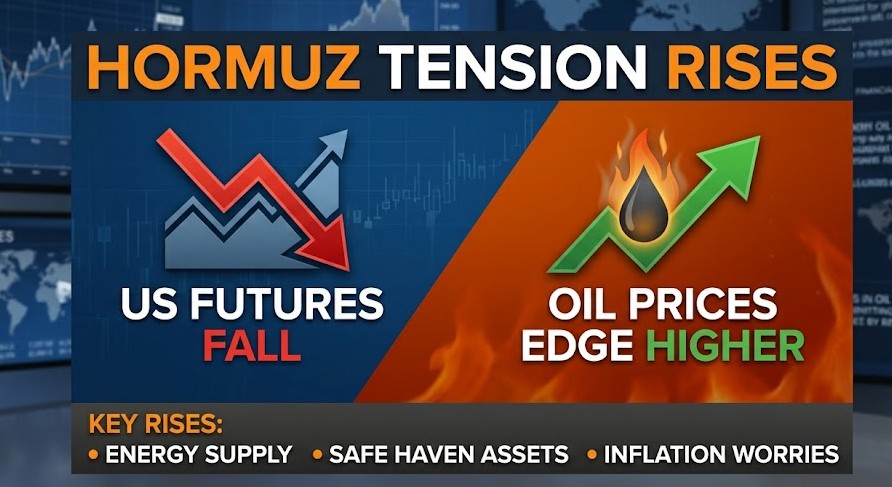
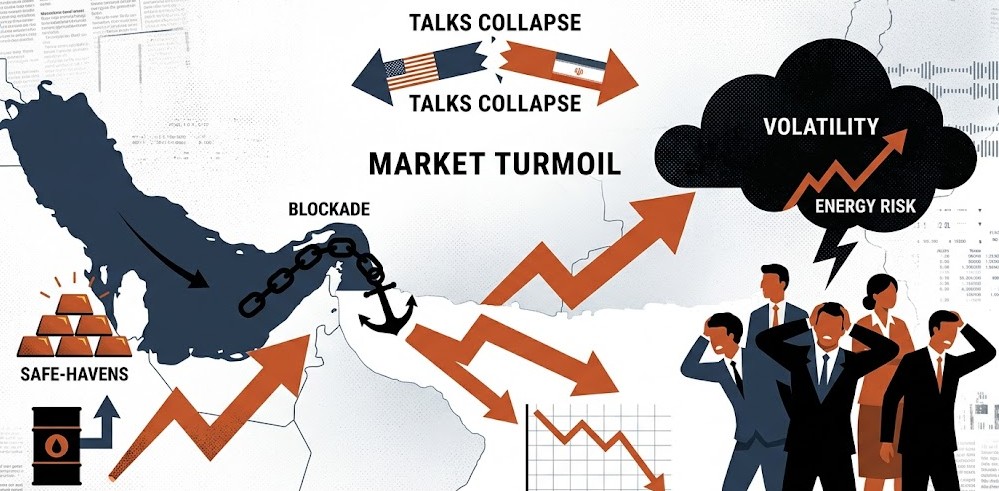
Markets Rally as Futures Jump on Report of U.S. Iran Peace Offer

Stock futures jumped early Wednesday after The New York Times reported that the U.S. had offered Iran a peace deal, a development that briefly reduced one of the market’s key geopolitical risk factors.
The move lifted major index futures and prompted a broad risk-on sentiment across equities, commodities and foreign exchange markets.
Background and recent performance
The SPDR S&P 500 ETF Trust (SPY) tracks the S&P 500 Index, making it a widely used proxy for broad U.S. equity market performance among institutional and retail investors.
The U.S. equity market has been navigating a mix of tighter monetary policy, sticky inflation readings and intermittent geopolitical shocks this year, producing periods of heightened volatility and cautious positioning.
Against that backdrop, drivers such as interest-rate expectations, corporate earnings and overseas risks particularly in the Middle East have been primary influences on price action.
Analysis of the news event
The New York Times report acted as a catalyst by signaling a potential de-escalation in a region that has repeatedly injected uncertainty into markets.
Geopolitical tensions typically pressure energy prices, lift safe-haven assets such as gold and U.S. Treasuries, and drive wider risk premia for equities.
A credible diplomatic opening reduces the probability of supply disruptions and military escalation, which in turn lowers risk premia and encourages profit-taking in defensive assets while boosting demand for cyclically exposed stocks.
Market mechanisms amplified the move. Futures markets, which price expected opening moves, can react quickly to breaking geopolitical headlines because they allow market participants to reposition ahead of cash-market trading.
When headline risk softens, leverage and momentum-driven flows in futures and ETF products often accelerate the initial move, creating outsized intraday swings relative to the underlying fundamentals.
Market reaction and analyst commentary
The immediate market reaction was typical of a risk-on episode: major index futures advanced and oil prices softened on the expectation that supply risk may be diminished.
Safe-haven instruments, including government bonds and gold, gave back some of the earlier gains as investors rotated back into equities.
Market strategists noted that while the headline reduced a key near-term risk, investors should view the development in context of a broader macro landscape that still includes inflation dynamics and central-bank policy tightening.
Analysts emphasized that headlines can be transitory. Even credible diplomatic steps can be followed by periods of negotiation, false starts or new flashpoints.
As a result, tactical traders may respond quickly to reduced risk, but longer-term portfolio decisions should weigh fundamentals such as earnings growth, margins and interest-rate trajectories—alongside any diplomatic progress.
What this means for investors (actionable insights)
- Reassess near-term positioning: Investors with significant defensive allocations tied to geopolitical risk may consider incremental re-risking if the diplomatic report holds up and oil prices remain stable. Rebalancing toward cyclicals or small caps could be appropriate for those with higher risk tolerance.
- Preserve hedges for tail risks: Maintain cost-effective downside protection such as options collars, modest put positions or fixed-income duration hedges because geopolitical developments can reverse quickly.
- Monitor inflation and yield signals: A genuine easing of geopolitical risk that reduces oil-price volatility can exert downward pressure on inflation expectations, which would influence Fed policy expectations and equity valuations.
- Focus on fundamentals: For longer-term investors, core decisions should continue to be driven by company-level earnings prospects, cash flows and valuation, rather than headline-driven trading alone.
Conclusion and forward-looking perspective
The NYT report offered a near-term reprieve from one of the markets’ principal external risk factors and provided a favorable backdrop for risk assets.
However, investors should treat the development as part of a shifting mosaic rather than a permanent removal of geopolitical risk.
Markets will continue to price incoming economic data, central-bank commentary and corporate earnings alongside any diplomatic progress.
For now, a cautious, process-driven approach combining selective re-risking with preserved downside protection aligns with the prevailing uncertainty while allowing investors to capture upside if the détente persists.
Stock futures jumped after The New York Times reported the U.S. had offered Iran a peace deal, easing geopolitical risk and boosting investor risk appetite.