Markets Slip as US-Iran Talks Fail, Hormuz Blockade Raises Risk

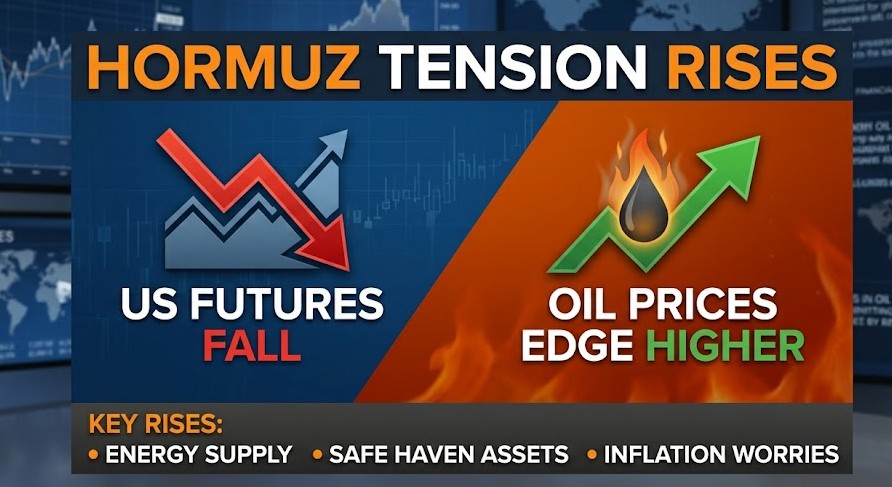
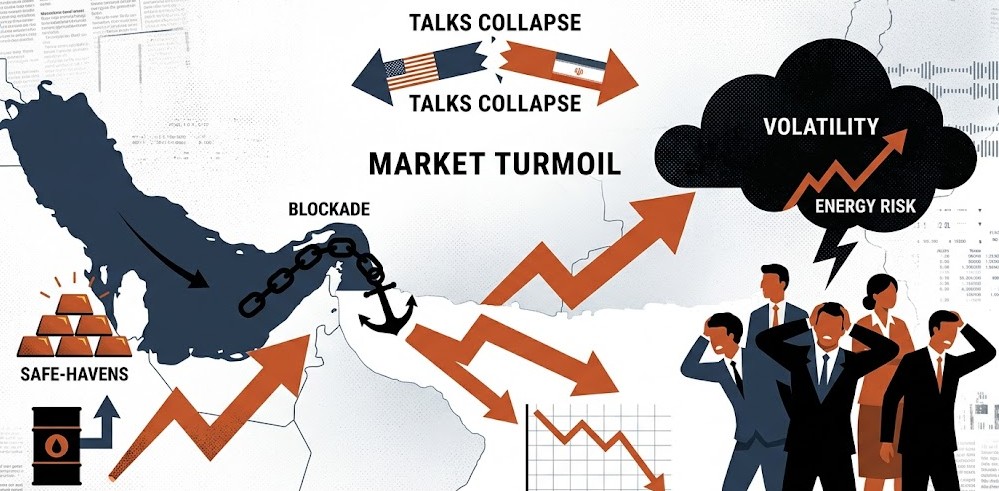
Markets opened cautiously as futures on the Dow, S&P 500, and Nasdaq moved lower after U.S.-Iran negotiations failed and the United States announced a blockade of the Strait of Hormuz, raising concerns about oil supply disruptions and broader geopolitical risk. The developments pushed investors toward safer assets while pressuring risk-sensitive sectors ahead of the trading week.
Background and Recent Market Performance
The S&P 500 had been trading near multi-month highs earlier this month as investors responded positively to moderating inflation data and resilient corporate earnings.
However, equity markets remain highly sensitive to macroeconomic and geopolitical shocks. Historically, tensions in the Middle East have triggered higher Volatility" title="More analysis on Market Volatility">market volatility, rising oil prices, and broader risk repricing across equities, currencies, and fixed-income markets.
Analysis of the Current Situation
The latest market reaction followed reports that negotiations between U.S. and Iranian officials collapsed over unresolved security and operational disputes.
The subsequent U.S. decision to establish a naval blockade around the Strait of Hormuz significantly increased fears of potential shipping disruptions. The Strait remains one of the world’s most important energy chokepoints, historically handling roughly one-fifth of global seaborne crude exports.
When geopolitical risks escalate at this scale, investors typically shift capital toward defensive assets such as U.S. Treasuries, gold, and the U.S. dollar while reducing exposure to cyclical and growth-oriented sectors.
Energy and Commodity Market Implications
The clearest economic transmission channel is through global energy markets.
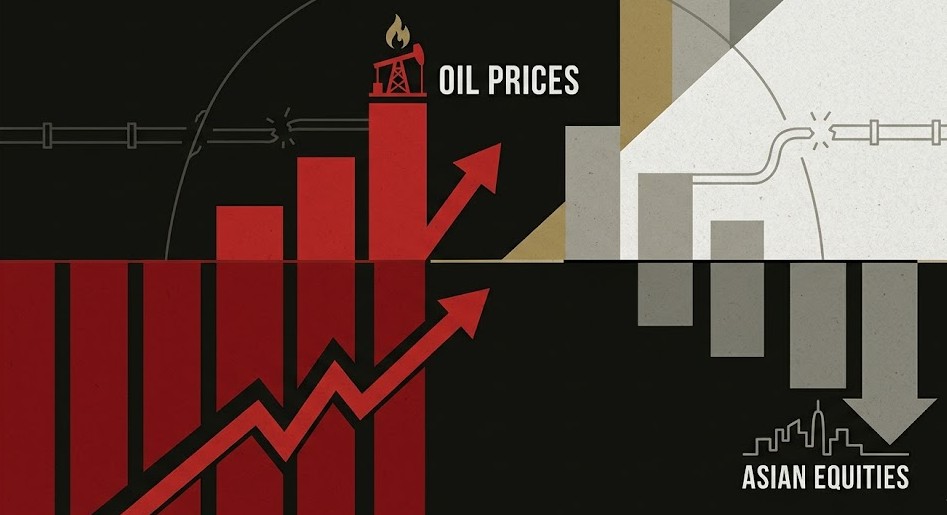
Even the possibility of disruptions in the Strait of Hormuz tends to push Brent and WTI crude prices higher, increasing costs for transportation, manufacturing, and consumer-related industries.
At the same time, higher oil prices generally support energy producers, oil services firms, and select commodity-linked companies.
This environment often creates wider performance gaps across sectors, with energy and defense stocks outperforming while growth-sensitive industries face pressure.
Market Reaction and Analyst Commentary
Equity futures declined ahead of the U.S. market open as investors recalibrated portfolio risk exposure.
Premarket trading showed strength concentrated in energy shares, while broader market breadth weakened. Fixed-income markets also reflected a defensive shift, with safe-haven demand supporting long-dated Treasury bonds and the U.S. dollar.
Market strategists advised clients to monitor crude oil spreads, tanker insurance costs, and shipping-related risk premiums for signs of further escalation.
Volatility indicators and credit spreads also moved higher as traders adjusted positioning for increased geopolitical uncertainty.
What This Means for Investors
Investors should reassess exposure to highly cyclical sectors and momentum-driven growth stocks, which are often vulnerable to spikes in energy costs and market volatility.
Quality-focused equities with strong balance sheets, stable cash flow generation, and pricing power are generally better positioned during periods of elevated uncertainty.
Tactical hedges such as gold, Treasury exposure, or options-based protection may help reduce downside portfolio risk if volatility continues rising.
Energy and defense sectors may also present selective opportunities if geopolitical tensions remain elevated, although investors should remain disciplined regarding valuations and risk management.
Risk Management and Monitoring
Several key indicators are worth monitoring closely in the coming days:
- Oil futures and crude spreads
- Shipping insurance and war-risk premiums
- Treasury yields
- Credit spreads
- The VIX volatility index
- Diplomatic developments and shipping activity near Hormuz
Short-term traders may find opportunities in increased volatility, while long-term investors should avoid emotional portfolio changes based solely on headlines unless conditions materially worsen.
Scenario Analysis
If shipping disruptions intensify, oil prices could spike further, potentially lifting inflation expectations and increasing downside pressure on global equities. Energy and defense sectors would likely benefit most under this scenario.
If diplomatic channels reopen and shipping routes remain operational, markets could stabilize relatively quickly, allowing investor focus to return to corporate earnings, economic growth, and monetary policy.
Markets often experience sharp short-term reactions to geopolitical events, followed by partial recoveries if escalation is contained.
Corporate and Economic Impact
The broader impact on corporate earnings will depend largely on the duration of elevated energy prices.
Companies with limited pricing power may face margin pressure from higher transportation and input costs, particularly in sectors such as airlines, industrials, and consumer discretionary.
Conversely, integrated energy companies and some industrial suppliers could benefit from stronger commodity pricing and improved revenue conditions.
Central banks are also likely to monitor energy-driven inflation closely, although broader monetary policy decisions will still depend primarily on labor market conditions and core inflation trends.
Practical Investor Checklist
- Review stop-loss levels and portfolio concentration risks
- Maintain adequate liquidity or cash reserves
- Consider selective exposure to energy and defensive sectors
- Avoid large reactive portfolio shifts based on short-term headlines
- Use disciplined, rule-based rebalancing strategies
Conclusion and Forward Looking Perspective
The collapse of U.S.-Iran negotiations and the blockade of the Strait of Hormuz have significantly increased geopolitical uncertainty and market volatility.
In the near term, markets are favoring defensive assets and energy-linked equities while reducing exposure to growth-oriented and cyclical sectors.
For investors, the most effective response remains disciplined risk management, maintaining portfolio flexibility, and monitoring developments in energy markets and diplomatic negotiations closely.
The market outlook will ultimately depend on whether tensions escalate further or whether diplomatic channels reopen and stabilize global shipping routes and energy supply expectations.