Nvidia Leads Earnings Week as Investors Weigh Tariffs, Outlook

Stock Futures Steady as Markets Brace for Heavy Earnings Week; Nvidia in Focus
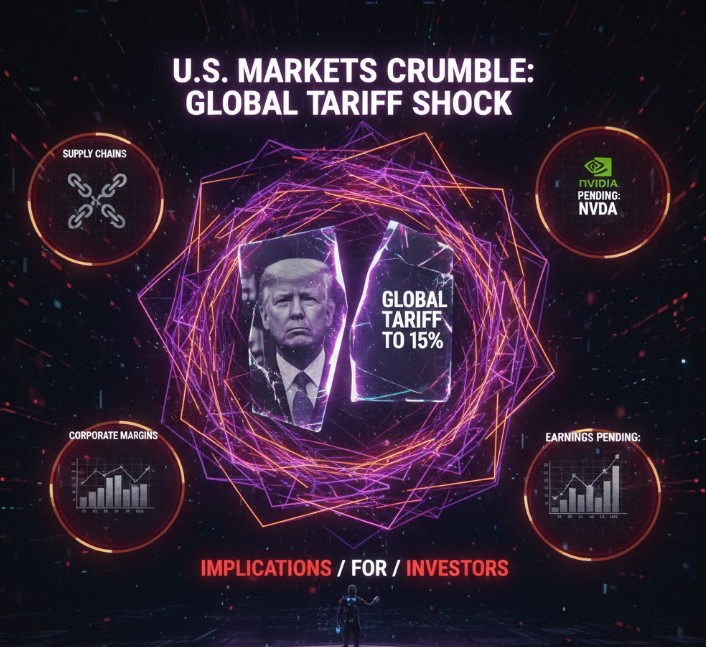
Stock futures traded little changed as investors prepared for a heavy corporate calendar and digested renewed concerns about tariffs that could reshape global supply chains.
Nvidia, the world’s most valuable company and a bellwether for the semiconductor industry, is among 55 S&P 500 firms slated to report earnings this week, making its results and guidance central to overall market direction.
Company Background and Recent Performance
Nvidia has become the dominant force in graphics processing units and artificial intelligence accelerators, powering:
- Data-center workloads
- Generative-AI applications
- Advanced gaming graphics
The company’s revenue mix has shifted dramatically toward data-center products over the past several quarters, driving outsized gains for the stock and positioning the firm as a core holding for technology-focused investors.
After a multi-year rally that propelled Nvidia to the top of global market-cap rankings, traders now view its earnings cadence and forward guidance as primary inputs into broader equity risk appetite.
Context: Why This Week Matters
The immediate market backdrop is shaped by two factors:
1. Crowded Earnings Slate
With 55 S&P 500 companies reporting, investors are parsing corporate-specific details for signs of demand resilience or weakness.
2. Renewed Tariff Attention
Talk of tariffs whether targeted measures affecting technology exports or broader trade friction introduces macro and geopolitical uncertainty that could influence:
- Global supply chains
- Customer access in key markets
- Chip pricing dynamics
For Nvidia specifically, any policy that constrains cross-border sales of high-end chips or complicates manufacturing inputs would materially affect revenue and margin forecasts.
Detailed Analysis and Implications
Nvidia’s upcoming report will be judged on two primary vectors:
Current-Quarter Performance
Investors will focus on:
- Revenue growth in the data-center segment
- Gross-margin trends reflecting product mix and yield improvements
- Commentary on order cadence from hyperscalers and enterprise customers
Forward Guidance
Guidance signaling continued strength in AI-related demand would likely reinforce the bull case and support elevated valuation multiples.
However, cautious language particularly referencing:
- Access constraints in foreign markets
- Inventory digestion
- Order push-outs
— could prompt rapid re-pricing, given Nvidia’s heavy weighting in both passive and active growth portfolios.
Tariffs and Supply-Chain Considerations
Tariff concerns add another layer of uncertainty, as semiconductors sit at the intersection of:
- Advanced manufacturing
- Intellectual-property controls
- International trade policy
Potential policy actions could:
- Restrict exports of high-performance chips
- Complicate assembly and testing processes
- Lengthen sales cycles
- Force system redesigns by customers
Even the prospect of tighter controls increases discounting risk and intensifies scrutiny of Nvidia’s regional revenue exposure.
Investors should weigh both the probability and timeline of potential policy changes when evaluating valuation sensitivity.
Market Reaction and Analyst View
Market participants initially responded with muted futures action reflecting cautious positioning ahead of potential earnings surprises.
Equity strategists and sell-side analysts are expected to focus on:
- Nvidia’s pricing power in AI workloads
- Sustainability of capital expenditure among cloud providers
While some analysts emphasize upside from continued AI adoption, others warn that forward multiples already price in aggressive growth, increasing sensitivity to any downward revisions or execution missteps.
What This Means for Investors: Actionable Takeaways
1. Prioritize Guidance and Customer Commentary
Pay close attention to management’s language on hyperscaler demand, enterprise adoption rates, and any mention of order delays or regulatory restrictions.
2. Monitor Data-Center Gross Margins
Margin expansion or contraction will signal whether high-end GPU pricing and product mix remain supportive of current valuations.
3. Use Options to Manage Risk
Given the potential for sharp post-earnings moves, defined-risk strategies such as collars or spreads may offer more controlled exposure than outright long positions ahead of results.
4. Reassess Regional Revenue Exposure
Investors with concentrated technology holdings should quantify exposure to regions potentially affected by tariff measures and adjust portfolio risk accordingly.
Key Risks and Upside Catalysts
Downside Risks
- Weaker-than-expected AI demand
- Margin pressure from rising component or logistics costs
- Concrete policy actions limiting Nvidia’s addressable market
Upside Catalysts
- Faster enterprise AI adoption than modeled
- Successful new product ramps
- Reduced or clarified trade-policy risk
Given these binary outcomes, disciplined position sizing and risk management are essential.
Conclusion and Forward-Looking Perspective
This week’s earnings and Nvidia’s commentary in particular will serve as a crucial signal for both the semiconductor sector and the broader market’s appetite for growth stocks.
With 55 S&P 500 companies reporting, investors will analyze results for evidence of durable demand versus transitory headwinds.
For Nvidia, the balance between robust AI-driven growth and potential policy-related constraints will determine near-term trajectory. Investors should focus on forward guidance, margin dynamics, and explicit discussion of trade implications to guide position adjustments in the coming weeks.
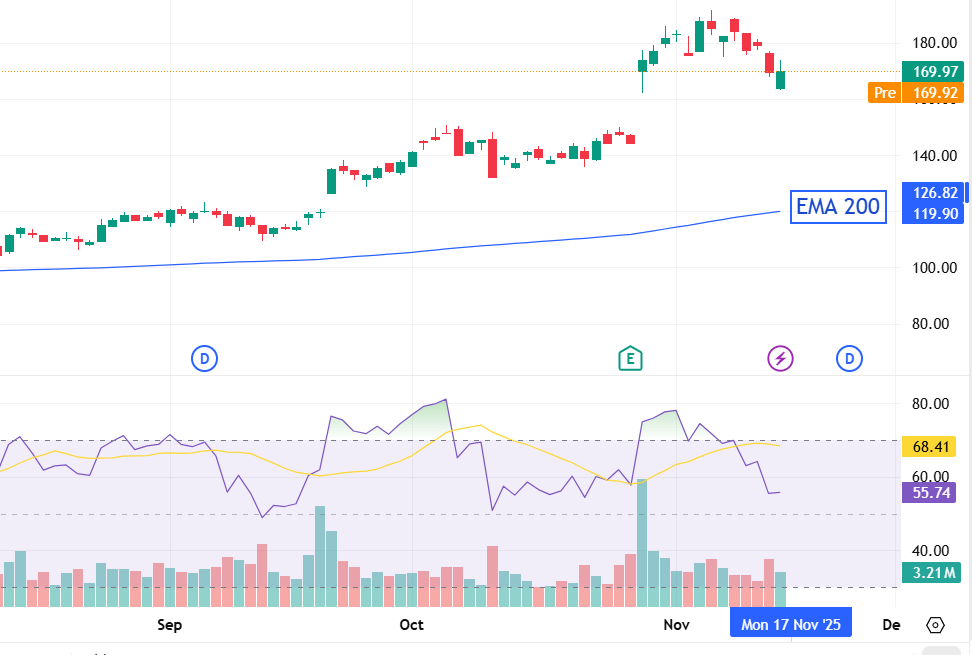
Nvidia shares moved modestly as investors weighed strong AI-driven demand expectations against tariff-related supply-chain and market-access risks ahead of a heavy earnings week.