Oil Jumps After U.S.-Iran Talks Collapse; Asian Stocks Fall Today
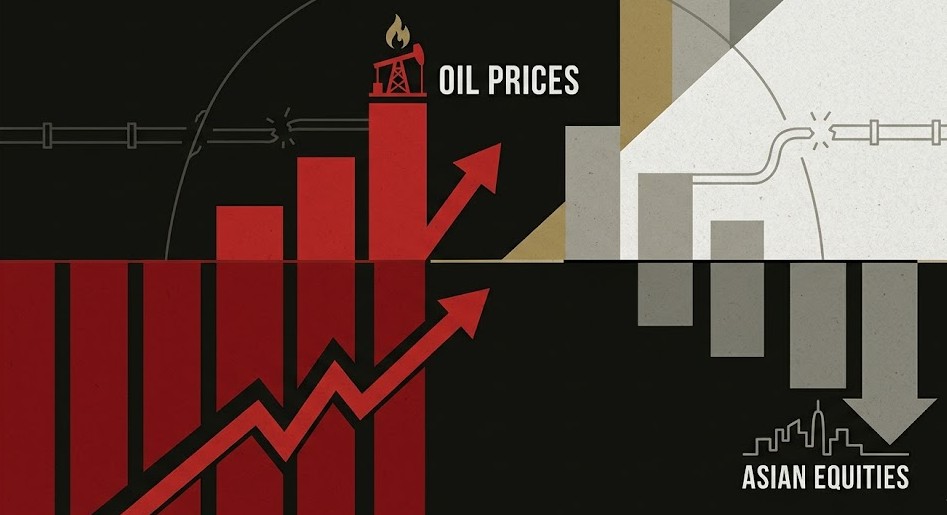
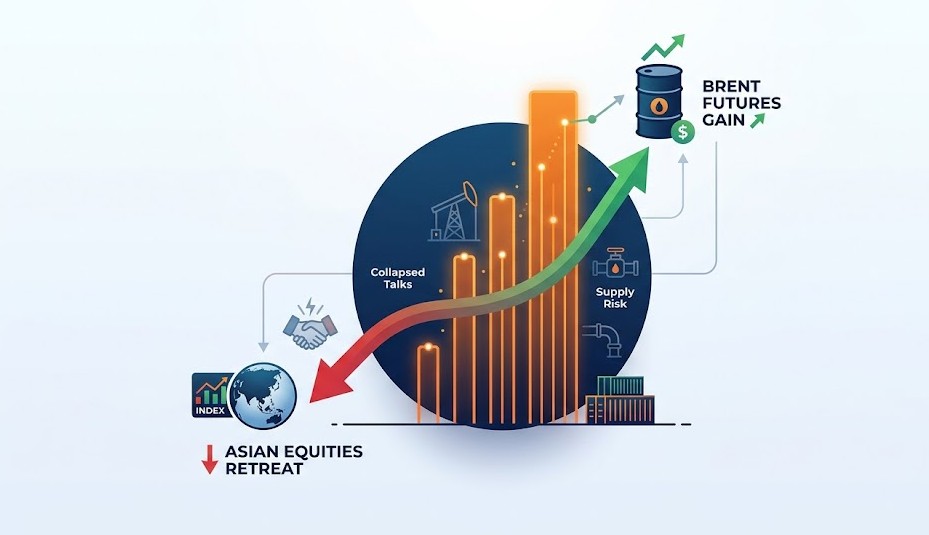
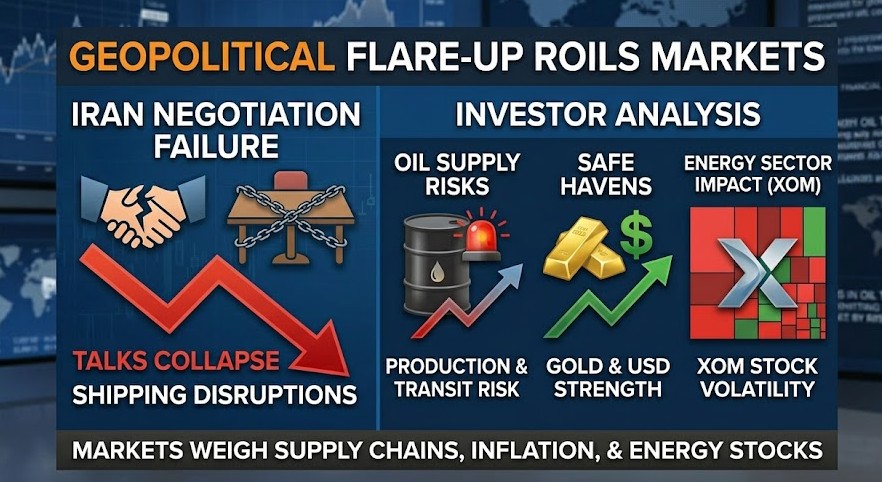
Oil prices climbed and Asian equities slipped after U.S.-Iran peace talks collapsed over the weekend, reviving concerns about crude supply disruptions and the potential escalation of conflict in the Middle East.
The deterioration in diplomatic prospects tightened risk sentiment across energy and regional markets, prompting investors to reprice geopolitical premiums into oil and risk assets.
Market reaction and immediate impact
The immediate market move centered on crude. Traders pushed benchmarks higher as concerns that renewed hostilities or targeted supply disruptions could cut exports outweighed cooling demand signals.
Energy futures have historically reacted quickly to geopolitical developments in the Gulf region because the area supplies a meaningful share of seaborne crude; any hint of disrupted flows prompts immediate risk premia rebuilding in prices.
Although the headline involved sovereign diplomacy rather than a corporate actor, the implications are most direct for global energy producers and integrated oil majors that dominate trade flows and storage dynamics.
Companies with exposure to physical crude, refining margins and shipping logistics particularly names in the U.S. and Europe face a near-term environment of wider price volatility and potential shipping and insurance cost increases.
Impact on Asian equities
For Asian markets, the deterioration in talks with Iran injected a risk-off tone.
Regional equity indexes, which had been buoyed earlier by supportive monetary signals and improving growth data in parts of the region, turned lower as investors rotated out of cyclical and export-oriented shares into perceived safe havens.
Banks, travel and industrial sectors often suffer in such episodes as trade routes and fuel costs become less certain.
Analyst perspective and market dynamics
Analysts said the price action reflects a classic geopolitics-driven reallocation rather than a fundamental demand shock.
“This is a reassessment of premium for supply risk,” said an oil strategist at a major brokerage, noting that inventory buffers and OPEC+ production remain central to how long the price re-rating lasts.
Market participants will monitor tanker flows, insurance notices and any military escalation indicators closely to assess the durability of the move.
Cross-asset market response
Market reaction beyond energy was measured but notable.
Safe-haven assets such as government bonds and the dollar typically gain when geopolitical risk rises, while equity volatility spikes.
Asian equity indices recorded declines as investors pared exposure; regional bond yields mostly fell on safe-haven flows, compressing yields by several basis points in the most affected markets during intra-day trading.
What this means for investors
First, volatility in oil presents both risk and trading opportunity: commodity-sensitive equity exposure can lead to outsized moves in sectors such as energy, travel and heavy industry.
Second, portfolio diversification into quality fixed income or defensive sectors can provide a cushion during geopolitical spikes.
Third, active monitoring of supply indicators such as tanker tracking, port closures and sanctions developments can offer leading information useful for timing tactical moves.
Structural implications
Longer-term, the episode highlights persistent structural risks in oil markets tied to geopolitics.
Even as global demand growth has slowed relative to prior years, supply concentration in geopolitically sensitive regions keeps prices susceptible to sudden shifts.
Companies with flexible production profiles, diversified customer bases and robust hedging programs will generally be better positioned to manage episodic price swings.
Additional investor considerations
Investors in regional equities should also weigh currency and interest rate implications.
A stronger dollar and lower regional yields often accompany risk-off episodes, which can exacerbate capital outflows from emerging market equities.
Active managers frequently use derivative overlays or dynamic hedging to manage such cross-asset risks during heightened tensions.
Conclusion
The collapse of U.S.-Iran peace talks has temporarily elevated geopolitical risk and pushed oil prices higher while prompting a pullback in Asian equities.
The near-term path for markets will depend on whether the diplomatic setback leads to tangible disruptions in crude flows or military escalation.
For now, investors should expect greater volatility, keep an eye on physical supply signals and consider defensive positioning or tactical hedges until clarity around the diplomatic trajectory improves.