Palantir (PLTR) Poised to Outperform S&P 500 by 2027, Analysts Say

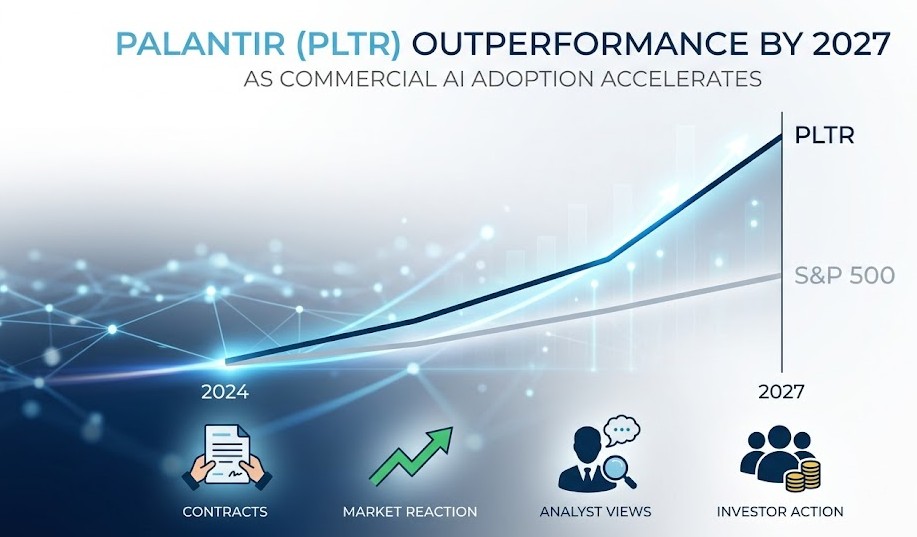
Palantir+Technologies" title="More analysis on Palantir Technologies">Palantir Technologies (PLTR) has emerged from a broad AI-driven selloff as a candidate to outperform the S&P 500 by 2027, as investors reassess durable revenue streams and improving unit economics. The shift in sentiment is notable because Palantir combines stable government contracts with a growing commercial AI business, potentially turning near-term volatility into long-term gains.
Company Background and Recent Performance
Founded in 2003, Palantir develops data integration and analytics platforms used by government and enterprise clients for intelligence, defense, and operational decision-making. The company went public in 2020 and has since transitioned from a high-growth, unprofitable model to one focused on margin expansion and recurring revenue.
Palantir’s revenue has historically been driven by government contracts, which provide long-term visibility and stability. Its commercial segment, while more volatile, offers higher growth potential. In recent quarters, the company has emphasized innovation through its Foundry and Gotham platforms while expanding its commercial AI deployment efforts.
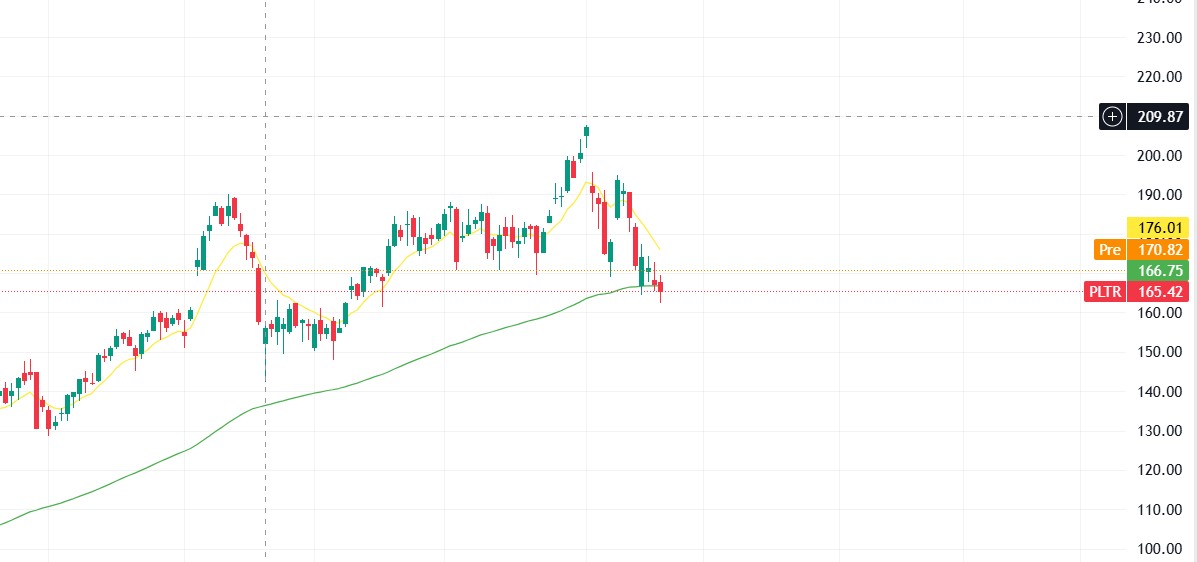
This strategic shift has occurred alongside a broader selloff in technology and AI stocks, which pressured Palantir’s valuation despite improvements in customer retention and upselling.
Analysis of the Current Narrative Shift
The view that Palantir could outperform the S&P 500 by 2027 reflects a broader reassessment of companies previously penalized for AI-driven growth narratives. During risk-off periods, Palantir was treated as a speculative AI play, leading to valuation compression.
The current reassessment is built on three key factors.
First, the durability of government contracts provides predictable, multi-year revenue streams that reduce downside risk and offer a stable foundation for growth.
Second, Palantir’s platforms are highly scalable. Additional deployments and modules can significantly increase revenue per customer without proportional increases in costs, improving lifetime value and operational efficiency.
Third, management’s focus on cost discipline and free cash flow generation signals a shift toward sustainable profitability rather than aggressive growth at any cost.
Market Reaction and Analyst Commentary
Investor sentiment has begun to improve, with renewed interest in Palantir as capital rotates back into companies with clear revenue models and monetization pathways.
Some analysts remain cautious, citing valuation concerns, customer concentration risks, and competition from major cloud providers and AI-focused firms. Others have taken a more constructive stance, pointing to improving gross margins, stronger contract pipelines, and increased deal sizes in the commercial segment.
Supporters of the stock highlight an improving risk-reward profile, where downside is supported by government revenue while upside depends on successful commercialization of AI products at scale.
Key Factors for Investors
The investment case for Palantir depends on execution. Investors should closely monitor contract renewals in the government segment, growth in commercial deal sizes, and the company’s ability to convert pilot programs into full enterprise deployments.
Free cash flow generation and margin expansion will be critical indicators of long-term sustainability. These factors will determine whether the company can justify higher valuation multiples over time.
Strategy and Risk Considerations
Investors should align exposure with their time horizon. Long-term investors may view recent weakness as an entry opportunity, while short-term traders should be prepared for continued volatility.
Position sizing is important given execution risks and competitive pressures. Allocating a portion of a growth-focused portfolio rather than concentrating exposure can help manage downside risk.
A phased investment approach may also be effective, allowing investors to build positions gradually as the company demonstrates consistent operational progress.
Outlook and Forward Perspective
Palantir’s potential to outperform the broader market by 2027 depends less on speculative AI enthusiasm and more on steady improvements in commercialization and profitability.
The company’s government business provides a stable base, while expanding enterprise AI adoption offers a pathway to incremental growth. If Palantir can sustain strong commercial bookings growth and continue improving operating margins, it may benefit from valuation expansion.
However, failure to execute on these fronts could result in continued volatility and limited upside.
Conclusion
Palantir’s recent recovery reflects a shift in investor focus from speculative AI narratives to tangible revenue, profitability, and scalability. The company remains well positioned strategically, but its long-term success depends on converting AI capabilities into consistent revenue growth and margin improvement.
The earlier selloff highlighted market skepticism, while the current rebound underscores renewed confidence in Palantir’s stable government revenue and growing commercial AI opportunity.