Presidents Day Market Pause: Rotation From Software to Energy
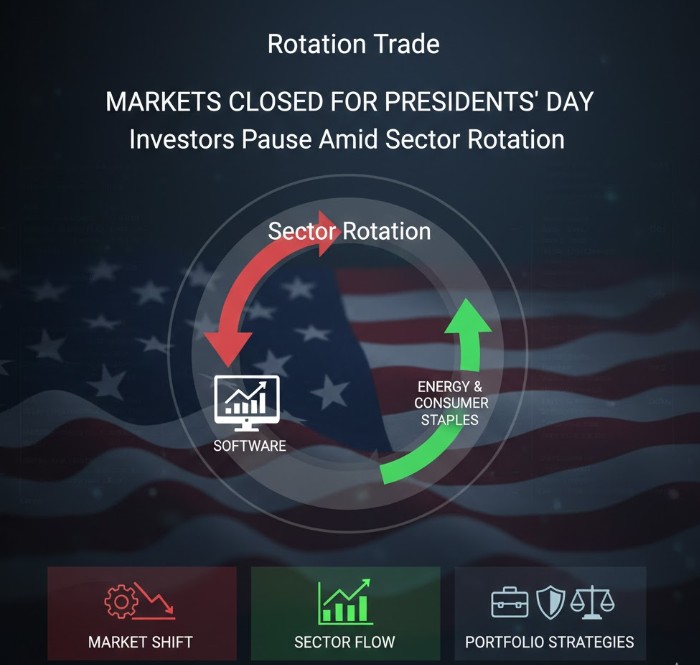
U.S. equity markets are closed for Presidents Day, giving investors a one-day pause from the recent rotation that sent money out of software and into energy and consumer staples. That break matters because the selling in high-growth technology names driven largely by concerns over artificial intelligence’s disruptive effects on margins and business models has created heightened sector volatility and broad re-pricing across the market.
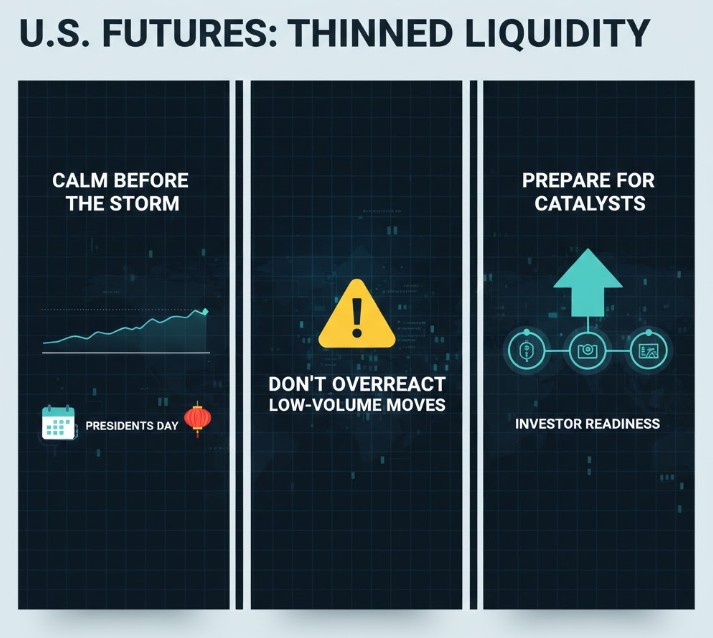
The holiday closure is straightforward: the New York Stock Exchange and Nasdaq will not trade on Presidents Day, while some futures and international markets remain active. For investors, this is a scheduled pause rather than a shock-triggered halt, but the timing arrives amid a notable shift in market leadership.
Over recent sessions, traders rotated capital away from software and other growth-heavy pockets and increased allocations to energy and consumer staples, seeking earnings stability and cash flow predictability.
Sector Background and Recent Performance
Although no single company drives this broader move, software names collectively accounted for outsized gains in prior years and have subsequently borne the brunt of recent profit-taking. The Information Technology sector registered some of the highest valuation multiples across the S&P 500 as investors priced long-term growth into software platforms and AI-related businesses.
Conversely, energy and consumer staples stocks have lagged in headline performance but now attract investors seeking dividend yields and earnings resilience amid macro uncertainty.
The compression of multiples in software has been accompanied by rising interest in sectors with stronger near-term cash flows. Energy companies have benefited from higher commodity prices and stronger shareholder returns, while consumer staples appeal as defensive holdings that can dampen portfolio volatility during a potential technology-led re-rating.
For many portfolio managers, the rotation is less about a single earnings report and more about recalibrating risk exposures as AI reshapes competitive dynamics.
What Is Driving the Rotation?
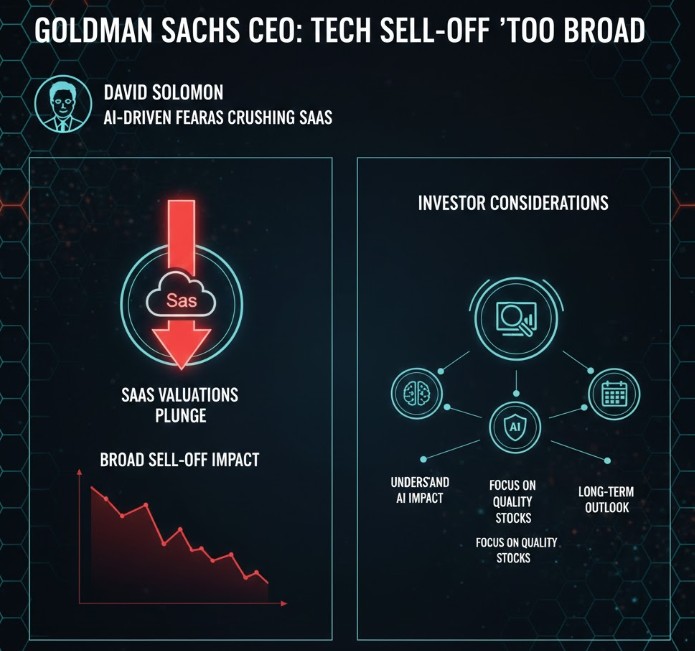
The core driver behind the recent selling pressure in software is investor concern that accelerated adoption of artificial intelligence could reshape revenue models and margin structures faster than companies can adapt.
For some software firms, AI presents a revenue opportunity. For others, it introduces competitive threats that could compress pricing power or increase R&D spending. That uneven impact has led investors to reassess which software names deserve premium valuations.
Institutional flows amplify these moves. When hedge funds and mutual funds rebalance, they often reduce positions that appear overvalued and redeploy capital into sectors offering immediate earnings visibility. Energy and consumer staples perceived respectively as cyclical cash generators and defensive income plays have benefited from this reallocation.
The holiday break means these positioning changes are largely set before markets reopen, leaving limited intraday liquidity to absorb additional reallocations when trading resumes.
ETFs, Derivatives, and Liquidity Effects
Derivative and ETF activity has magnified the rotation. Sector ETFs such as XLK (technology), XLE (energy), and XLP (consumer staples) have become focal points for reallocations. ETF flows and futures positioning can accelerate moves when headline risk emerges.
Options markets reflect heightened uncertainty: implied volatility for many software names has ticked up, increasing the cost of hedging and prompting some investors to prefer ETF exposure for sector bets. This dynamic can widen bid-ask spreads and amplify price swings, particularly in the first sessions after a holiday when liquidity is thinner.
Corporate Catalysts Ahead
Upcoming earnings and forward guidance will determine whether the rotation persists.
- Companies demonstrating accelerating revenue growth and positive free cash flow alongside clear monetization of AI investments are more likely to regain investor favor.
- Firms unable to defend margins or justify premium valuations may continue to experience multiple compression.
Market strategists broadly describe the shift as a classic sector rotation rather than a systemic risk event. Analysts emphasize that while some software names appear stretched relative to fundamentals, others maintain strong balance sheets, expanding margins, and durable enterprise revenue streams.
Sell-side research is advising selective pruning: trim exposure to richly valued names while reviewing companies with sustainable growth and robust profitability metrics.
What This Means for Investors Actionable Steps
- Re-evaluate valuation risk: Consider partial profit-taking in software names trading at extended multiples relative to peers.
- Be selective in defensives: Increase exposure to dividend-producing energy or consumer staples only where fundamentals support earnings durability and cash conversion strength.
- Review portfolio beta: Use the holiday pause to assess overall volatility exposure and liquidity needs.
- Consider hedging tools: Options collars, stop-loss strategies, or partial trims can reduce downside risk without fully exiting long-term tech convictions.
- Watch earnings and macro data: Upcoming results and economic indicators will likely determine whether this rotation deepens or reverses.
Conclusion
The Presidents Day closure offers a brief respite from daily trading volatility, but the underlying drivers behind the recent shift valuation reassessment in software and a search for stable cash flow will persist once markets reopen.
Investors should use the pause to recalibrate exposures, distinguish durable AI beneficiaries from speculative plays, and prepare for renewed volatility tied to earnings and macro developments.
Disciplined positioning, valuation awareness, and a focus on sustainable cash generation remain essential as markets digest the structural implications of AI and broader economic uncertainty.
Summary: Investors rotated out of software into energy and consumer staples as they reassessed valuations and sought stable cash flows amid concerns about AI’s uneven impact on margins.