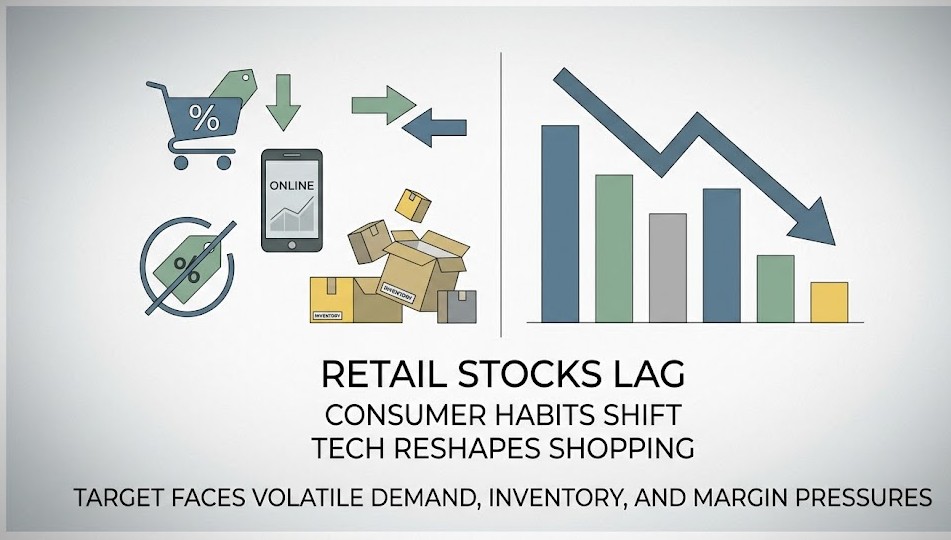
Retail Stocks Slip as Consumer Demand Shifts and Tech Disrupts
Retail stocks have faced increasing pressure as changing consumer behavior and rapid technological adoption reshape the industry, leaving the sector down 1.3% over the past six months while the S&P 500 gained 2.5%. For investors, the divergence highlights growing separation within the retail space, where companies with strong omnichannel strategies and disciplined inventory management are outperforming those struggling to adapt to an increasingly digital marketplace.
Retail Sector Faces Structural and Economic Challenges
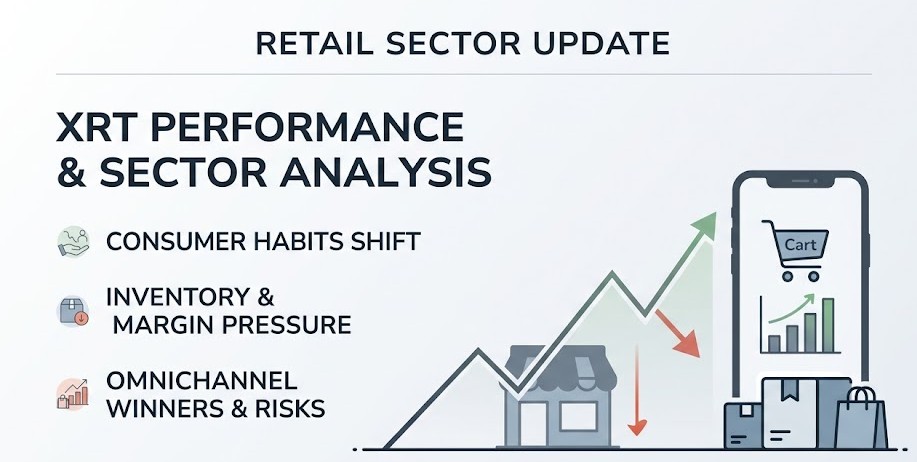
The SPDR S&P Retail ETF (XRT), a widely followed benchmark for U.S. retail stocks, has underperformed the broader market as investors reassess demand strength and profit margins across the industry.
Retailers are currently dealing with two major challenges:
- Rapid changes in consumer shopping habits driven by e-commerce and digital engagement.
- Economic pressures including inflation, interest rates and changing disposable income.
While grocery chains and large-format retailers have remained relatively resilient, discretionary retailers have experienced greater volatility as consumers become more selective with spending.
E-Commerce Is Accelerating Industry Transformation
The sector's modest decline masks significant differences between individual companies.
The continued growth of online shopping and direct-to-consumer business models has forced traditional retailers to invest heavily in:
- Digital platforms
- Fulfillment centers
- Supply chain technology
- Data analytics and personalization
Although these investments can pressure short-term profitability, they are intended to strengthen long-term competitiveness and market share.
At the same time, higher interest rates and inflation in necessities such as food and energy are reducing consumers' discretionary spending capacity, creating additional headwinds for many retailers.
Inventory and Margin Pressures Remain Key Concerns
Operational execution has become one of the biggest differentiators across the sector.
Some retailers continue to struggle with excess inventory, leading to markdowns that compress gross margins. Others have managed inventory more effectively, allowing stronger pricing power and healthier profitability.
Additional challenges include:
- Elevated labor costs
- Higher logistics expenses
- Increased promotional activity
- Slowing demand in certain discretionary categories
These factors have increased earnings uncertainty and contributed to lower valuation multiples for companies without a clear path to margin recovery.
Investors Are Rewarding Operational Excellence
Market performance has become increasingly selective.
Retailers with strong omnichannel capabilities, efficient fulfillment operations and differentiated product offerings have attracted investor interest, while companies with weaker online execution or heavy reliance on traditional store formats have generally lagged.
Analysts continue to emphasize several key performance indicators when evaluating retailers:
- Comparable-store sales growth
- Gross margin trends
- Inventory turnover
- Loyalty program performance
- E-commerce contribution to revenue
Companies demonstrating improvements in these areas are receiving more favorable analyst commentary and investor attention.
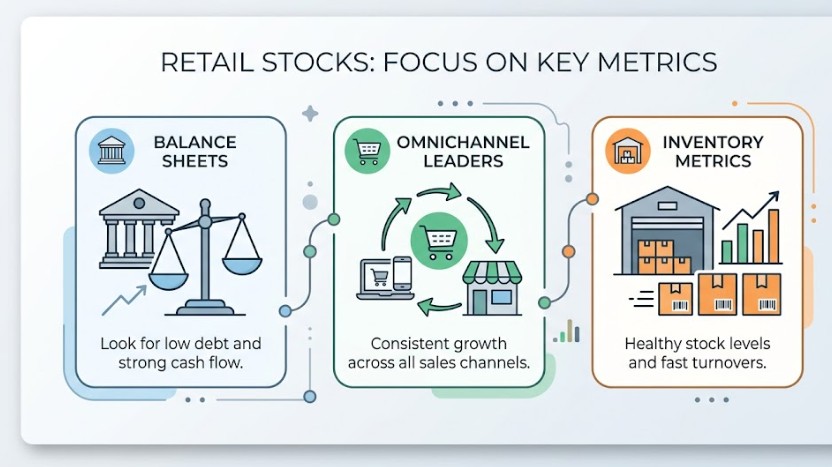
What Investors Should Watch
Balance Sheet Strength
Retailers with strong liquidity, manageable debt levels and consistent free cash flow are generally better positioned to navigate economic uncertainty and continue investing in technology.
Operational Metrics
Investors should closely monitor:
- Same-store sales
- Inventory levels
- Gross margins
- Promotional activity
- Inventory turnover rates
Improving inventory efficiency often serves as an early indicator of earnings recovery.
Omnichannel Execution
Companies that successfully integrate digital platforms with physical stores and fulfillment networks tend to achieve stronger customer retention and more sustainable margins.
Specialty retailers with unique products and pricing power may also outperform during periods of uneven consumer demand.
Diversified Exposure
Investors seeking broad retail exposure without relying on individual companies may consider diversified retail ETFs such as XRT, which provide sector-wide exposure while reducing single-stock risk.
Macro Indicators
Economic data including consumer confidence, employment trends, credit card delinquencies and inflation readings can provide valuable insight into future discretionary spending patterns and retail demand.
Outlook for the Retail Sector
The recent weakness in retail stocks reflects increasing differentiation across the industry rather than a broad-based collapse.
Upcoming quarterly earnings reports, holiday sales forecasts and management commentary on margins will help investors distinguish between temporary challenges and more fundamental business issues.
Retailers that successfully convert technology investments into stronger customer engagement, improved efficiency and healthier margins are likely to lead any future recovery. Those unable to demonstrate operational progress may continue to face pressure as the industry evolves toward an increasingly digital shopping environment.
For active investors, careful stock selection based on execution quality, balance-sheet strength and operational metrics is likely to be more important than broad sector exposure.
Retail stocks have weakened as investors reassess demand sustainability and margin pressures amid accelerating e-commerce adoption, inventory challenges and changing consumer spending patterns.