Retail Stocks Slip as Consumer Demand Shifts — Investor Guide
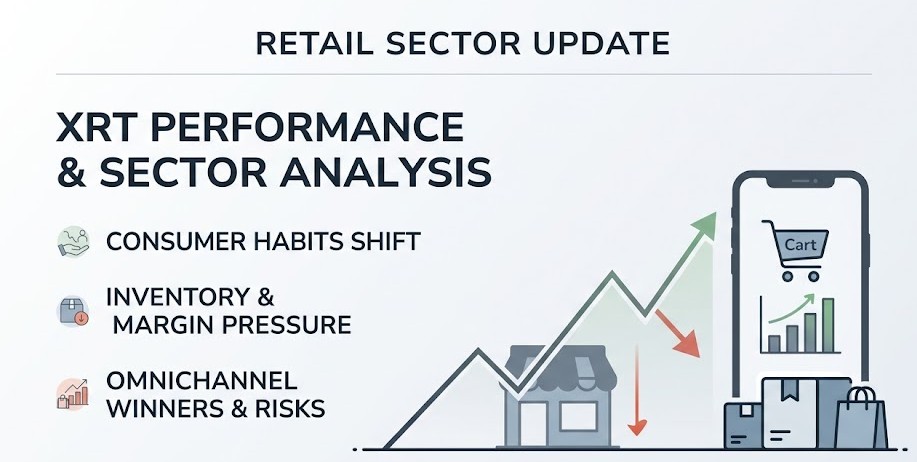
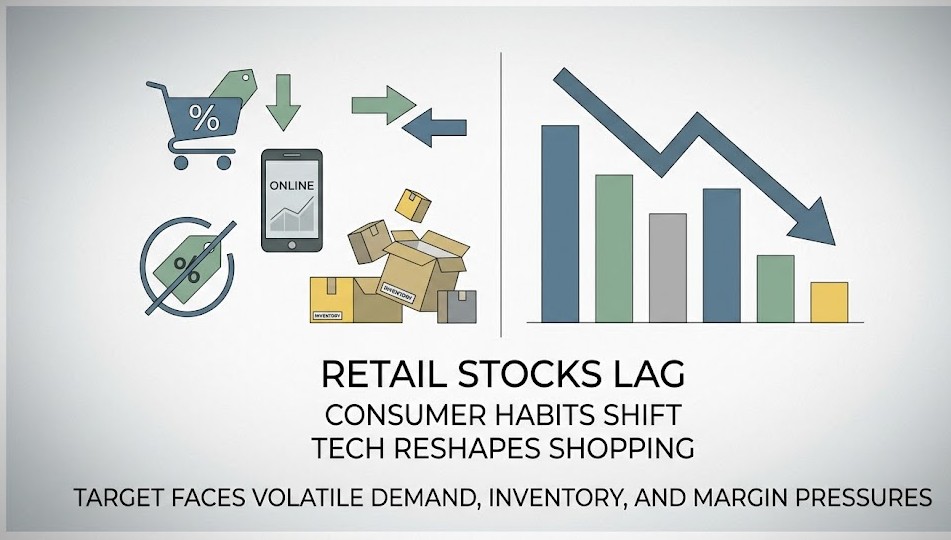
Retail stocks underperformed the broader market over the past six months as investors grew more cautious about the sector’s ability to navigate changing consumer behavior, rising operating costs and persistent margin pressure. While the S&P 500 advanced 2.5% during the period, the retail sector declined 1.3%, highlighting concerns that many retailers remain vulnerable to slowing discretionary spending and structural industry disruption. A key benchmark for the space is the SPDR S&P Retail ETF, which tracks a broad mix of specialty retailers, apparel chains, e-commerce businesses and general merchandise companies across the U.S. market.
The retail industry has been undergoing a major transformation as consumers increasingly shift toward digital shopping, omnichannel fulfillment and value-oriented purchasing decisions. Companies have had to invest heavily in logistics infrastructure, mobile commerce platforms and “buy online, pick up in store” capabilities to remain competitive. While these investments are essential for long-term survival, they also raise short-term operating expenses and pressure profit margins. Investors have therefore become more selective, rewarding retailers with strong execution and punishing those struggling with inventory management or declining store traffic.
Another major factor weighing on sentiment is uneven consumer demand. Spending on travel, entertainment and services has recovered faster than demand for discretionary goods, leaving some retailers exposed to excess inventory and aggressive discounting. Apparel and specialty retailers have been particularly sensitive to fluctuating consumer trends, while value-oriented chains and home improvement retailers have generally held up better. Inflation and elevated interest rates have further complicated the picture by increasing borrowing costs and reducing purchasing power for middle-income consumers.
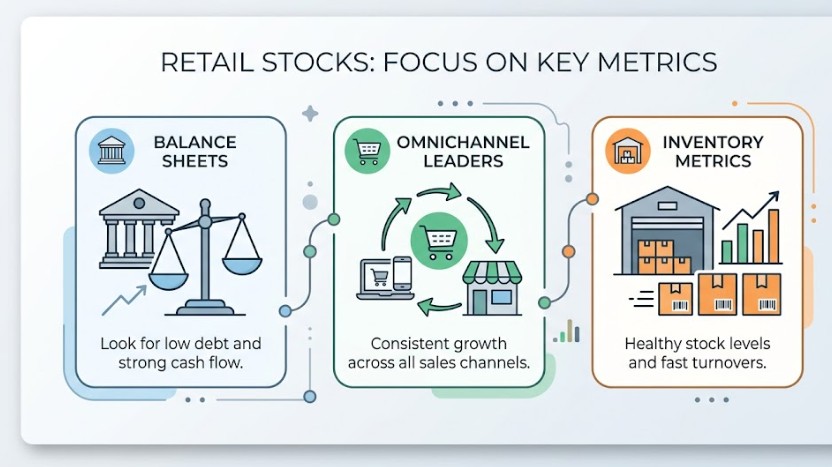
Despite the sector-wide decline, performance within retail has been highly uneven. Large retailers with diversified revenue streams, strong pricing power and efficient supply chains have continued to attract investor interest. Businesses that successfully improved inventory turnover, maintained higher full-price sales and expanded digital penetration have outperformed peers. Meanwhile, retailers carrying elevated debt loads or relying heavily on outdated store-centric models have experienced greater stock-price weakness as investors question long-term profitability.
Market participants are closely monitoring several operational indicators that could determine whether the sector stabilizes in the coming quarters. Same-store sales growth, inventory-to-sales ratios, gross margin trends and free cash flow generation remain among the most important metrics for analysts evaluating retail companies. Investors are also watching upcoming earnings reports for signs that promotional activity is easing and consumer demand is becoming more consistent heading into future shopping seasons.
For investors, the current environment presents both risks and selective opportunities. Companies with strong balance sheets, improving digital capabilities and disciplined capital allocation may emerge stronger as weaker competitors lose market share. Investors looking for diversified exposure can use sector ETFs such as SPDR S&P Retail ETF to gain broad participation while reducing single-company risk. More active investors may focus on retailers demonstrating rising online sales penetration, stable free cash flow and improving operating margins.
Risk management remains critical because the sector is highly sensitive to macroeconomic conditions. If inflation moderates and consumer confidence improves, retailers with efficient omnichannel operations could see margin recovery and renewed earnings growth. However, a weaker economic backdrop marked by slowing employment or declining consumer spending would likely intensify discounting and compress profitability further. Investors should therefore avoid relying solely on historical valuations and instead focus on forward earnings potential, balance-sheet strength and operational execution.
The retail sector’s recent underperformance reflects broader structural transitions rather than a uniform collapse across all companies. Technology-driven shifts in shopping behavior, changing consumer priorities and cost pressures are reshaping the competitive landscape. Going forward, investors who emphasize quality balance sheets, inventory discipline and sustainable omnichannel growth strategies will likely be better positioned to identify long-term winners within the sector.