Retail Stocks Slip as Consumers Shift Habits; Is Target a Buy?
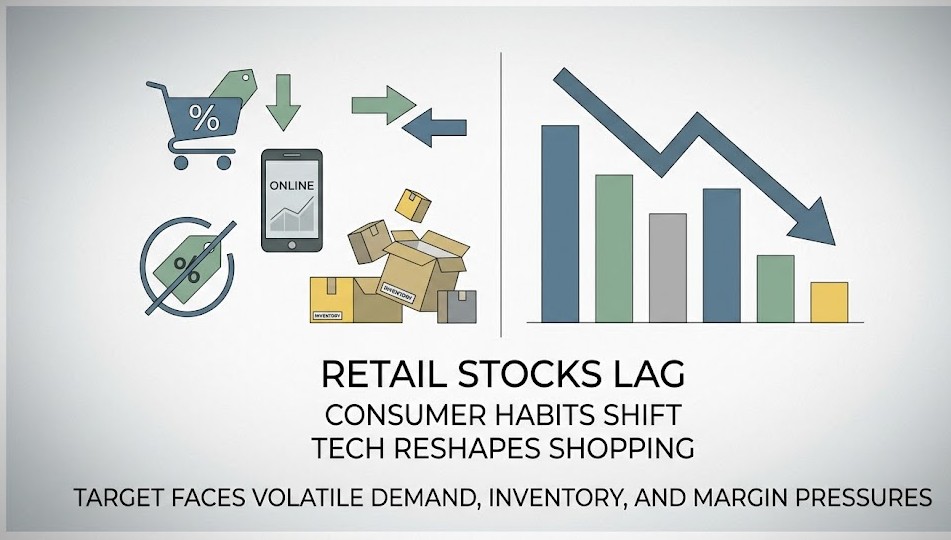
Lead Target and the broader retail sector have come under pressure in recent months as technological shifts and fickle consumer spending force companies to adapt.
Investors are weighing the retailer’s ability to manage inventory, protect margins and grow sales amid a sector that has fallen 1.3% over the past six months while the S&P 500 has gained 2.5%.
Background and recent performance
Target Corporation (TGT) is one of the largest U.S. general merchandise retailers, operating a national store base and a growing online business.
Over the last several years the company has invested heavily in omnichannel capabilities, supply-chain upgrades and private-label expansion to defend market share against e-commerce competitors and discount chains.
Despite those investments, the retail group has shown uneven performance: demand has remained volatile as consumers shift spending between goods and services, and retailers have had to manage inventory turns and promotional cadence to protect margins.
Target’s recent quarters have illustrated these tensions.
The company has periodically reported mixed same-store sales (comps) and compressed gross margins due to markdowns in certain categories and higher fulfillment costs.
At the same time, Target’s balance sheet and cash flow generation have allowed continued capital allocation to store remodels, digital fulfillment nodes and shareholder returns, but investor focus has tightened on near-term profitability and guidance.
Analysis of the news event and implications
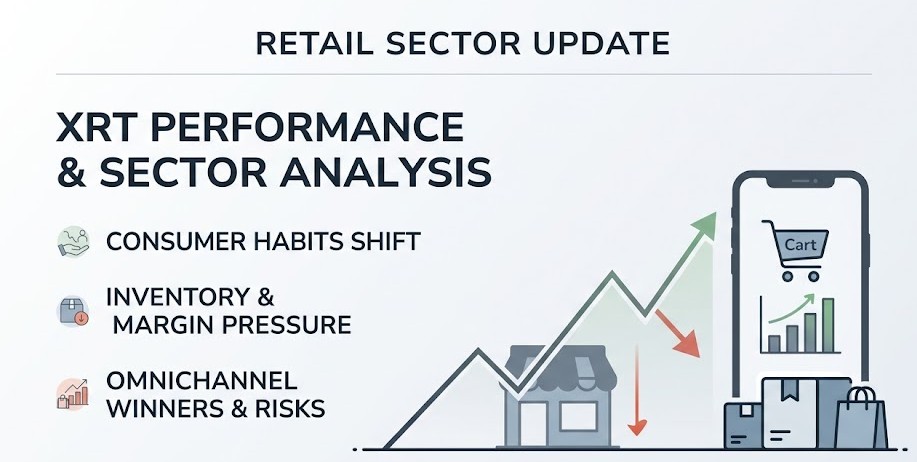
The short note that retail stocks have tumbled 1.3% in the past six months while the S&P 500 returned 2.5% underscores a sector rotation away from discretionary retail exposure.
For Target specifically, this environment raises three investor questions: can the company sustain comp growth as spending patterns shift; will margin recovery outpace reinvestment costs; and how quickly can excess inventory be normalized without deepening promotional pressure.
Technology is reshaping the customer journey.
Faster delivery expectations, buy-online-pickup-in-store (BOPIS) models, and personalized marketing increase operating complexity and cost.
For a large omnichannel operator like Target, these pressures mean higher fulfillment and labor expenses even as online penetration potentially elevates average tickets.
The trade-off is investment today versus margin improvement later — and investors are sensitive to timing.
Macro and operational pressures
Macro variables are also at play.
Consumer sentiment, disposable income trends, and discretionary spending patterns determine the volume and mix of sales across apparel, home goods and essentials.
Higher interest rates and sticky inflation can reduce discretionary purchases and push consumers toward staples and discount formats, compressing retailers’ higher-margin categories.
Inventory management remains central.
Excess inventory forces markdowns and margin erosion; too little inventory risks lost sales.
Target’s historical improvements in inventory turns have been a focal point for management communications.
Any signs of inventory re-accumulation or slower sell-through are likely to trigger renewed concern from the market.
Market reaction and analyst commentary
The market’s modest retreat in retail equities reflects a reassessment of growth visibility and margin resilience.
Traders and longer-term investors alike have pared positions in names perceived to be most exposed to discretionary volatility.
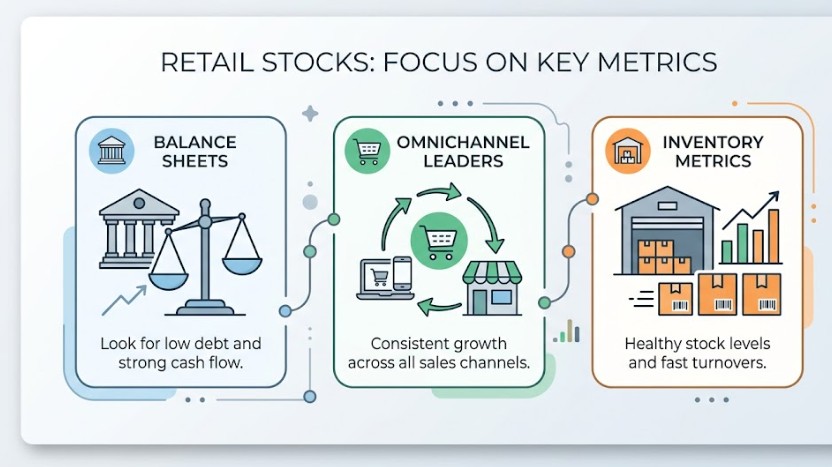
Analysts have generally urged focus on the upcoming quarterly prints and guidance updates, emphasizing same-store sales trends, margin trajectory and inventory days on hand as the key metrics.
While some analysts remain constructive on Target’s long-term competitive advantages — scale, private brands and an efficient store fleet for omnichannel fulfillment — near-term estimates have been trimmed across the sector in response to softer demand signals.
Investor attention will zoom in on management commentary about promotional cadence, holiday-season preparations, and cost-out initiatives that can offset reinvestment drag.
What this means for investors
Monitor three data points closely: comp sales and category mix, gross-margin rate and promotion intensity, and inventory levels versus sell-through.
Those metrics will drive quarter-to-quarter sentiment and materially affect valuation multiples.
For longer-term investors, weigh Target’s scale advantages and capital-return profile against the risk of transient margin pressure.
Valuation discipline matters.
If near-term earnings estimates come down, the opportunity for a value-oriented entry may present itself, but investors should demand clarity on a path to margin normalization and sustainable comp growth.
For income-oriented holders, Target’s dividend and share-repurchase program provide partial downside protection, though total return will depend on operational recovery.
Active investors may prefer a wait-and-see approach ahead of the next earnings release; more patient investors can dollar-cost-average into positions if they believe the company will successfully navigate inventory normalization and reaccelerate comps.
Short-term traders should be prepared for volatility tied to monthly sales updates and macro data on consumer spending.
Conclusion and forward-looking perspective
The recent slump in retail stocks reflects a recalibration of expectations as consumers shift habits and technology raises operating complexity.
For Target, the coming quarters are a test of execution: inventory control, margin recovery and the conversion of omnichannel investments into consistent sales growth.
Investors should focus on objective, measurable indicators—comps, margins and inventory—and watch management’s ability to deliver a credible roadmap to earnings stabilization.
If Target can demonstrate steady improvements on those fronts, the stock’s recent underperformance relative to the S&P could present a compelling risk-reward tradeoff for long-term investors.
Retail stocks declined as investors reassessed discretionary exposure amid shifting consumer habits, inventory pressures and higher omnichannel costs.