RH Slides 3.1% to $150.99 as Market Advances: Investor Guide
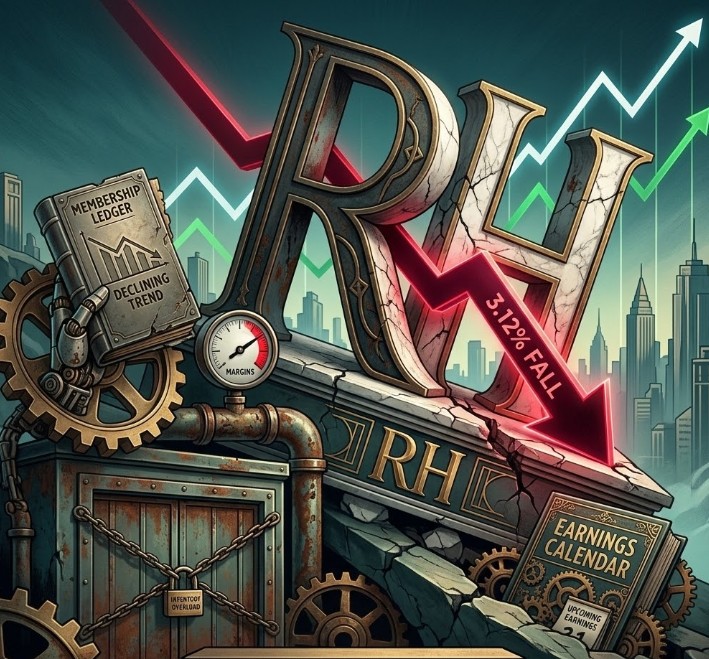
RH (RH) closed the latest session at $150.99, down 3.12% from its prior close, even as the broader market advanced. The decline highlights investor sensitivity to discretionary retail names and underscores the importance of company-specific operating trends particularly membership metrics, margins and guidance for a luxury home furnishings retailer whose revenue is tied to high-ticket purchases and housing sentiment.
Background and Recent Performance
RH, the high-end home furnishings retailer formerly known as Restoration Hardware, operates a vertically curated business centered on premium price points, membership programs and a portfolio of design galleries.
The company’s model depends on customers making intermittent, larger-ticket purchases rather than frequent low-cost transactions, which makes revenues and earnings more volatile and closely tied to consumer confidence and housing market dynamics.
Over recent reporting periods RH has shown mixed results, with management repeatedly emphasizing the role of membership and design services as key levers for margin expansion and customer retention. The shares have been susceptible to swings driven by changes in discretionary spending, shifts in household wealth and any signals on inventory and gross margins coming from quarterly reports or guidance updates.
Why the Stock Moved
The immediate catalyst for the 3.12% slide was not tied to a single public company announcement; instead, the move appears to reflect investor rotation away from higher-beta discretionary names on a day when the broader market was up.
Several plausible drivers likely contributed:
- Profit-taking after prior gains
- Concern about RH’s sensitivity to interest rates and housing data
- The possibility of cautious guidance or margin pressure when the company next reports results
Investors also watch membership metrics closely changes in membership take rates, renewal rates and the average spend of members versus non-members can materially affect near-term revenue and long-term lifetime value.
Any sign that such engagement metrics are weakening would increase the perceived risk that top-line momentum could slow, prompting traders to reduce exposure.
Detailed Implications of the Move
A 3.12% intraday decline in the absence of company-specific negative news often signals a reassessment of risk rather than a fundamental change in outlook.
For RH, the key fundamentals investors should monitor include:
- Comparable-sales trends
- Average order value
- Membership growth and retention
- Gross margin trajectory
- Inventory levels
Elevated inventories can pressure promotions and margins; conversely, tight inventory could support pricing power but constrain sales if customer demand remains strong.
Because RH sells higher-ticket items and relies on occasional purchases, quarterly results can be lumpy. That lumpy nature makes guidance language and management tone on calls disproportionately impactful for the stock.
If management expresses caution on demand or signals incremental promotional activity to clear inventory, the market could respond with further downside. Conversely, any signs of resilient membership engagement or expanding margins could quickly restore confidence.
Market Reaction and Analyst Perspective
On the trading day in question, the stock’s drop contrasted with a rising tape, suggesting an idiosyncratic reprice rather than macro-driven selling.
Brokers and market participants typically parse these moves by checking volumes, short interest and options flow to see whether sellers are protective or speculative.
While we have not seen new analyst reports tied directly to this move, street analysts tend to focus on near-term same-store sales, margin guidance, and capital allocation priorities when reassessing RH’s earnings trajectory.
Some analysts may react to persistent volatility by adjusting models to reflect higher discounting risk or slower membership conversion, while others will await the next formal update from the company before making material estimate changes.
For investors, it’s important to differentiate short-term trading noise from alterations to the company’s long-term cash flow potential.
What This Means for Investors Actionable Insights
- Reassess position size: Given RH’s sensitivity to discretionary spending and housing conditions, investors should ensure position sizes align with their risk tolerance and time horizon.
- Monitor upcoming catalysts: The next quarterly report, membership metrics, and housing data releases are likely catalysts that could change the stock’s trajectory; plan trades or rebalances around these dates.
- Watch margins and inventory: Signs of margin compression or inventory buildup could presage more downside, while improving gross margins or disciplined inventory management would be a positive signal.
- Use volatility strategically: Long-term investors with conviction may view transient dips as buying opportunities, but traders should employ stop-losses or hedges to limit downside during episodes of sector rotation.
Risks to Consider
Key risks for RH include:
- A deterioration in consumer discretionary spending driven by higher rates or weaker labor markets
- Softer housing activity that reduces large-ticket purchases
- Operational issues that push the company toward greater promotional activity
Additionally, macro volatility can amplify RH’s performance swings because of the lumpy nature of its sales cadence.
Conclusion and Outlook
RH’s 3.12% decline to $150.99 amid a rising market underscores the stock’s idiosyncratic risk and the market’s heightened sensitivity to discretionary and housing-linked names.
Looking ahead, investors should focus on the company’s next earnings release, membership and comparable-sales trends, margin guidance, and inventory signals as the primary determinants of near-term performance.
For those considering exposure, disciplined sizing, attention to upcoming catalysts and clear exit plans will be essential as RH navigates the interplay between luxury demand and broader economic trends.