Robinhood Slides After Earnings; Dow Futures Rise Amid AI Fears
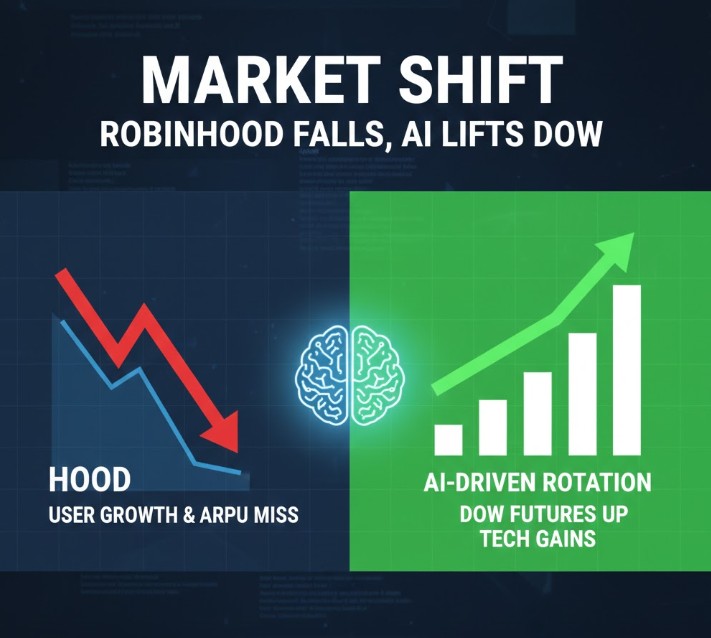
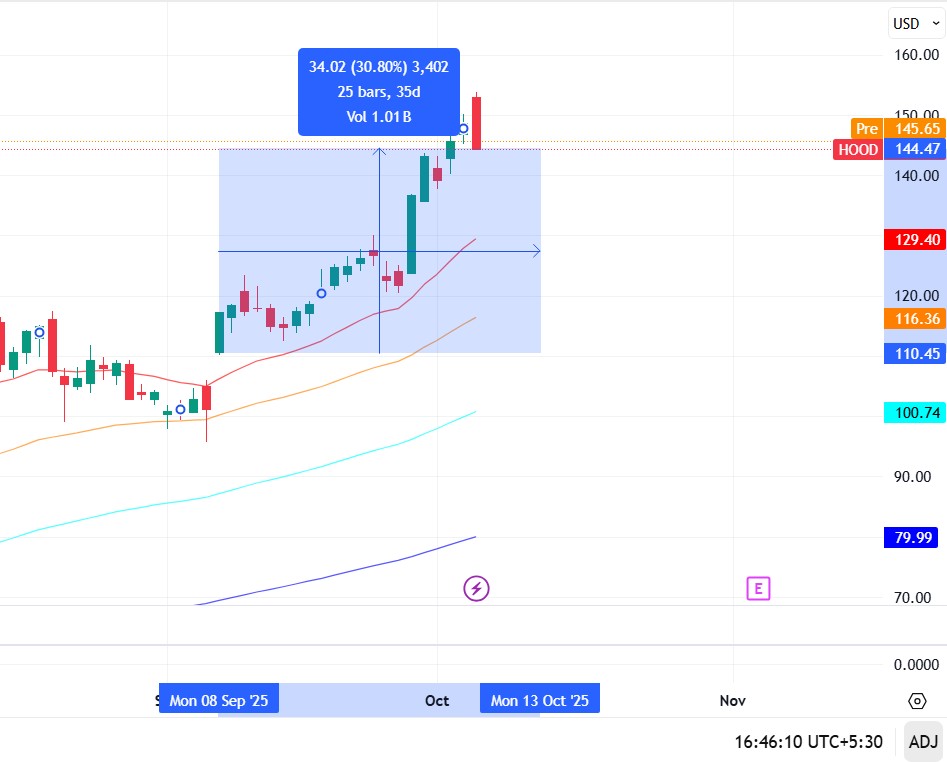
Robinhood Markets shares slid after the company reported results late Wednesday, while Dow Jones futures rose as the market paused following a two day rally. Investors are weighing the earnings details amid broader AI driven sector rotation that pressured Schwab and other financials and knocked smaller names such as Astera Labs lower.
Robinhood Markets Inc. (HOOD) operates a popular commission free brokerage platform with a core retail customer base and growing revenue streams from transaction based activities, subscriptions and interest on cash. The company has swung between volatile trading volumes and efforts to diversify revenue through cash management and premium features, leaving its stock sensitive to earnings cadence and macroeconomic signals. Over the past year Robinhood shares have seen wide intraday moves around results and regulatory headlines.
The immediate catalyst for Robinhood's decline was the late earnings release, which appeared to contain metrics or guidance that disappointed some investors and traders in after hours trade. That weakness came against a market backdrop where AI enthusiasm has been rotating funds into chipmakers and software names seen as beneficiaries, while exposing financials to fears of slowing transaction activity or re rating of fee models. Schwab and several regional financial stocks also came under pressure, signaling a broader reallocation rather than a company specific crisis. Astera Labs, a smaller semiconductor related name, fell after its results, underscoring that earnings execution remains central to investor sentiment across market caps.
An earnings miss or cautious guidance at Robinhood would spotlight the company's reliance on episodic trading volumes and the challenge of building predictable non transaction revenue. Any sign of slowing active users, lower average revenue per user (ARPU), or weaker options and crypto engagement would pressure near term profitability and cash flow. Conversely, management commentary about cost discipline, product engagement, or progress in subscription uptake could temper the sell off. Investors will focus on user metrics, margin trends, and how the company contends with regulatory and competitive dynamics.
Market participants reacted by pushing Robinhood shares lower in extended trading, while broader indices showed modest strength as futures climbed, reflecting a pause after recent gains. Analysts typically emphasize user growth and monetization as primary valuation levers for Robinhood, and downgrades or trimmed estimates from sell side firms can amplify moves around earnings. Strategists also highlighted that AI driven rotation into hardware and software stocks can create headwinds for financial technology names when liquidity shifts.
Commentary from sell side and independent analysts will likely focus on whether the company’s reported metrics represent a transient blip or the start of a trend. Dow Jones futures rising in the face of company specific weakness illustrates the market's bifurcated nature this week: broad indices can be supported by macro optimism even while individual names correct after earnings. The two day jump referenced by traders suggests recent risk on positioning which often prompts profit taking and selective reassessment of fundamentals. AI related optimism has concentrated flows into semiconductors, data center suppliers and AI software, creating spillover volatility for adjacent sectors. For financials, the interplay between interest rate expectations, trading volumes and fee pressures remains a key determinant of performance.
What This Means for Investors
Investors should separate company specific fundamentals from sector rotation when deciding to hold, sell or buy Robinhood. Short term traders may exploit volatility around after hours earnings, but longer term investors should target clarity on user growth, ARPU, and margin trajectory before increasing exposure. Diversified investors may consider tilting to names with more predictable revenue streams or clear exposure to secular AI beneficiaries if they seek growth with lower event driven risk. For risk tolerant investors, a significant pullback could present an entry point if valuation reflects a reasonable path to profitability and user engagement improves.
Key risks include regulatory actions, persistent volatility in crypto and retail trading volumes, and competitive pressure from banks and other brokerages expanding zero fee offerings. Macro factors such as interest rate moves and a potential slowdown in consumer trading activity would weigh on Robinhood more than on established diversified financial institutions. Investors should also monitor insider activity and any shifts in the firm's capital allocation priorities.
Looking ahead, the narrative for Robinhood will hinge on execution: stabilizing ARPU, expanding subscription and interest income, and demonstrating consistent cost management. Broader market flows into AI and technology may continue to re rate pockets of the market, producing short term dislocations that create buying opportunities for disciplined investors. Earnings seasons will remain the litmus test for whether momentum resumes or if valuation resets are warranted.
Robinhood's post earnings slide underscores the sensitivity of fintech stocks to user engagement metrics and sector rotation. While Dow futures rose and broader indices held gains, the divergence highlights the importance of parsing company details within the macro context. Investors should prioritize fundamentals, follow analyst revisions, and set risk managed exposure aligned with their investment horizon.
Next reporting milestones include the company's next quarterly update and any scheduled investor days or product announcements that could shift sentiment. Traders will watch weekly active users, options flow and any commentary on crypto exposure for fresh clues. Hedge funds and high frequency traders may increase volatility near those events.
Robinhood shares fell after the company's late earnings release, prompting investor concerns about user engagement and revenue trends amid an AI driven sector rotation.