RTX Outpaces Market After Iran Shock: Why Investors Are Taking Notice
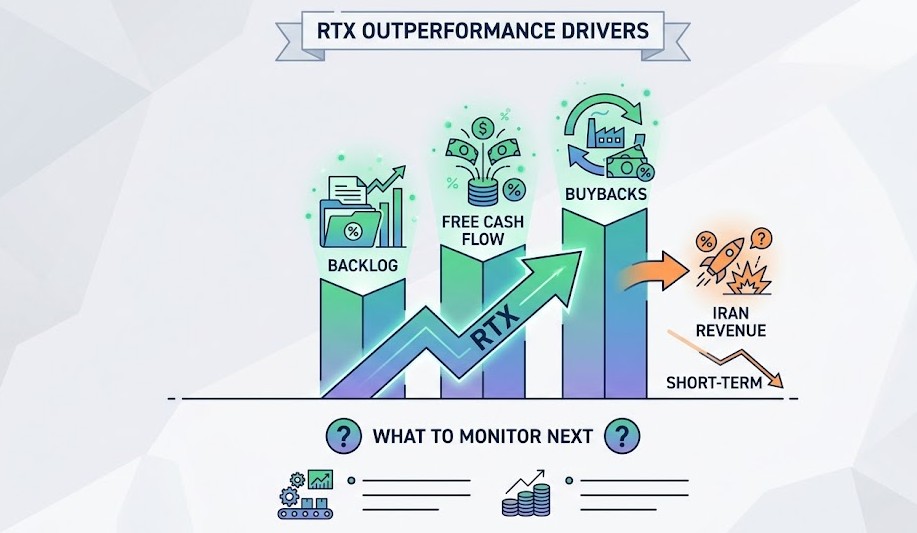
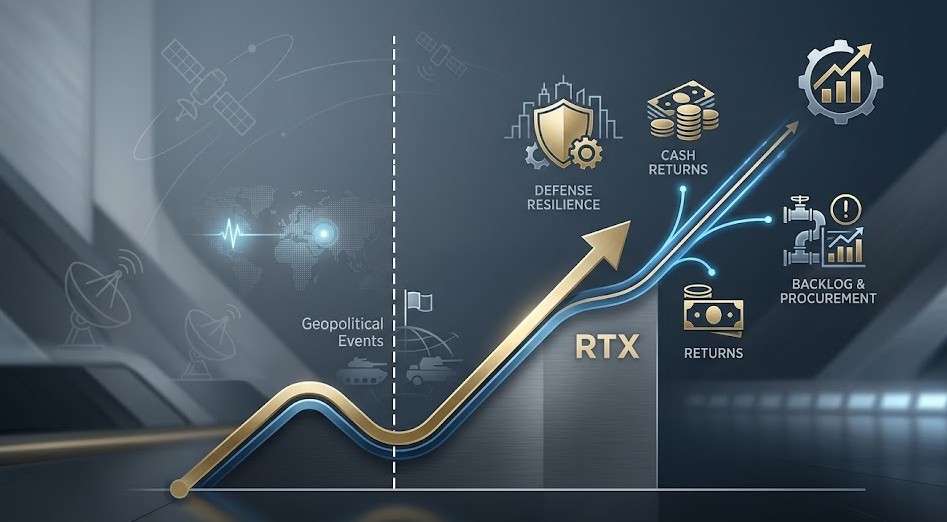
RTX Corp. shares have outperformed the broader market in recent sessions, even as the conflict in Iran has not translated into immediate revenue gains for large-cap defense contractors. Investors appear to be pricing in the company’s durable backlog, improving free cash flow, and shareholder-friendly capital deployment rather than near-term boosts from geopolitical tensions.
Background and Recent Performance
RTX (ticker: RTX) is a diversified aerospace and defense conglomerate formed from the merger of Raytheon and United Technologies. Its principal businesses include Pratt & Whitney jet engines, Collins Aerospace systems, and Raytheon Missiles & Defense, generating revenue from commercial aviation, military platforms, and long-term service contracts.
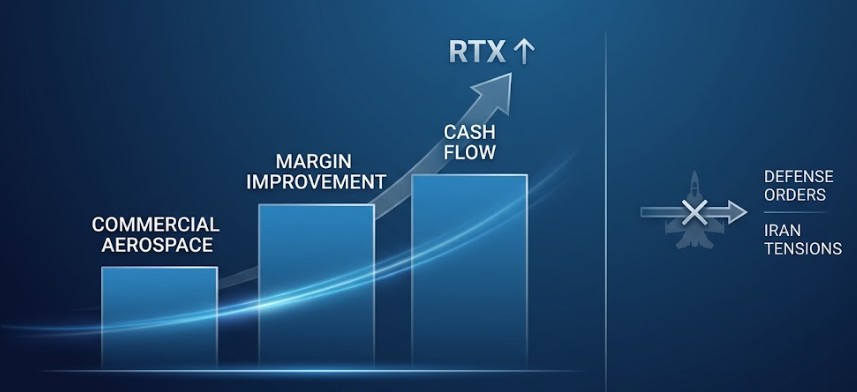
Over the past several quarters, the company has focused on margin improvement, cost reduction programs, and steady cash returns to shareholders through dividends and buybacks. Its large government backlog and multiyear contracts provide revenue visibility that appeals to investors during periods of uncertainty.
At the same time, RTX’s exposure to commercial aviation ties its performance to airline demand and aircraft production rates, which can dampen the impact of short-term geopolitical demand for weapons. This dynamic helps explain why a sudden escalation abroad may not produce a rapid revenue windfall for an integrated supplier like RTX.
Analysis of the Recent News Event
Recent coverage highlighted that the Iran conflict has not directly improved RTX’s near-term order flow, underscoring that defense procurement typically moves on budgetary and programmatic timelines rather than immediate crisis response.
New foreign military sales, congressional appropriations, and multi-year procurement agreements generally unfold over months to years, with many major programs already committed under existing contract schedules.
Instead, the current situation appears to have accelerated a sector re-rating. Investors have rotated into large, cash-generative defense names as a hedge against Volatility" title="More analysis on Market Volatility">market volatility, favoring companies with stable cash flows, robust backlogs, and visible capital return policies.
For RTX, this has meant multiple valuation drivers beyond immediate contract wins, including a large installed base supporting high-margin services, disciplined cost control, and a capital allocation strategy that has returned significant value to shareholders through dividends and buybacks. Investors should review the latest company filings for precise figures.
Beyond headline developments, key operational indicators to monitor include quarterly margin expansion, free cash flow conversion, procurement wins in missile systems and avionics, and commercial engine order trends. Supply chain pressures and labor constraints remain risks that could delay revenue recognition and compress margins, making progress on manufacturing throughput and cost control critical.
Market Reaction and Analyst Commentary
The market has rewarded companies perceived as reliable cash generators and providers of essential products. Analysts have increasingly emphasized fundamentals such as free cash flow conversion, backlog growth, and margin trajectory when revisiting ratings for the aerospace and defense sector.
Several brokerage notes since the escalation indicate that while top-line sensitivity to short-term conflicts is limited, earnings per share upside can still emerge from improved margins, higher service revenues, and steady defense spending allocations.
Institutional flows into defense-focused ETFs and large-cap value funds have also supported share prices, tightening liquidity and compressing spreads. However, some strategists caution that valuation re-ratings may reverse if macroeconomic conditions shift or if defense budgets fail to increase as expected.
Investors should monitor updates to congressional defense budgets, Department of Defense procurement schedules, and major contract announcements that could materially alter forward revenue expectations.
What This Means for Investors
For long-term investors seeking exposure to aerospace and defense, RTX offers a blend of cyclical and defensive characteristics. Its sizable backlog and service revenue provide resilience during commercial aviation slowdowns, while its defense operations benefit from structural demand linked to national security priorities.
Key considerations for investors include monitoring free cash flow and margin progress, tracking backlog and book-to-bill ratios, evaluating capital allocation through dividends and buybacks, and comparing valuation against peers and historical averages.
Short-term traders should recognize that geopolitical headlines can drive volatility without materially changing fundamentals. A staggered approach to building positions, combined with disciplined entry points based on normalized earnings multiples, may help manage risk.
Conclusion and Forward Looking Perspective
RTX’s recent outperformance appears driven less by immediate revenue gains from the Iran conflict and more by a broader market rotation into cash-generative, defensible businesses with visible capital returns.
Looking ahead, the primary drivers of upside are likely to be continued margin expansion, efficient backlog conversion, accretive contract awards, and disciplined capital deployment. Over the next 12 to 24 months, these factors are expected to play a more significant role in shaping performance than short-term geopolitical developments.
RTX shares rose as investors rotated into defensive aerospace and defense names, prioritizing backlog stability and capital returns over immediate war-driven revenue impacts.