RTX Outperforms: Commercial Recovery, Not Iran War, Is Key Now
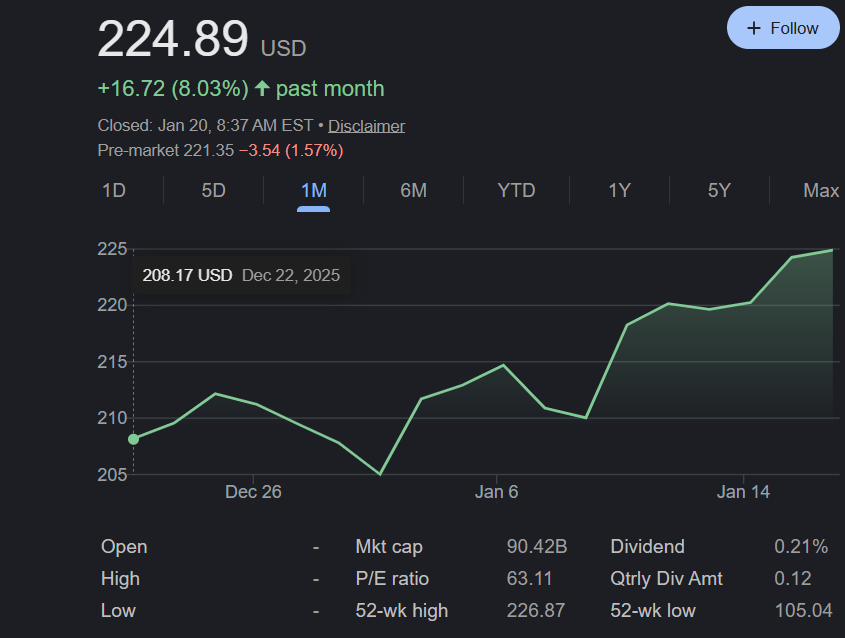
RTX Corporation has been one of the strongest-performing large-cap industrial stocks over the past year, but its recent share-price gains appear to be driven more by commercial aerospace recovery and operational improvements than by geopolitical tensions in the Middle East.
While headlines have largely focused on the Iran conflict and broader defense-sector implications, investors are increasingly rewarding RTX for improving margins, strong cash generation and exposure to a recovering global aviation market.
RTX Benefits From a Diversified Business Model
RTX was created through the merger of Raytheon and United Technologies and operates across both commercial aerospace and defense markets.
Its major business segments include:
- Pratt & Whitney
- Collins Aerospace
- Raytheon Missiles & Defense
This diversified structure allows the company to benefit from two powerful long-term drivers:
- Stable defense spending and government contracts
- Cyclical growth in commercial aviation and aftermarket services
Following the pandemic-induced downturn in air travel, the global recovery in passenger traffic has significantly increased demand for aircraft engines, spare parts, maintenance services and aviation systems, all areas where RTX holds strong market positions.
Commercial Aerospace Recovery Is the Main Catalyst
Despite rising geopolitical tensions, available data suggests that the Iran conflict has not yet created a meaningful wave of new defense procurement for major contractors.
Defense spending decisions are typically driven by multi-year government budgets rather than immediate military events. As a result, any revenue benefit from geopolitical developments often takes time to materialize.
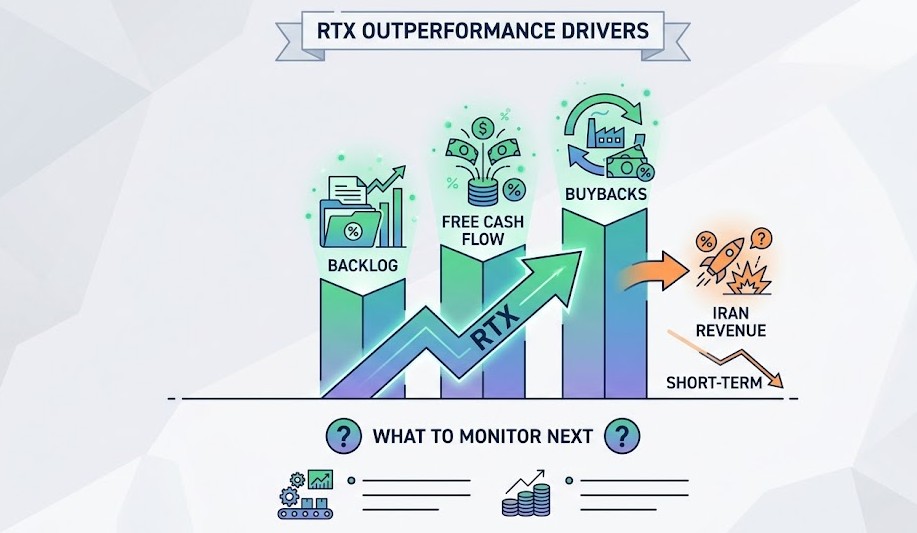
Instead, investors appear to be focusing on more durable drivers of earnings growth, including:
- Strong commercial aftermarket demand
- Improving profitability at Pratt & Whitney
- Stable revenue from existing defense backlogs
- Expanding free cash flow generation
These factors provide a clearer path to sustained earnings growth than short-term geopolitical events.
Operational Improvements Continue to Support Shares
A significant part of RTX's recent success stems from management's focus on operational execution.
Since the merger, leadership has emphasized:
- Cost discipline
- Portfolio optimization
- Margin expansion
- Improved cash conversion
These initiatives have translated into stronger financial performance and increased investor confidence.
In a higher interest-rate environment, predictable free cash flow is particularly valuable because it supports:
- Dividend payments
- Share repurchases
- Debt reduction
- Growth investments
RTX's balance sheet and cash-flow outlook have helped reassure investors that the company can continue returning capital while investing in future growth opportunities.
Institutional Investors Are Rotating Into RTX
Market performance reflects a broader shift in investor priorities.
RTX shares have outperformed both the S&P 500 and many defense-sector peers as investors seek companies that combine:
- Growth potential from commercial aerospace
- Stability from defense contracts
- Strong cash flow generation
Trading activity around recent company updates and industry conferences also suggests increasing institutional interest.
Options-market data indicates investors remain comfortable with moderate near-term volatility in exchange for improved long-term earnings visibility.
Key Themes Supporting the Bullish Outlook
Several trends continue to support the investment case.
Rising Global Air Travel
The recovery in passenger traffic has increased airline utilization rates and fleet activity.
This drives demand for:
- Engine maintenance
- Spare parts
- Aircraft systems upgrades
- Aftermarket services
Both Pratt & Whitney and Collins Aerospace are well positioned to benefit from these trends.
Stable Defense Revenue
While the Iran conflict has not yet generated a significant new procurement cycle, RTX continues to benefit from an established defense backlog that provides recurring revenue visibility.
Existing defense programs remain an important source of earnings stability.
Margin Recovery
Cost synergies and operational improvements have narrowed the profitability gap between RTX and some of its competitors.
This has encouraged analysts to assign higher valuation multiples as confidence in earnings quality improves.
Risks Investors Should Consider
Despite the positive outlook, several risks remain.
Supply Chain Challenges
Aerospace manufacturers continue to face supply-chain constraints that could delay production schedules and impact profitability.
Airline Spending Cycles
Commercial aerospace demand remains tied to airline profitability and capital spending plans.
A slowdown in global economic growth could weaken travel demand and reduce future orders.
Geopolitical Uncertainty
While defense spending has not yet meaningfully accelerated due to the Iran conflict, future geopolitical developments could create both opportunities and execution challenges.
Rapid increases in demand may require production ramp-ups that are difficult to manage efficiently.
Key Metrics for Investors to Monitor
Investors evaluating RTX should focus on measurable operational indicators rather than headline-driven narratives.
Important metrics include:
- Revenue growth and margin trends
- Free cash flow generation
- Defense backlog growth
- Pratt & Whitney engine shop visit activity
- Airline fleet utilization trends
- Capital allocation decisions
Management guidance regarding these metrics will likely have a greater impact on valuation than short-term geopolitical developments.
Valuation Considerations
RTX currently trades at a premium to some industrial peers due to its unique combination of aerospace growth and defense stability.
Investors should compare:
- Forward price-to-earnings ratios
- Enterprise value-to-EBITDA multiples
- Free cash flow yields
against peers such as Northrop Grumman and General Dynamics to evaluate relative value.
Future guidance upgrades related to margins or free cash flow could justify current valuation levels, while downward revisions may place pressure on the stock.
Upcoming Catalysts
Several developments could influence RTX shares in the coming quarters:
- Quarterly earnings reports
- Margin and free cash flow updates
- Pratt & Whitney engine maintenance trends
- Defense backlog disclosures
- Share repurchase announcements
- Airline traffic and fleet growth data
These factors will likely be more important to investors than short-term geopolitical headlines.
Conclusion
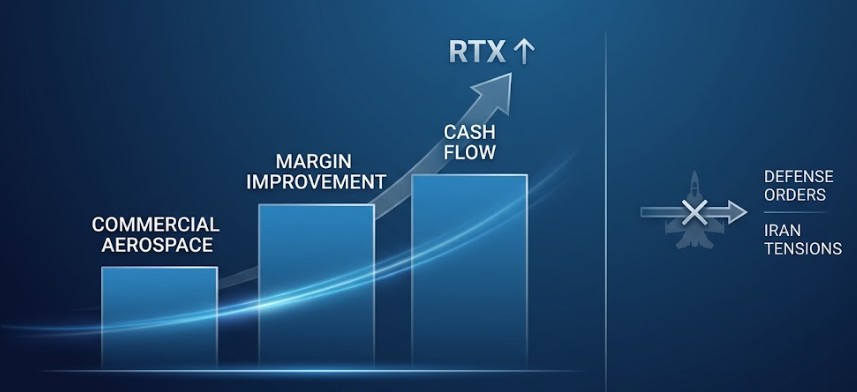
RTX's recent outperformance appears to be driven primarily by commercial aerospace recovery, improving margins and dependable cash generation rather than immediate defense spending tied to the Iran conflict.
The company's combination of aerospace growth opportunities and defense-sector stability continues to attract investors seeking both earnings expansion and resilience.
Going forward, RTX's performance will largely depend on the strength of the global travel recovery, successful execution of margin-improvement initiatives and disciplined capital allocation. Investors should remain focused on operational metrics and company guidance rather than assuming geopolitical tensions will automatically translate into near-term revenue growth.
Investors are rewarding RTX for its exposure to a recovering commercial aerospace market and improving profitability, rather than for any immediate increase in defense demand linked to the Iran conflict.