S&P 500 Futures Rise as Inflation Eases, Treasury Yields Slip
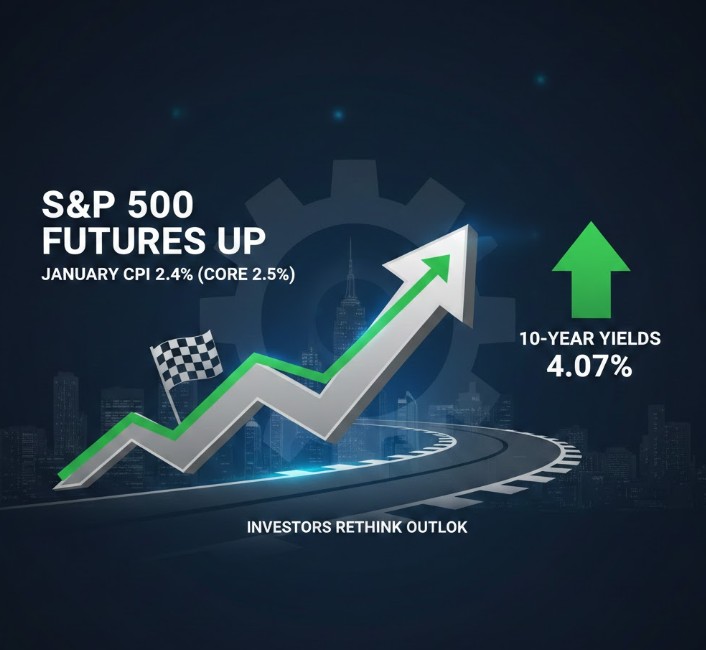
U.S. stock futures pointed higher Monday after softer-than-expected January inflation readings, lifting hopes that the Federal Reserve will keep policy tighter for less time. Headline consumer price inflation cooled to 2.4% year-over-year with core CPI at 2.5%, while the 10-year Treasury yield slipped to roughly 4.07%, a move that supported expectations for lower borrowing costs and helped risk assets rally in early trading.
Background
The United States equity market, led by the S&P 500 index, has been navigating the transition from an aggressive Federal Reserve tightening cycle toward a more data-dependent policy stance. After two years of elevated volatility tied to inflation and interest-rate uncertainty, investors have focused on monthly CPI prints for clues about the path for rates, corporate profit margins, and consumer spending.
With inflation readings edging closer to the Fed’s tolerance range, market participants are recalibrating expectations for rate hikes, balance-sheet runoff, and the timing of any easing.
Detailed Analysis
The January CPI report showing headline inflation at 2.4% and core at 2.5% matters because it reduces the near-term likelihood of additional Fed rate increases. Policymakers have repeatedly framed the central bank’s remit around getting inflation sustainably to 2%. While current readings remain slightly above that target, the downward momentum is significant.
The 10-year Treasury yield falling toward 4.07% implies cheaper long-term borrowing costs, which typically benefits growth-oriented sectors such as technology and consumer discretionary by lowering discount rates used in valuation models.
At the same time, moderation in inflation sends mixed signals for financials and cyclicals. Banks and insurers often profit from higher yields and wider net interest margins, so a decline in long-term rates can weigh on sector profitability expectations. Conversely, lower yields can boost housing demand and consumer credit appetite over time, which may help mortgage originators, homebuilders, and retail names if the trend persists.
Market Reaction and Analyst Commentary
Equity futures across major benchmarks climbed in early trading as investors parsed the CPI print. Traders in the Treasury market pushed yields lower across the curve, signaling that markets now price a lower probability of additional Fed tightening.
Market strategists said the data will likely keep the Federal Open Market Committee in a more accommodative posture for longer than previously anticipated, though most stressed that one monthly report does not yet constitute a sustained trend.
Analysts noted that corporate earnings and forward guidance remain central to near-term stock performance. Lower inflation helps corporate margins by easing wage and input-cost pressures, but revenue growth will depend on consumer resilience.
Fixed-income strategists cautioned that the path of real yields and the pace of disinflation will determine whether equities can sustain their gains or face renewed volatility if inflation rebounds.
What This Means for Investors
Investors should treat the CPI moderation as an important but not definitive signal. Actionable steps include rebalancing portfolio exposures to reflect lower discount rates:
- Consider trimming contingent high-beta positions that benefited solely from momentum.
- Favor quality growth names with durable cash flows and reasonable valuations.
Income-seeking investors can watch corporate credit spreads and investment-grade yields for selective opportunities as long-term rates retreat, while fixed-income allocators may extend duration modestly if inflation expectations remain anchored.
Practical portfolio steps should prioritize liquidity and diversification. Short-term traders may rotate into rate-sensitive growth names and protective call spreads on beaten-down cyclicals, while longer-term investors can dollar-cost average into sectors that benefit from lower discount rates.
Hedging remains prudent: consider options protection for concentrated positions and maintain cash buffers to exploit dislocations if inflation momentum reverses.
Looking ahead, investors should watch upcoming data including the personal consumption expenditures index, weekly jobless claims, and retail sales, along with Fed speakers for clues about the committee’s tolerance for persistent inflation. Corporate earnings reports and forward guidance over the next six to eight weeks will test whether revenue growth can offset margin improvement from easing input costs.
Sector allocation adjustments could also be warranted. Growth sectors such as technology and consumer discretionary typically outperform when real yields fall; cyclical and financial sectors may lag in the near term but could rebound if the policy outlook tightens again.
Conclusion
The softer January CPI print and a dip in 10-year yields provided a clear near-term boost to U.S. equity futures, signaling that investors are increasingly optimistic about a less aggressive rate environment. Still, the market’s ultimate direction will hinge on subsequent inflation data, corporate earnings trajectories, and the Federal Reserve’s assessment.
For now, the data favor a modest risk-on stance calibrated by selectivity: favor high-quality growth and wait for additional confirmation before making broad sector rotations. Investors should continue to monitor inflation expectations, monetary policy signals, and economic indicators to refine positioning as the picture evolves.
Summary: U.S. stocks rose as January CPI cooled to 2.4% (core 2.5%), reducing the likelihood of further Fed hikes and pushing 10-year yields down to about 4.07%.