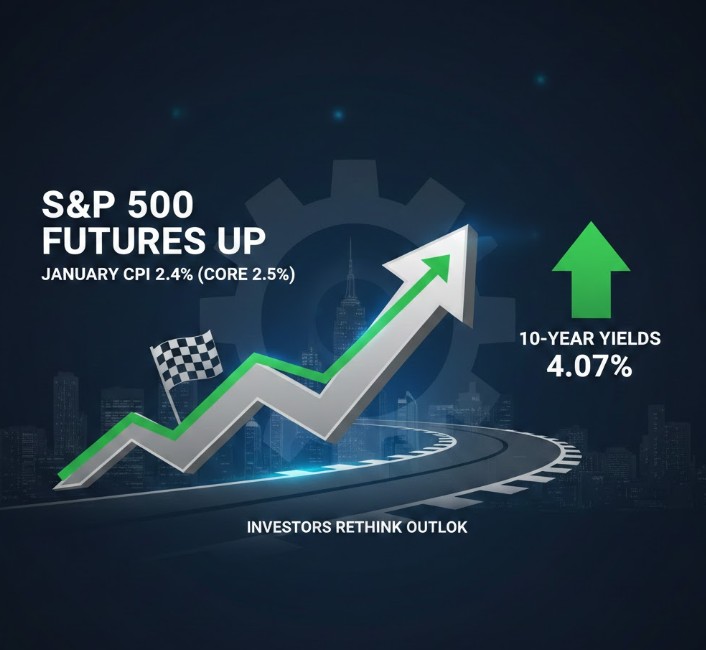
S&P 500 Futures Tick Up Ahead of Jobs Report and Retail Data

Lead: U.S. equity futures inched higher Wednesday as traders braced for this week’s key economic releases, with E mini S&P 500 contracts up roughly 0.2% and Nasdaq 100 minis also up about 0.2%. The market’s focus is squarely on the January jobs report and December retail sales figures, which investors expect will clarify the strength of the labor market and consumer demand and influence the Federal Reserve’s policy path.
Background: The S&P 500 represented in futures by the E mini contracts (ticker ES) and tracked on the cash market as the ^GSPC index has been trading in a narrow range as markets navigate conflicting signals from durable inflation prints and resilient employment. Over recent months the index has shown moderate gains driven by heavyweight technology names, while cyclical sectors have fluctuated with macroeconomic headlines. With the Fed having paused hikes for now, traders are parsing incoming data for clues on whether rate cuts remain likely later in the year.
Why the data matter: The January nonfarm payrolls report due this week is projected to show about 70,000 jobs added and an unemployment rate steady at 4.4%, according to consensus estimates. That is materially below the monthly gains seen during the recovery years, and a softer print would support the view that the labor market is cooling, potentially increasing the odds of rate cuts. December retail sales, meanwhile, will shed light on consumer spending, which accounts for roughly two thirds of U.S. economic activity; a weak retail sales number would signal slowing demand and reinforce a cautious economic outlook.
Detailed analysis: Futures’ modest gains reflect a classic pre data positioning: investors buy on dip risk while keeping exposure limited ahead of headline releases that can drive intraday volatility. A payroll result close to the 70,000 forecast would generally be interpreted as consistent with a labor market decelerating toward trend, likely cementing expectations that the Fed can remain on hold and potentially begin easing later this year if inflation continues to drift lower. Conversely, a surprise upside in payrolls or an uptick in wage growth would revive concerns that tight labor conditions could sustain inflationary pressure, lifting yields and pressuring growth sensitive equities.
Market reaction: Early trading Wednesday showed E mini S&P 500 contracts up about 0.2% and Nasdaq 100 minis up roughly 0.2%, indicating modest risk appetite. Those moves mirror a cautious optimism: participants are tentatively buying exposure while preserving flexibility for the incoming jobs and retail prints. Historically, volatility spikes around the jobs release, and dealers often widen option spreads and hedge directional exposure; such positioning can amplify price swings when the data hit the tape.
Analyst and strategist view: Market strategists broadly describe the current environment as data dependent. Many observers say a softer payrolls number would lower the hurdle for Fed easing, supporting multiple expansion in interest rate sensitive sectors such as real estate and utilities, while a stronger reading could boost bank shares on the prospect of sustained loan demand and higher yields. Economists emphasize that wage growth and participation rates are as important as headline payrolls when interpreting labor market tightness and the likely policy response.
Sector implications: Consumer discretionary and retail stocks are particularly sensitive to the upcoming retail sales report; downside surprises could hit retailers and autos, while defensive sectors such as consumer staples and utilities may outperform. Financials can swing with the payrolls surprise via moves in Treasury yields: stronger jobs and wage data typically push yields higher, benefiting net interest margins but weighing on rate sensitive growth stocks. Technology has shown resilience but remains vulnerable to sudden shifts in yield expectations.
Actionable guidance for investors: With significant macro data imminent, investors should rebalance around risk tolerance and time horizon rather than make large directional bets. Consider trimming concentrated positions and using options or stop limits to manage headline risk; shorter dated hedges can cap downside around the release without imposing long term costs. Monitor not only headline payrolls but also average hourly earnings and participation; evidence of accelerating wages would be a red flag for inflation momentum. For longer term investors, maintain exposure to high quality names and diversify across sectors likely to benefit from either a soft landing (consumer resilience) or slower growth (defensive champions).
Conclusion: The next 48 hours of data will provide important signals on the U.S. economy’s trajectory and the Fed’s likely timing for any policy shifts. Modest gains in futures reflect an orderly market positioning ahead of potentially market moving releases, with outcomes that could either reinforce expectations for eventual easing or prompt investors to recalibrate for a more persistent rate environment. Traders and longer term investors alike should prepare for elevated intraday volatility around the reports, focus on the underlying wage and participation metrics, and adjust risk exposure based on confirmed data rather than headlines alone.
U.S. futures rose about 0.2% as investors positioned ahead of the January jobs report and December retail sales, seeking clarity on labor strength and the Fed outlook.