Steel Dynamics Slips as Markets Rally: What Investors Should Watch

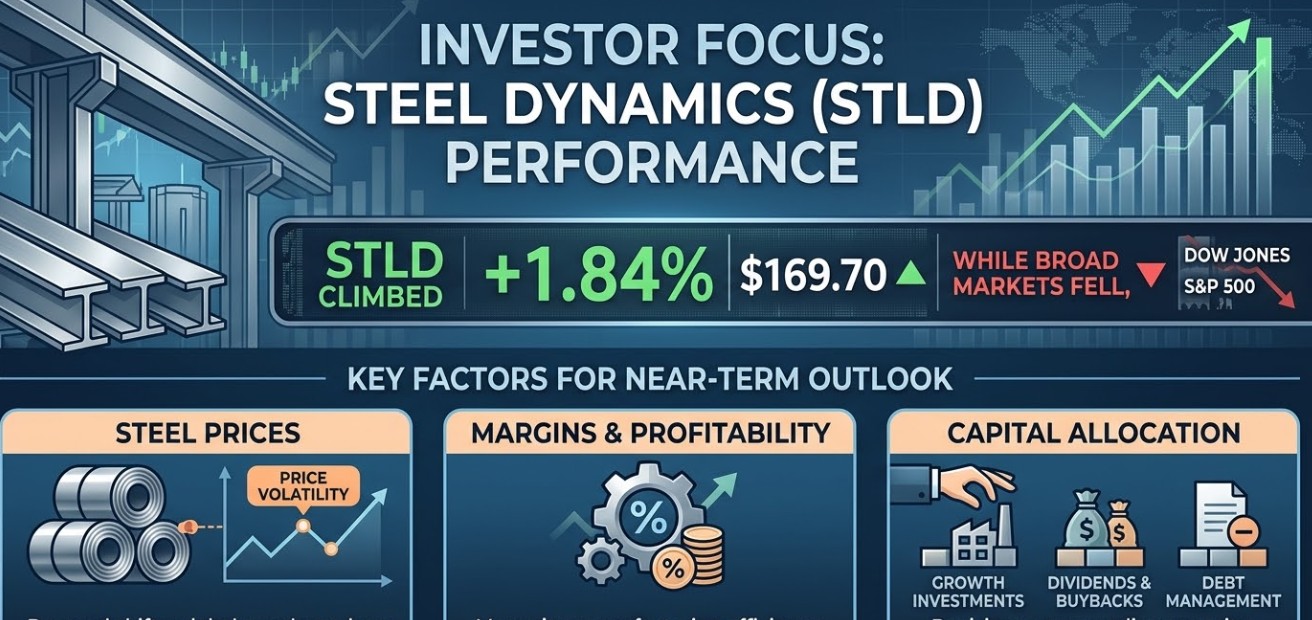
Steel Dynamics (STLD) closed at $193.91 in the most recent session, down 1.79% from the prior day even as broader markets advanced. The divergence highlights investor sensitivity to sector-specific drivers notably steel demand, scrap and raw-material costs, and margin outlook that can move integrated steelmakers independently of the wider market.
Background and Company Overview
Steel Dynamics is one of the largest domestic steel producers in the United States, operating integrated steelmaking, metals recycling and engineered products businesses.
The company supplies flat-rolled, structural and specialty steel to automotive, construction, appliance and manufacturing customers, and it also operates significant metals recycling operations that both support raw-material sourcing and contribute to margins.
Over recent quarters STLD has drawn investor attention for its capital allocation, capacity additions and historically cyclical revenue and margin patterns.
Why the Stock Moved
The immediate price move a decline of 1.79% to $193.91 is modest in absolute terms but notable because it occurred while broader indices were rising, signaling a potential stock-specific reassessment by investors.
Steel stocks frequently react to short-term shifts in underlying commodity markets:
- Scrap prices
- Hot-rolled coil (HRC) futures
- Iron ore markets
These variables can alter near-term margin expectations quickly.
For an integrated producer such as Steel Dynamics, changes in scrap input costs relative to finished-steel prices compress or expand gross margins and thus affect near-term earnings visibility.
Key Drivers Investors Watch
In the absence of a company-specific headline tied to today's move, several factual factors typically drive investor behavior in STLD and provide a framework for analysis.
1. Commodity-Price Volatility
Scrap steel and HRC benchmarks remain key inputs for valuation models. Sudden downward pressure on steel prices or upward pressure on scrap increases the risk to margins.
2. Demand Signals
Activity in U.S. construction, manufacturing, energy and automotive sectors directly affects order volumes and pricing power for domestic steel producers.
3. Macro and Trade Policy
Tariffs, trade flows from major exporters and currency moves influence the competitive landscape and can shift investor expectations about domestic pricing and utilization.
Analyst Focus and Sector Metrics
Analysts tracking the steel sector emphasize margin sensitivity and volume trends when assessing Steel Dynamics.
Industry research typically points to three near-term metrics investors should monitor:
- Realized selling prices per ton
- Average scrap purchase costs
- Shipments and outbound tons
Improvements in per-ton spreads often translate into outsized changes in operating income because much of the cost base is variable.
Conversely, margin compression can reduce free cash flow and temper near-term buyback or dividend capacity.
Market Reaction
Market reaction to today's price decline appeared to be concentrated within the industrial and materials group rather than broad-based selling.
When a single-name stock underperforms while indexes rally, it can reflect several factors:
- Profit-taking after prior gains
- Sector rotation into higher-growth areas
- Positioning ahead of company catalysts such as earnings releases or guidance updates
For Steel Dynamics, forthcoming quarterly results and any commentary on order backlog, utilization and pricing will be key catalysts to watch.
Analyst and Industry Commentary
Industry experts often emphasize the operating leverage inherent in integrated steelmakers. Modest changes in spreads can disproportionately affect earnings.
Analysts also highlight the strategic value of metals recycling operations, which can partially insulate producers from raw-material inflation.
From a capital allocation perspective, investors are watching how the company balances:
- Capacity expansion investments
- Dividend maintenance
- Share repurchases
These decisions often signal management’s confidence in future cash flow durability.
What This Means for Investors Actionable Insights
- Monitor steel and scrap benchmarks: A sustained decline in finished steel pricing relative to scrap costs would pressure margins.
- Track upcoming earnings commentary: Shipments, utilization rates and pricing guidance will likely explain near-term stock movements.
- Evaluate valuation metrics: Compare Steel Dynamics with peers using EV/EBITDA and price-to-earnings ratios while accounting for its integrated recycling advantage.
- Consider investment horizon: The company’s cyclical exposure favors investors with a medium-to-long-term outlook who can tolerate quarterly volatility.
Risk Management Considerations
Given the cyclical nature of the steel industry, risk management is critical.
Investors should consider:
- Position sizing appropriate for cyclical volatility
- Stop-loss strategies or options hedges around earnings or commodity shocks
- Dividend sustainability relative to free cash flow under varying margin scenarios
Income-focused investors should assess whether the dividend payout remains sustainable under different commodity price environments.
Conclusion and Outlook
Steel Dynamics’ 1.79% dip to $193.91 amid broader market gains underscores how sector-specific fundamentals can drive stock performance independently of macro equity trends.
The move highlights the importance for investors of watching per-ton spreads, scrap costs, shipment trends and upcoming company disclosures.
Over the coming weeks, quarterly results and commodity-market developments will be the primary determinants of direction for STLD. Investors should align exposure with their view on the steel cycle and the company's ability to convert operational leverage into durable cash flow.