Stock Futures Slide After Talks Fail; Oil Surges 9% on Hormuz Risk
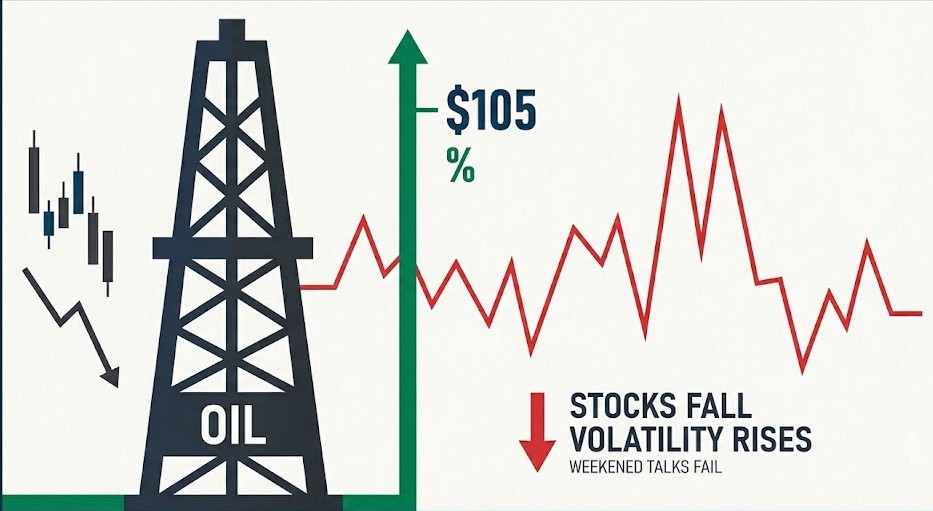
U.S. stock futures fell sharply Sunday evening after weekend peace negotiations failed, while crude oil prices surged roughly 9.2% to around $105 per barrel as investors rapidly repriced geopolitical and energy-market risk. The sudden reversal in sentiment marked a sharp shift away from the risk-on momentum that had lifted equities the previous week and highlighted how quickly geopolitical developments can reshape expectations across global markets. The SPDR S&P 500 ETF Trust, widely viewed as a benchmark for U.S. equities, came under pressure alongside futures tied to the Dow Jones Industrial Average, S&P 500 and Nasdaq as traders moved toward safer assets.
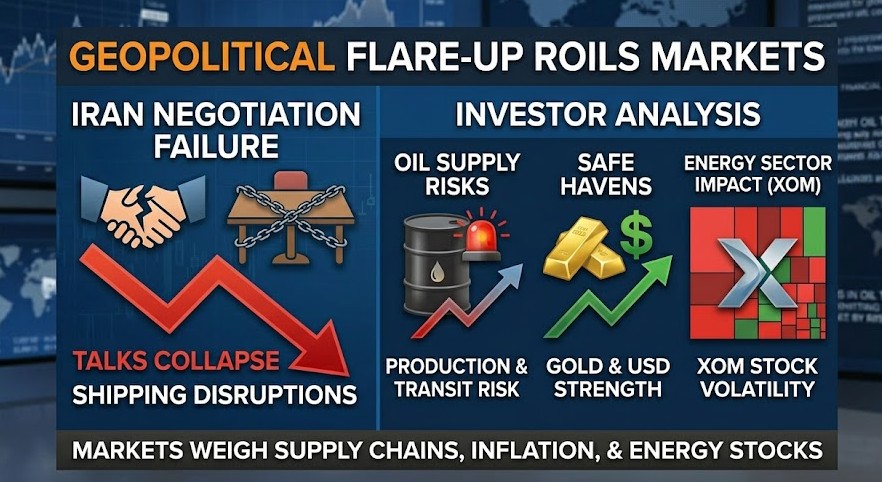
The selloff follows the collapse of weekend peace talks tied to escalating tensions in the Middle East, with renewed concerns focused on the Strait of Hormuz — one of the world’s most strategically important oil-shipping chokepoints. The region handles a substantial share of global seaborne crude exports, meaning even the threat of disruption can significantly affect energy pricing and market stability. Oil markets responded immediately, with crude futures reversing last week’s decline and jumping above the psychologically important $100 level.
The move in crude prices has major implications for equities and the broader economy. Higher oil prices increase fuel and transportation costs across industries, directly pressuring sectors such as airlines, shipping, manufacturing and consumer discretionary companies. Businesses with limited pricing power may struggle to absorb rising input costs, potentially compressing profit margins in coming quarters. Conversely, integrated oil producers and energy-service firms are likely to benefit from stronger upstream pricing and improved cash flow expectations.
Beyond sector-specific effects, rising crude prices also create broader macroeconomic challenges. Higher gasoline and energy costs reduce consumer disposable income, which can slow spending activity and weaken demand-sensitive parts of the economy. At the same time, energy-driven inflation can complicate monetary policy expectations by increasing pressure on central banks to maintain tighter financial conditions for longer periods. Investors are therefore increasingly focused on whether the latest spike in oil represents a temporary geopolitical premium or the beginning of a more prolonged supply disruption.
Market reaction has reflected a classic risk-off environment. Equity futures declined while investors rotated toward traditional safe-haven assets such as U.S. Treasuries, the U.S. dollar and gold. Volatility expectations also increased as traders adjusted portfolios to account for elevated geopolitical uncertainty. In these environments, market movements often become highly sensitive to headlines, diplomatic developments and real-time updates regarding shipping activity and military positioning in the Gulf region.
Analysts remain cautious about making aggressive directional calls too early. Historically, geopolitical shocks tied to the Middle East have often produced sharp but temporary spikes in oil and volatility, followed by partial recoveries once tensions stabilized or diplomatic channels reopened. However, strategists note that a sustained disruption to shipping through the Strait of Hormuz would represent a materially different scenario with more lasting implications for inflation, earnings forecasts and global growth expectations.
For investors, the current environment reinforces the importance of disciplined portfolio management and risk control. Energy-sensitive sectors such as airlines, transportation and certain consumer discretionary names may remain vulnerable if crude prices stay elevated. At the same time, selective exposure to high-quality energy companies or energy-focused ETFs could provide a hedge against continued oil-price strength. Investors may also consider maintaining higher cash allocations or using options-based hedging strategies to manage near-term volatility.
Monitoring macro indicators will be critical over the coming days and weeks. Key signals include shipping activity through the Strait of Hormuz, changes in oil futures curves, inventory data, insurance premiums for tanker routes and official statements from governments involved in negotiations. Central bank commentary will also matter because persistent energy inflation could affect interest-rate expectations and broader market valuations, particularly for growth-oriented equities.
The latest market reversal highlights how quickly geopolitical events can alter investor psychology and financial conditions. While the jump to approximately $105 oil reflects a significant increase in perceived supply risk, markets will ultimately determine whether the move represents a temporary fear-driven repricing or the beginning of a longer-lasting energy shock. Until greater clarity emerges, investors are likely to remain focused on liquidity, defensive positioning and tactical risk management as volatility across equities, commodities and currencies remains elevated.