Sunoco Falls 1.05% to $67.56 Amid Broader Market Gains for Investors
Sunoco LP Shares Slip Despite Broader Market Gains as Investors Reassess Downstream Fuel Exposure
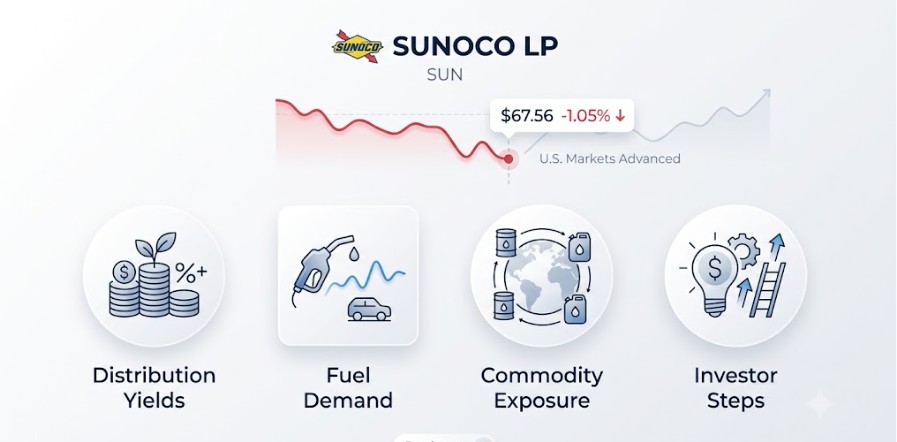
Sunoco LP (SUN) declined 1.05% to close at $67.56 in the latest trading session, underperforming the broader market as investors reassessed exposure to downstream fuel distribution businesses. The modest decline highlights the sensitivity of fuel distributors to changes in fuel demand, commodity spreads, and distribution expectations, even during periods of broader market strength.
Company Background and Recent Performance
Sunoco LP is a downstream fuel distributor and retail marketer with a longstanding presence in wholesale fuel supply and convenience store partnerships. Historically structured as a master limited partnership (MLP), the company's investment appeal is closely tied to motor fuel volumes, wholesale margins, and the stability of its cash distributions.
Investors generally view Sunoco as a play on consumer driving trends, regional fuel pricing, and the overall health of the retail fuel distribution network.
Analysis of the Share Price Decline
Sunoco closed at $67.56, down 1.05% from the previous session despite gains across the broader equity market. Although trading volume was not a major focus, the decline suggests selective profit-taking or portfolio repositioning by investors evaluating the company's distribution outlook and broader macroeconomic conditions.
Several factors may explain the stock's underperformance.
Fuel demand trends and regional supply dynamics have a significant impact on Sunoco's operating margins and fuel volumes. At the same time, fluctuations in refined-product spreads can materially affect wholesale profitability and earnings.
Investor sentiment surrounding distribution sustainability also remains important. Rising interest rates, inflation expectations, and changes in income-oriented investment preferences can influence demand for high-yield energy partnerships like Sunoco.
Market Reaction and Analyst Commentary
There was no company-specific announcement associated with the decline. However, analysts covering downstream fuel distributors continue to emphasize the sector's sensitivity to seasonal demand patterns, refining margins, and fuel price volatility.
Previous research has focused on Sunoco's ability to maintain fuel volumes while effectively managing procurement costs and preserving distribution coverage during changing market conditions.
Even relatively small declines can prompt investors to reassess earnings expectations and distribution sustainability, particularly in yield-focused sectors.
What This Means for Investors
Investors should continue monitoring several key operating indicators, including:
- Monthly fuel volumes.
- Regional fuel pricing trends.
- Wholesale margin performance.
- Distribution coverage ratios.
- Company commentary regarding capital allocation and distributions.
Given Sunoco's exposure to retail and wholesale fuel markets, quarterly results can vary significantly depending on demand patterns and commodity pricing.
Income-focused investors should also evaluate whether the current yield adequately compensates for commodity price volatility and cyclical business risks compared with other energy income investments.
Risks and Portfolio Considerations
Risk management remains important for Sunoco investors.
Existing shareholders may consider reducing exposure if macroeconomic data point toward sustained weakness in fuel demand or deteriorating distribution coverage. Conversely, value-oriented investors may view periods of weakness as potential accumulation opportunities if fuel volumes and refined-product margins begin to improve.
More conservative investors may prefer waiting for quarterly earnings or updated management guidance before increasing positions.
Comparisons with other downstream distributors and convenience retailers are also useful. Businesses that generate meaningful non-fuel revenue through convenience stores or other services often experience less earnings volatility than companies with greater reliance on wholesale fuel margins.
Longer-Term Outlook
Several catalysts could influence Sunoco's performance over the coming quarters, including:
- Quarterly earnings results.
- Updates to distribution guidance.
- Government fuel consumption and inventory reports.
- Seasonal gasoline demand during the summer driving period.
- Capital allocation decisions, including distribution changes or share repurchases.
Longer-term structural trends also deserve attention. Growing electric vehicle adoption, changing transportation habits, environmental regulations, and evolving fuel distribution economics could gradually affect gasoline demand and regional profitability.
Investors should regularly assess these trends alongside Sunoco's ability to maintain stable cash flows and attractive distributions.
Conclusion and Forward-Looking Perspective
Sunoco's 1.05% decline to $67.56 during an otherwise positive market session reflects sector-specific caution rather than broad market weakness. The company remains closely tied to fuel demand cycles, wholesale margin trends, and distribution sustainability, all of which continue to influence investor sentiment.
Looking ahead, investors should monitor fuel volumes, refined-product margins, distribution coverage, and management commentary to determine whether recent weakness represents a temporary pullback or the beginning of a more sustained shift in market expectations.
Sunoco shares fell 1.05% to $67.56 as investors reduced exposure to downstream fuel distributors amid concerns over fuel demand, commodity spread volatility, and distribution sustainability despite broader market gains.