Tech Sell-Off Rattles S&P 500 Amid AI Profit-Taking & Labor Woes
Tech Sell-Off Rattles S&P 500 Amid AI Profit-Taking & Labor Woes
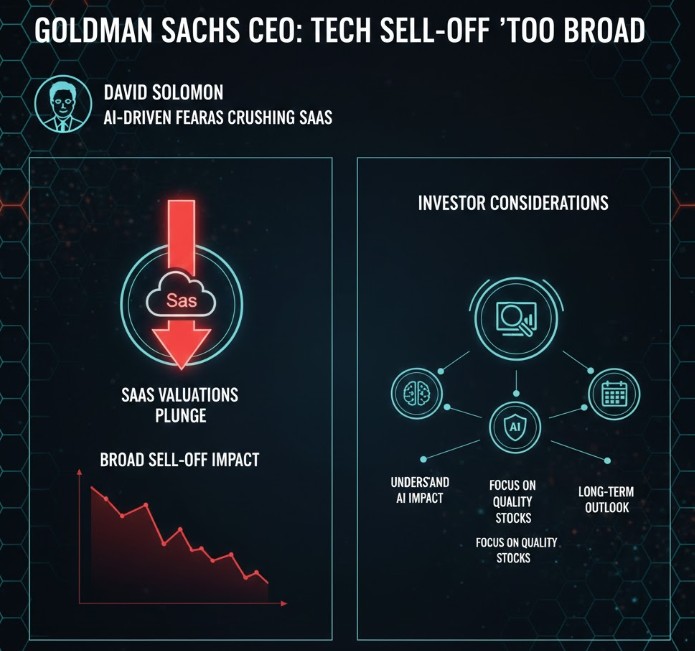
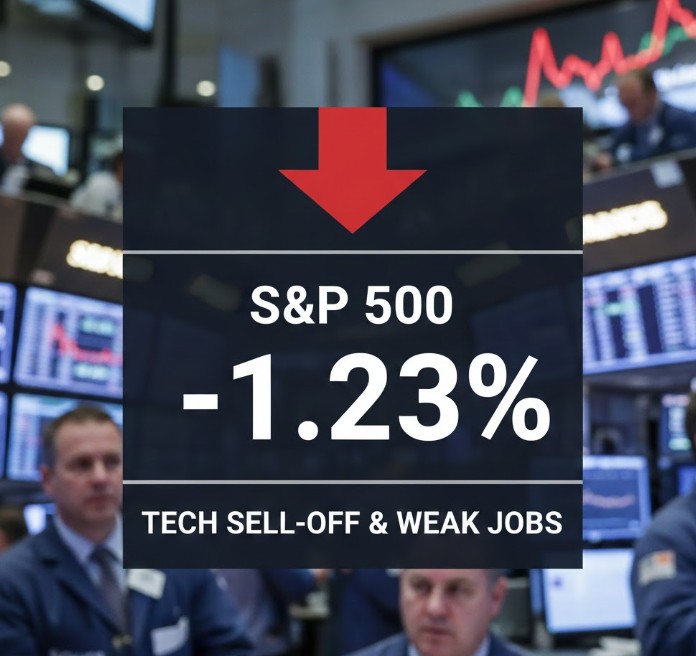
U.S. major indexes experienced a notable downturn today, February 5, 2026, with the S&P 500 shedding 1.23% as a significant tech sector sell-off, fueled by investor concerns over artificial intelligence valuations and unsettling labor market signals, sent software stocks into a notable freefall. This broad market correction highlights increasing investor caution regarding elevated tech valuations and the potential for a weakening economic landscape, impacting overall market sentiment and prompting a reevaluation of growth-oriented portfolios.
Background: A Market Riding High on Tech Optimism
For much of the preceding period, the U.S. stock market, particularly the S&P 500, had been buoyed by robust enthusiasm surrounding the artificial intelligence revolution. Technology companies, especially those at the forefront of AI development and implementation, saw their valuations soar, driven by projections of transformative growth and increased profitability.
This era of sustained optimism led to significant capital inflows into the tech sector, making it a dominant force in the broader market's performance. The S&P 500, a bellwether for the U.S. economy and corporate health, reflected this trend, often seeing its gains heavily influenced by the outperformance of its technology constituents. However, such prolonged periods of rapid appreciation invariably invite scrutiny over valuations and sustainability, setting the stage for potential corrections when market catalysts emerge.
Detailed Analysis: AI Profit-Taking and Faltering Labor Signals
Today's market action saw two primary forces converge to trigger the downturn: "AI-fueled tech selling" and "weak labor signals."
The AI-fueled selling is multifaceted. After a period of intense hype and substantial gains, investors are increasingly scrutinizing the sustainability of current valuations in the AI space. Many high-flying tech and software companies have seen their price-to-earnings ratios expand dramatically, reflecting future growth expectations that may now appear overly optimistic to some. This can lead to profit-taking, where investors cash in on their gains, particularly when macroeconomic indicators suggest potential headwinds.
There is also the possibility of a rotational shift, where capital flows out of perceived overvalued growth stocks and into more defensive or value-oriented sectors, anticipating a slower economic cycle.
Concurrently, the emergence of weak labor signals amplified investor anxieties. While the specific details of these signals were not immediately clear, any indication of a softening labor market is a critical macroeconomic data point. A robust job market has been a cornerstone of consumer spending and overall economic resilience. Weakening employment data can point toward a slowdown in economic growth, reduced consumer confidence, and ultimately lower corporate earnings across sectors.
For technology and software companies, which are often highly sensitive to economic cycles and corporate spending, a contraction in labor markets can translate directly into reduced demand for their products and services, justifying a downward re-evaluation of their future revenue and profit outlooks.
The combination of these factors created a potent mix, driving significant selling pressure, especially within the software sub-sector, which often trades at premium valuations based on strong growth trajectories.
Market Reaction and Analyst Commentary
The S&P 500's 1.23% decline reflects a broader market apprehension, but the pronounced freefall in software stocks indicates where the pain was most acute. This suggests that the tech sector's high-growth, high-valuation characteristics made it particularly vulnerable to the dual pressures of profit-taking and economic uncertainty.
Other sectors may have experienced more modest declines or even shown relative resilience, as investors rotated capital into safer areas.
Analyst commentary following such events typically centers on recalibrating expectations. Experts from major financial institutions often emphasize the importance of fundamentals over hype, particularly for companies with stretched valuations. Discussions would likely revolve around whether the AI rally had overheated and whether a healthy correction was necessary to restore more sustainable growth paths.
Economists and market strategists would also focus on interpreting the labor market data, attempting to determine whether these weak signals represent a temporary fluctuation or the early stages of a broader economic slowdown. The consensus may lean toward increased volatility in the near term, with closer attention on corporate earnings and forward guidance from technology firms.
What This Means for Investors: Actionable Insights
For investors, today's market action underscores the importance of maintaining a diversified and disciplined investment approach.
Re-evaluate Tech Exposure:
Investors heavily concentrated in high-growth tech and software stocks should
reassess their portfolio risk profile. While AI remains a powerful long-term
theme, short-term valuations can be highly volatile.
Focus on Fundamentals:
Prioritize companies with strong balance sheets, consistent profitability, and
clear pathways to sustainable growth, rather than relying solely on speculative
narratives.
Monitor Economic Data:
Keep a close watch on labor market reports, inflation trends, and interest rate
signals. These macroeconomic indicators will heavily influence market direction
and sector performance.
Consider Defensive Sectors:
In periods of heightened uncertainty, sectors such as utilities, consumer
staples, and healthcare may offer relative stability and downside protection.
Maintain a Long-Term Perspective:
Market pullbacks can present opportunities to acquire quality assets at more
attractive valuations. However, careful selection and thorough research remain
essential.
Conclusion: Navigating Shifting Sands
The S&P 500's dip, driven by a tech sector correction stemming from AI valuation concerns and unsettling labor market signals, serves as a reminder of the market's inherent volatility and the constant interplay between sector-specific developments and broader economic health.
While the long-term potential of artificial intelligence remains intact, the near-term environment calls for a more measured and discerning investment approach. The market is navigating shifting conditions where strong company fundamentals and awareness of macroeconomic trends will be increasingly important.
Investors who remain informed, diversified, and focused on long-term strategy will be better positioned to manage potential turbulence and capitalize on opportunities as the economic landscape continues to evolve.