Tesla Stock Climbs on Robotaxi Milestone Despite Mixed Earnings Signals
Introduction
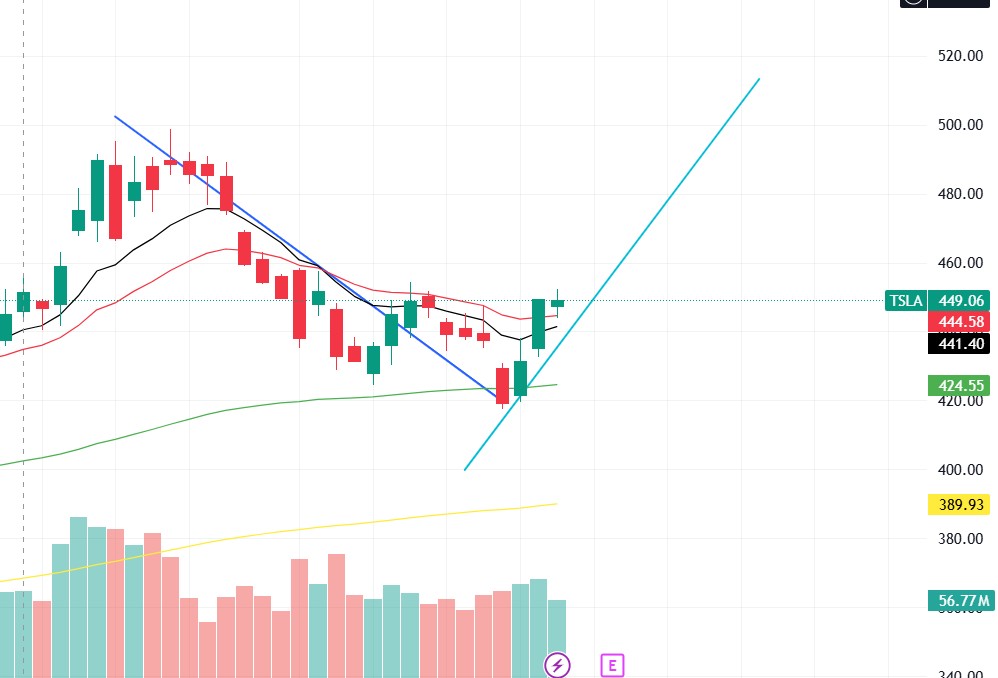
Tesla Inc shares are trading around $450, reflecting a nuanced market narrative that balances milestone progress in autonomous robotaxi services with mixed quarterly delivery and earnings performance. The electric-vehicle maker continues to capture headlines for its promising AI-driven mobility innovations even as traditional vehicle delivery metrics show signs of slowing.
Investors are closely watching both the company’s recent autonomous driving developments and its core automotive business results from the most recent quarter. This dynamic has created a complex backdrop for the stock, blending future-focused technological optimism with near-term fundamental pressures.
About the Company
Tesla is one of the leading electric vehicle (EV) manufacturers globally, known for its Model S, 3, X, and Y series, and has expanded ambitions into energy storage, solar products, autonomous systems, and robotics. The company’s core revenue streams include automotive sales, energy generation and storage, and services and other revenue. Its innovations in electric propulsion and self-driving technology have made it a household name in both consumer markets and financial circles.
Under CEO Elon Musk, Tesla has also ventured aggressively into autonomous driving technologies and robotics, positioning itself at the intersection of transportation, artificial intelligence, and energy. Its Gigafactories across the United States and worldwide support its vehicle production and battery ecosystem.
Why the Stock Is in Focus
Tesla’s stock remains in focus for several reasons:
1. Autonomous Milestones: Tesla recently announced significant progress in launching robotaxi rides without onboard safety monitors in Austin, Texas, representing a key step toward commercializing full autonomy. This update has driven bullish sentiment among technology-oriented investors and traders.
2. Delivery Trends: Tesla reported 418,227 vehicle deliveries in Q4 2025, down 16% year-over-year and slightly below Wall Street consensus. Although deliveries remain strong in absolute terms, this decline signals a shift in the company’s traditional growth pattern.
3. Market Reaction to Mixed Results: Despite delivery headwinds and earnings misses in recent periods, Tesla’s stock has shown resilience, buoyed by enthusiasm for future technologies like Optimus robots and autonomous software.
Together, these developments create a narrative where Tesla is seen not just as an automaker but as a technology platform with multiple future growth vectors.
Trading
From a technical and sentiment perspective, Tesla’s share price has shown sustained trading interest near the $450 area, with notable spikes tied to news events rather than traditional earnings catalysts. The market has reacted positively to autonomous and AI-related milestones, keeping the stock in play even when core automotive fundamentals are challenged.
Recent price action suggests that trend participants are treating Tesla as a hybrid tech/auto story: one where innovation headlines can outweigh cyclical pressures. This trend behavior supports the idea that traders may continue to rotate into TSLA during market phases that reward growth narratives tied to AI and autonomy.
Fundamental Support
On the fundamental side, Tesla’s recent numbers paint a more mixed picture:
- Q4 2025 Vehicle Deliveries: Approximately 418,227 units, marking a 16% decline compared to the same quarter a year earlier and slightly below consensus estimates.
- Revenue & Earnings Signals: According to recent earnings data, Tesla reported revenue of ~$25.7 billion and adjusted EPS around $0.73, which were slightly below analyst expectations and represented ongoing pressure on profitability.
- Free Cash Flow: Despite earnings challenges, Tesla has maintained free cash flow generation and continues to invest heavily in R&D and future growth areas such as AI and autonomous systems.
While vehicle deliveries have softened, Tesla’s diversified business units such as energy storage and services continue to contribute to overall revenue streams. Moreover, the company’s active deployment of autonomous driving technology and ambitious robotics roadmap provide strategic longer-term catalysts that many investors are now pricing into the stock.
Risks to Watch
Despite its multiple growth narratives, Tesla faces several real risks:
1. Delivery Slowdown: A decline in quarterly vehicle deliveries, particularly in Q4 2025, highlights the challenges Tesla faces in sustaining EV demand amid rising competition and changes to fiscal incentives.
2. Profitability Pressures: Recent earnings reports have shown misses on revenue and EPS expectations, suggesting that cost structure, pricing strategies, and margin pressures remain key risks for near-term fundamentals.
3. Execution Risk in New Ventures: While autonomous robotaxi services and Optimus robots generate excitement, these initiatives also carry execution risk both in scaling production and in meeting regulatory requirements across global markets.
4. Market Sentiment Volatility: Shares have historically been sensitive to broader tech sentiment, macroeconomic factors, and commentary from company leadership, meaning short-term volatility can outpace underlying business performance.
Conclusion
Tesla’s stock, trading near $450, sits at a crossroads of innovation-driven enthusiasm and mixed fundamental performance. While quarterly delivery declines and earnings headwinds continue to challenge its core automotive business, milestone achievements in autonomous driving and AI-related initiatives have helped sustain investor interest.
For investors and traders alike, TSLA remains a compelling name not just as a leader in electric vehicles, but as a technology developer with multiple potential long-term growth vectors. The stock’s reaction to non-traditional news catalysts underscores how narrative and innovation can materially influence price behavior even when traditional metrics face pressure.
Disclaimer
This article is for informational and educational purposes only and does not constitute financial, investment, or trading advice. Investing in financial markets involves risk, and readers should conduct their own research or consult a qualified financial advisor before making any investment decisions. Past performance is not indicative of future results.