U.S. Futures Tick Higher as Holiday Thin Trading Dampens Volume
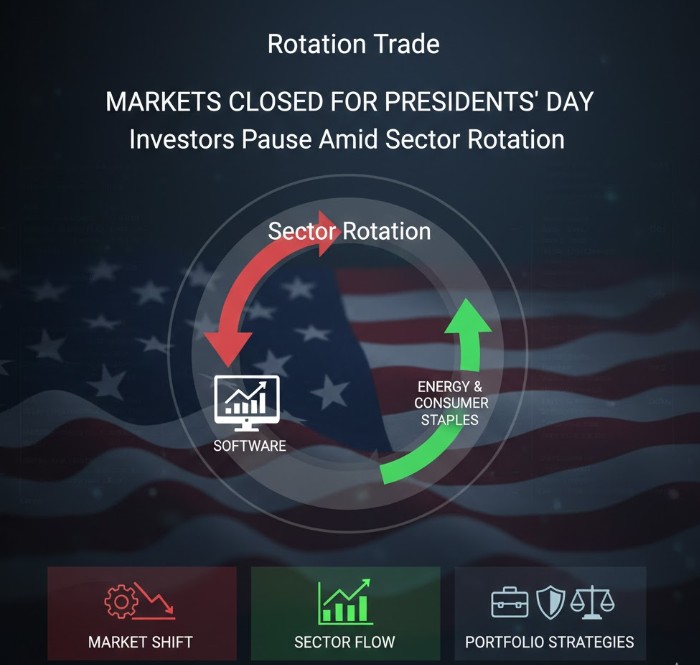
U.S. equity futures edged higher Monday as a string of public holidays around the globe thinned trading volumes, leaving investors to parse a sparse news docket for market direction. The pause in cash markets with U.S. exchanges closed for Presidents Day and trading floors in China and South Korea shut for Lunar New Year observances produced modest gains in futures while amplifying the potential impact of any fresh economic data or corporate headlines.
Background and Recent Performance
The SPDR S&P 500 ETF Trust (SPY), a widely tracked proxy for broad U.S. equity performance, has recorded steady gains over the past year amid resilient corporate earnings and a pause in aggressive monetary tightening. While large-cap technology and cyclical names have led much of the advance, volatility has remained subdued, and investors have used holiday-thinned sessions to reposition portfolios or manage risk ahead of earnings and macro releases.
Market Context and Detailed Analysis
Holiday-driven closures tend to reduce liquidity and make price moves in futures more sensitive to comparatively small flows. With U.S. cash trading closed for Presidents Day and several Asian markets on Lunar New Year holiday schedules, block trades and algorithmic flow can drive outsized moves in pre-market and overnight sessions.
On this holiday-affected Monday, equity futures in Europe were modestly higher, reflecting a cautious tone as traders awaited a fuller slate of U.S. data later in the week. The lack of primary economic prints or major corporate news increased the market’s focus on technical levels and cross-asset signals. Treasury yields were largely unchanged, while commodity markets traded with limited conviction as participants delayed larger directional bets until normal liquidity returned.
For institutional investors, the holiday presented both an opportunity to execute planned rebalances with lower market impact and a risk that thin markets could exaggerate short-term price swings.
Market Reaction and Analyst Commentary
Market strategists noted that holiday-thinned conditions typically lead to muted directional conviction but elevated headline sensitivity. “In holiday sessions the market’s reaction function becomes shorter,” said one strategist with a large asset manager, noting that a small piece of news can move futures more than it would in a regular session. Equity futures’ modest uptick reflected a risk-on leaning among short-term traders, but analysts cautioned that the signal has lower reliability until full participation resumes.
Regional holidays in Asia also supplied a cross-border dynamic. The Lunar New Year closures in China and South Korea constrained liquidity in Asian equity and bond markets and reduced the flow of price discovery from that region. That can limit the transmission of overseas sentiment into U.S.-listed securities and ETFs such as SPY, reinforcing a tendency toward range-bound trading in the absence of fresh catalysts.
What This Means for Investors
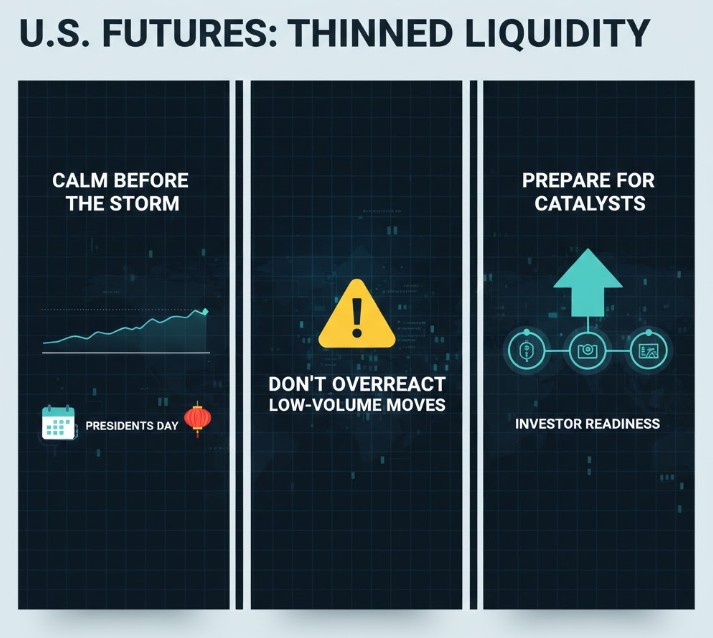
- Expect higher short-term noise: Thin holiday markets can amplify volatility; investors should be cautious about reading too much into intraday futures moves and avoid overreacting to small percentage changes.
- Use the pause to prepare for catalysts: With a fuller calendar of earnings and economic releases approaching, holiday sessions are a pragmatic time to review portfolio exposures, hedge where necessary, and set execution plans for when liquidity returns.
- Mind execution cost and slippage: Institutional and retail traders should be mindful that bid-ask spreads and slippage can widen in low-volatility environments, making large trades more costly than they appear in headline price moves.
- Watch cross-asset signals: With limited equity participation, movements in Treasuries, commodities, and FX can provide useful context; a divergence between futures and fixed income may presage a stronger move once markets reopen.
ETF and Liquidity Dynamics
Exchange-traded funds such as SPY can mitigate trading frictions on regular days by concentrating liquidity, but on holiday-thinned sessions even ETF spreads and authorized participant activity can be constrained. That can make it harder for large institutions to source baskets of underlying stocks or to execute in-kind creations and redemptions without moving prices. Market makers tend to widen quoting ranges, increasing implicit transaction costs and encouraging some participants to delay sizable reallocations until the regular session.
Earnings Season and the Near-Term Calendar
Investors should also consider the proximity of corporate earnings and key macro releases. Holiday sessions compress the window for pre-earnings adjustments, and when earnings reports, GDP readings, or inflation indicators arrive in the days after a holiday, they can trigger sharper moves as liquidity normalizes. Portfolio managers often calibrate hedges and options positions over holiday weekends, but the true market response to news usually materializes once trading resumes at scale.
Conclusion and Outlook
Holiday-thinned trading days are a routine but important feature of the market calendar, temporarily shifting the emphasis from broad participation to discrete flows and technical levels. The modest uptick in U.S. futures during the Presidents Day and Lunar New Year closures reflected subdued risk appetite rather than a decisive directional change. Investors should treat such sessions as preparatory windows useful for housekeeping, rebalancing, and tactical positioning but avoid making sweeping investment decisions based on limited-volume price action.
As markets return to full liquidity this week, attention will refocus on scheduled earnings, retail sales, and central bank commentary that will more reliably determine market direction.
Futures ticked higher as holiday-related thin liquidity from Presidents Day and Lunar New Year made markets more sensitive to modest buying flows.