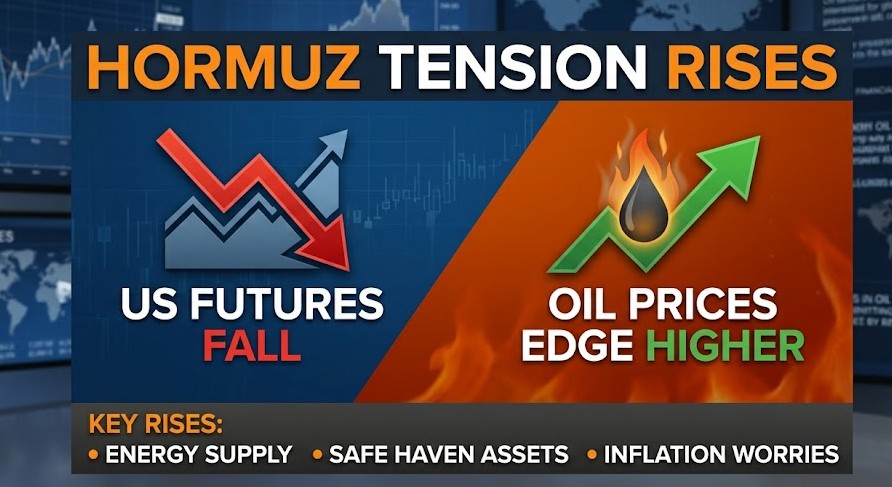
US-Iran Breakdown Sends Futures Lower; Oil, Risk Assets Drop
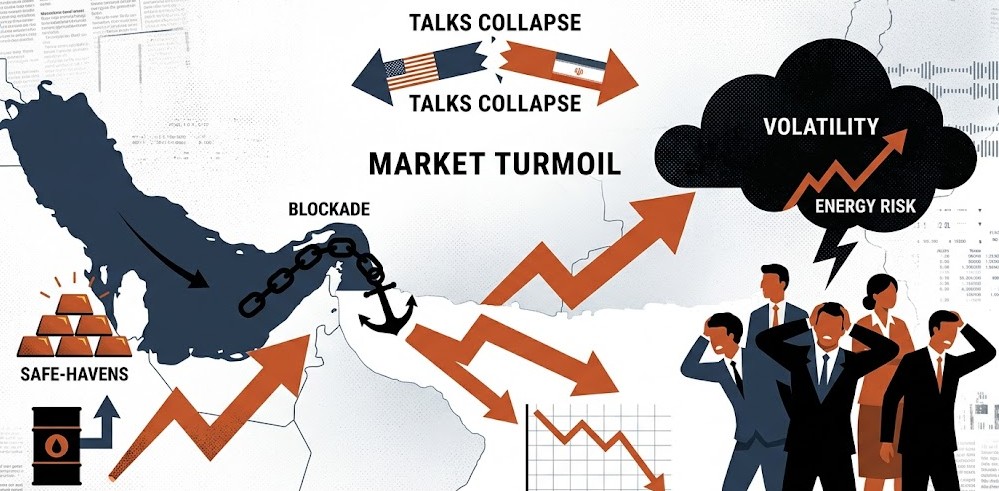
U.S. equity futures slid Monday after negotiations between the United States and Iran failed to produce a peace accord and U.S. forces instituted a blockade near the Strait of Hormuz. The collapse of talks and heightened geopolitical risk prompted a classic risk-off response, pressuring futures on the Dow, S&P 500, and Nasdaq ahead of the trading week.
The most direct market proxy for the move is the SPDR S&P 500 ETF Trust (SPY), which tracks the S&P 500 index and serves as a flagship barometer for U.S. equity performance. After a year that saw the broad market recover from last year’s lows, investors had been balancing resilient corporate earnings against persistent inflation and tighter Federal Reserve policy expectations.
Geopolitical shocks historically compress risk appetite, and supply route disruptions in the Middle East carry outsized implications for energy-sensitive sectors and cyclical names. Monday’s move reflects two linked transmission channels. First, an abrupt deterioration in diplomatic prospects raises the likelihood of sustained or escalatory military activity, increasing the chance of disruption to oil flows through the Strait of Hormuz, a conduit for roughly one-fifth of seaborne oil trade. Second, the shift to a risk-off posture pushes investors toward safe-haven assets such as U.S. Treasuries, the dollar, and gold, while selling growth and cyclically exposed equities.
For companies with high energy intensity or profit margins vulnerable to input cost spikes, pressure could intensify if higher crude prices persist. Commodity markets act as a direct barometer. Even absent firm intraday data in this bulletin, market practice typically sees a near-term bid to oil and petroleum products on credible threats to supply routes. A renewed premium in oil could widen spreads for integrated energy producers and refineries, while weighing on discretionary spending if fuel prices rise.
Equity sectors most sensitive to energy and transport costs, including industrials, airlines, and auto suppliers, warrant close monitoring. On the trading desk, the decline in equity futures translated into wider gap-down openings for many names at the cash open, depending on the magnitude of the premarket move. Market strategists identified geopolitical risk as the primary driver, compounding concerns about rising energy costs and potential second-order effects on economic growth.
Several sell-side strategists advised clients to review exposure to high-beta stocks and consider short-term hedges. Others emphasized the importance of quality earnings and strong balance sheets in this environment. Fixed-income markets typically receive inflows during risk-off episodes, pushing Treasury yields lower and flattening parts of the curve as investors seek duration. The dollar often strengthens on safe-haven demand, which can further pressure multinational earnings denominated in foreign currencies.
For portfolio managers, these cross-asset movements influence hedging costs and the relative attractiveness of U.S. equities versus international markets in the near term.
Investors may consider reassessing exposure to energy-intensive sectors and high-beta growth names that could see outsized downside in a sustained risk-off period. Trimming cyclical positions and reallocating toward defensive sectors such as utilities, healthcare, and consumer staples has historically proven effective during heightened geopolitical risk. Revisiting stop-loss levels and option hedges for concentrated positions, as well as evaluating fixed-income duration as a portfolio stabilizer, can also be prudent.
Tax-aware investors may look to rebalance within taxable accounts to lock in gains where appropriate. Short-term traders may encounter increased volatility, presenting both risks and opportunities, making disciplined position sizing and clearly defined exit strategies essential. Institutional investors should test portfolio stress scenarios under more adverse oil price and growth assumptions and review liquidity management plans in light of potential rapid repricing.
It remains important to distinguish between temporary headline-driven movements and durable shifts in macroeconomic fundamentals when making allocation decisions. The breakdown in U.S.-Iran talks and the reported U.S. blockade of the Strait of Hormuz introduce a new layer of uncertainty that could sustain market volatility. Investors should prepare for elevated risk premiums, closely monitor oil market signals, and prioritize liquidity and balance sheet strength in portfolio construction.
Historically, geopolitical flare-ups in the Persian Gulf have produced short-lived equity selloffs accompanied by spikes in oil and safe-haven assets, followed by partial recoveries as diplomatic channels reopen and markets look past temporary supply disruptions. Episodes such as the 2019 tanker attacks and the 2011 Arab Spring triggered volatility spikes but caused limited long-term damage to diversified equity portfolios once shipping insurance and alternative supply lines stabilized.
However, sustained disruptions or escalation affecting physical flows over an extended period would represent a materially different scenario, requiring a reassessment of growth and inflation expectations and likely leading to more persistent sectoral divergence.
Tactically, short-term investors may consider using options to hedge downside exposure, such as buying protective puts or establishing put spreads on major indices or concentrated holdings. Longer-term investors might view market weakness as an opportunity to add high-quality cyclicals at more attractive valuations if disruptions prove temporary, or to incrementally increase exposure to energy producers with strong balance sheets if oil prices stabilize at higher levels.
Maintaining cash buffers and laddered fixed-income exposure can provide both liquidity and return potential as volatility stabilizes. Rebalancing strategies should be executed with attention to tax efficiency and transaction costs.
Stocks and futures fell as U.S.-Iran negotiations collapsed and a U.S. blockade near the Strait of Hormuz heightened geopolitical and oil supply risks, triggering a broad risk-off shift in global markets.