Why Investors Should Avoid Certain Bank Stocks Now: Credit, Regulation

Banks are under renewed scrutiny as investors weigh rising credit-quality risks and potential regulatory changes that could sap banking profitability. The result: banking stocks have been essentially flat over the past six months while the S&P 500 climbed 5.6%, prompting calls to keep certain bank names off portfolios for now.
Background and Recent Performance
The financial sector benefits when the economy expands and lending increases, but it is uniquely exposed to credit cycles, deposit dynamics and regulatory shifts. Over the past year, banks experienced wider net interest margins amid higher policy rates, but those gains have been offset by growing concerns about loan losses, slowing commercial and consumer lending, and volatile funding costs.
In the most recent six-month window, investors have grown cautious. The Financial Select Sector SPDR Fund (XLF), a proxy for large U.S. bank exposure, reflects this caution: sector performance has lagged the broader market, with banking shares essentially flat compared with the S&P 500’s 5.6% rise. That divergence signals investors are applying a discount to the industry based on forward risks rather than current revenue streams alone.
Detailed Analysis of the News Event
The Yahoo headline framing — “3 Bank Stocks We Keep Off Our Radar” encapsulates a broader investor stance: avoid select lenders that face outsized credit and regulatory risks.
Credit quality concerns center on commercial real estate exposure, resumed credit card charge-offs, and credit-card delinquencies that historically lag economic cycles. Banks with concentrated exposures to sectors under stress, or with aggressive commercial lending books, are viewed as higher risk.
Regulatory uncertainty compounds the problem. Policymakers and regulators periodically reassess capital and liquidity standards, stress-testing parameters, and supervisory expectations after periods of market strain. Any tightening for example, higher capital buffers or more conservative loan-loss provisioning rules would reduce return on equity for banks already operating under compressed growth expectations.
Operationally, deposit competition remains a variable. Higher rates have encouraged depositors to seek yield, pressuring some institutions to pay up for funding or reprice assets. That dynamic can squeeze margins if loan yields don’t reprice as quickly, particularly for banks with shorter-duration assets or large uninsured deposit bases.
Market Reaction and Analyst Commentary
Market participants have responded by rotating out of names perceived as vulnerable and favoring diversified or better-capitalized institutions. Analysts cited in coverage of the sector emphasize balance-sheet quality, provisioning trends and deposit stability as the primary drivers of relative valuation.
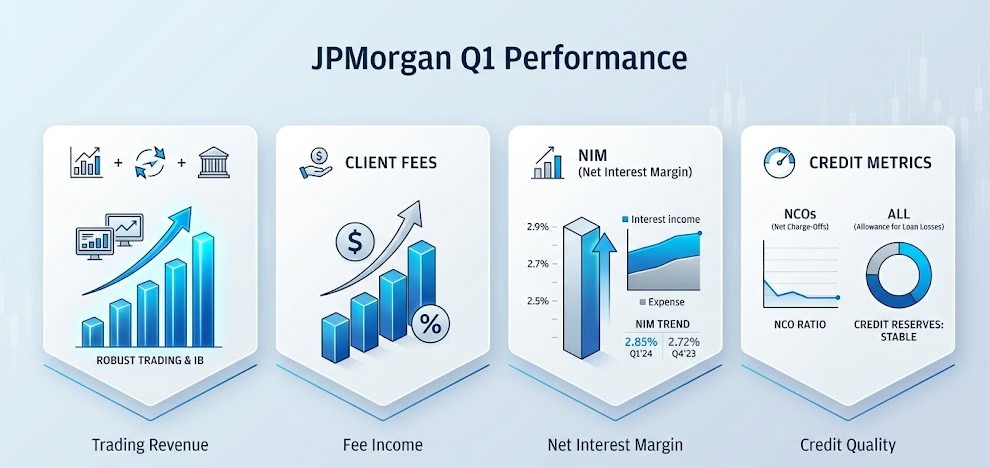
Where the market has pronounced winners and losers, winners typically show robust liquidity, low nonperforming-loan ratios, conservative underwriting and diversified fee income.
Importantly, pricing in credit risk varies across the universe. Large money-center banks with diversified revenue streams and strong capital positions have generally fared better than smaller regional peers. Equity analysts are factoring in higher provisioning assumptions for weaker lenders and, in some cases, trimming 12-month price targets until credit trends clarify.
What This Means for Investors Actionable Insights
- Reassess exposure: Investors should review their bank holdings for concentrated commercial real estate, sector-specific commercial loans, and reliance on uninsured or volatile funding. Those with elevated exposures are candidates for reduction.
- Favor quality balance sheets: Prioritize banks with Tier 1 capital cushions, low nonperforming-asset ratios, and diversified revenue sources including trading, investment banking fees and wealth management, which can offset loan-cycle weakness.
- Watch provisioning and stress-test results: Quarterly changes in loan-loss provisions and regulatory stress-test disclosures will be leading indicators of how serious credit deterioration may become. Sudden increases in provisioning can materially compress EPS estimates.
- Consider defensive alternatives: For investors looking to remain in financial exposure without idiosyncratic bank risk, sector ETFs such as XLF or diversified financials with lower single-bank concentrations can provide exposure with less stock-specific volatility.
- Manage duration and interest-rate sensitivity: If margin pressure from rapid rate moves is a concern, evaluate duration mismatches on bank balance sheets and the sensitivity of net interest income to future rate cuts or increases.
Professional Conclusion and Forward-Looking Perspective
The recommendation to “keep certain bank stocks off our radar” reflects a cautious, risk-aware posture rather than an indictment of the entire financial sector. While higher interest rates have supported net interest margins, the potential for deteriorating credit quality and regulatory tightening presents a clear headwind.
Investors should demand stronger evidence of sustained underwriting stability and deposit resilience before redeploying capital into the more vulnerable names.
Looking ahead, the path for bank stocks will hinge on macro outcomes particularly employment, corporate earnings, commercial real estate performance and central bank policy and on the transparency of bank reporting around credit deterioration and liquidity.
For now, a selective approach that emphasizes capital strength, diversified earnings and conservative underwriting will serve investors better than a broad bet on the sector.
Bank stocks have lagged because rising credit concerns and regulatory uncertainty have weighed on investor sentiment, leaving the sector flat while the S&P 500 gained 5.6%.