Why Some Investors Say Three Stocks Could Eclipse Walmart in Value
Walmart’s Outperformance Faces New Comparison as Exxon, Visa and ASML Enter the Debate
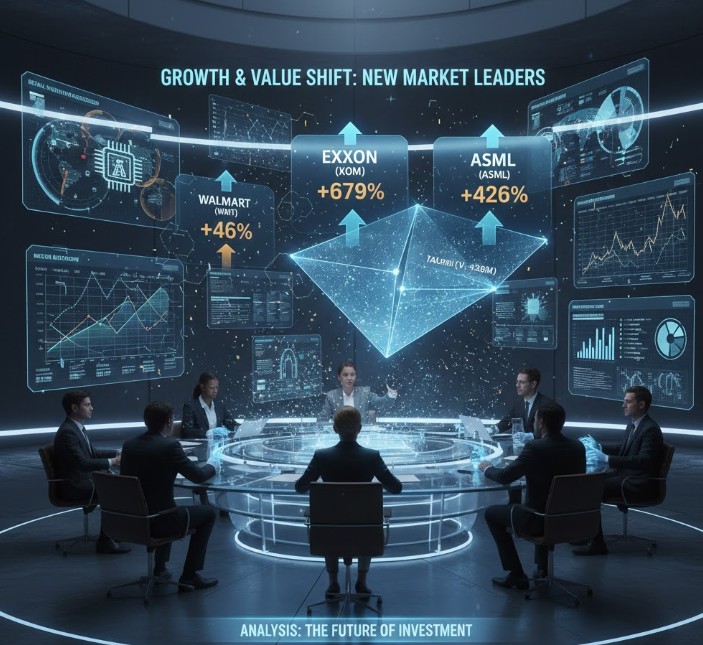
Walmart Inc. (WMT) has been one of the market’s standout large-cap performers in recent years. However, a recent note suggesting that Exxon Mobil, Visa and ASML could each be worth more than Walmart in five years has shifted investor focus toward valuation, secular growth and sector rotation.
The argument underscores the risk that Walmart’s recent momentum may moderate, while companies with structural tailwinds or cyclical leverage could potentially deliver superior returns over a medium-term horizon.
Company Background and Recent Performance
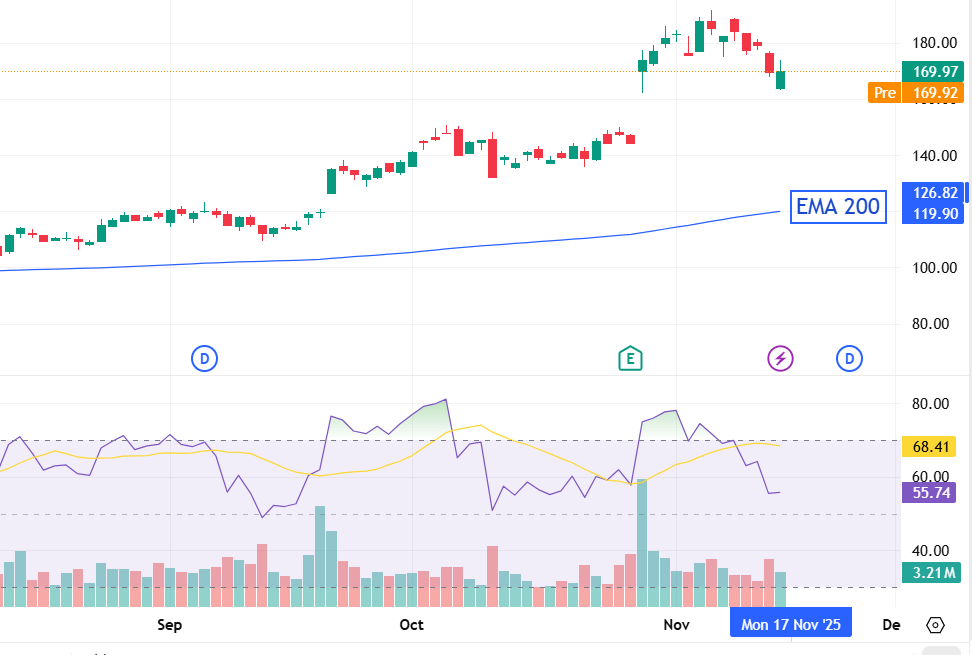
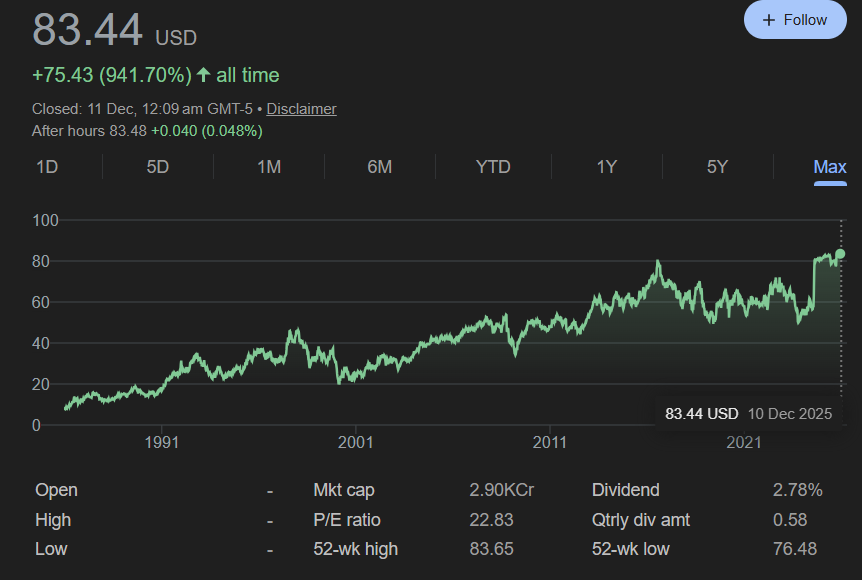
Walmart is the world’s largest retailer by revenue and a core holding in many dividend-focused and defensive portfolios.
The company combines:
- A vast brick-and-mortar footprint
- A rapidly expanding e-commerce platform
- A global supply chain network
- Higher-margin services such as advertising and financial offerings
Over the past several years, Walmart’s shares have outpaced the broader S&P 500, supported by:
- Steady same-store sales
- Improved operating margins
- Expanding digital penetration
Despite that strength, the company continues to face structural pressures, including:
- Margin compression from price investments
- Significant capital allocation to e-commerce and fulfillment
- Intense competition from discount retailers and online platforms
These dynamics have led some investors to question whether Walmart can sustain a premium growth profile or whether alternative names offer greater multi-year upside.
Analysis of the Five-Year Prediction
The argument that Exxon Mobil (XOM), Visa (V) and ASML (ASML) could surpass Walmart in value over five years rests on distinct investment theses.
Exxon Mobil
The case for Exxon centers on:
- Cyclical leverage to oil and gas prices
- Balance-sheet improvement via free cash flow generation
- Shareholder returns through dividends and buybacks
Visa
Visa’s thesis is rooted in:
- Durable secular growth in electronic payments
- Expanding cross-border transaction volumes
- Higher take-rates as commerce increasingly digitizes
ASML
ASML’s investment case emphasizes:
- Its near-monopolistic position in advanced lithography equipment
- Critical importance to semiconductor scaling
- Structural demand from global chipmakers’ capital expenditure cycles
Each thesis differs materially from Walmart’s profile. Walmart’s growth is largely incremental and tied to retail sales scale and margin optimization. In contrast:
- Exxon offers cyclical upside
- Visa benefits from long-term secular digitization trends
- ASML commands concentrated pricing power within a technological moat
Importantly, the comparison does not imply Walmart will decline in absolute terms. Rather, it suggests the other companies could appreciate faster over a five-year period due to stronger structural drivers or valuation re-rating catalysts.
Market Reaction and Analyst Commentary
Narrative shifts of this nature often prompt sector rotation. Investors may reduce exposure to mature, defensive growth names and allocate capital toward sectors with perceived higher upside or undervaluation.
Since the note, trading activity may reflect repositioning by both retail and institutional investors adjusting portfolio weightings.
Analysts covering Walmart emphasize:
- Stable cash flow generation
- Resilient earnings performance
- Consistent dividend growth
These attributes support its role in income-oriented and defensive allocations.
By contrast, analysts favoring Exxon, Visa and ASML highlight:
- Improving energy fundamentals and capital discipline for Exxon
- Sustained digital payment growth for Visa
- Capacity constraints and technological leadership for ASML
It is critical to recognize that these companies carry different risk profiles:
- Exxon’s returns depend heavily on commodity cycles and regulatory factors
- Visa’s upside assumes continued global payment digitization
- ASML’s trajectory hinges on semiconductor capital expenditure and technological leadership
These risk-return dynamics differ substantially from Walmart’s retail-driven exposure.
What This Means for Investors: Actionable Takeaways
1. Reassess Time Horizon and Risk Tolerance
Investors with a five-year horizon seeking higher growth may allocate selectively to secular growth or cyclical recovery stories rather than relying exclusively on defensive retail leaders.
2. Focus on Fundamentals and Valuation
Compare forward price-to-earnings ratios, free cash flow yield and balance-sheet strength. A high-quality company at an elevated valuation may offer less upside than a lower-valued company with a clear growth runway.
3. Diversify by Investment Thesis
A balanced allocation across:
- Structural growth (Visa, ASML)
- Cyclical recovery (Exxon)
- Defensive cash generators (Walmart)
can help capture asymmetric upside while managing drawdown risk.
4. Monitor Catalysts and Execution Risk
Track:
- Semiconductor capital expenditure cycles for ASML
- Global payment volumes and regulatory developments for Visa
- Commodity prices and capital allocation discipline for Exxon
- Same-store sales, e-commerce growth and margin discipline for Walmart
Conclusion and Forward-Looking Perspective
The suggestion that Exxon Mobil, Visa and ASML could be worth more than Walmart in five years serves as a useful comparative framework highlighting contrasting growth profiles and sector dynamics.
Walmart remains a high-quality, cash-generative business with defensive characteristics. However, its capacity for outsized appreciation may be more limited relative to companies benefiting from secular tailwinds or cyclical leverage.
For investors, the takeaway is not binary. Rather than abandoning Walmart, a differentiated approach aligned with time horizon, valuation discipline and conviction in company-specific catalysts may be more appropriate.
Over the next five years, outcomes will depend on execution, macroeconomic cycles and technological adoption — factors that should guide portfolio positioning more than headline-driven narratives.
The note suggesting Exxon Mobil, Visa and ASML could outpace Walmart has prompted investors to reassess Walmart’s growth runway and consider rotating into names with stronger secular or cyclical upside potential.