Enovis Rallies 15% After CMS Reverses Reimbursement Cuts for Bone Stimulators
Enovis Corporation (ENOV): CMS Reimbursement Reversal Drives 15% Stock Surge
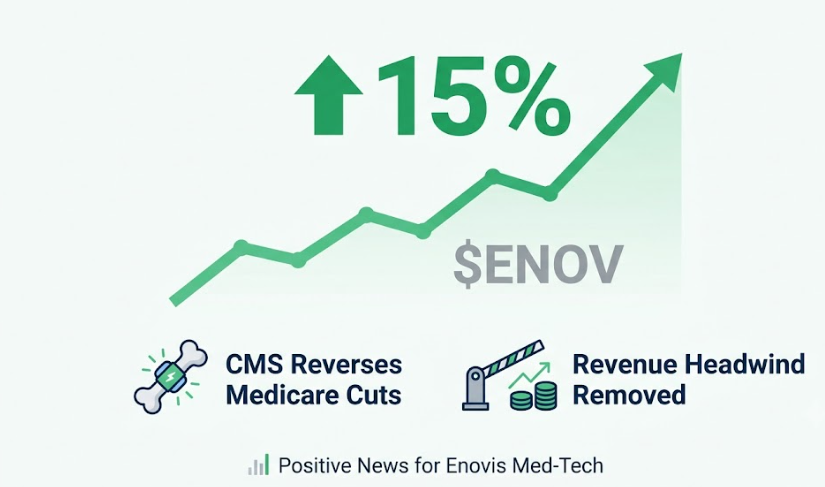
Enovis Corporation (NYSE: ENOV) shares surged roughly 15% in afternoon trading after the Centers for Medicare & Medicaid Services (CMS) reversed previously announced Medicare reimbursement cuts for the company’s non-invasive bone growth stimulators. The policy reversal removed a significant near-term reimbursement risk and restored greater visibility into the economics of a product line that serves Medicare-covered orthopedic and fracture patients.
Company Background
Enovis is a medical technology company focused on musculoskeletal health, orthopedics, surgical solutions and pain management. Its portfolio includes non-invasive bone growth stimulators, braces and supports, surgical instruments and other orthopedic products sold primarily through hospitals, outpatient centers and specialty clinics.
The company's bone growth stimulators are used in post-operative care and fracture treatment to promote bone healing. Because these products can be reimbursed through Medicare, changes in government payment rates can directly influence provider economics, patient access and product demand.
This makes CMS reimbursement policy an important factor for investors evaluating Enovis's revenue visibility and growth prospects.
Why ENOV Shares Surged
The immediate catalyst was the CMS reversal of previously announced reimbursement cuts affecting non-invasive bone growth stimulators.
The earlier reimbursement proposal had created concerns that lower Medicare payments could:
- Reduce effective pricing for Enovis's products
- Make the devices less economically attractive for healthcare providers
- Potentially reduce utilization among Medicare-covered patients
- Pressure revenue expectations
- Create additional margin pressure
- Increase uncertainty around future guidance
The reversal removes much of that near-term uncertainty.
By restoring the previous reimbursement framework, CMS effectively preserved the payment environment under which Enovis's existing bone stimulator business has been operating. Investors therefore interpreted the announcement as the removal of a tangible downside risk rather than simply a new growth catalyst.
Why Medicare Reimbursement Matters
Medicare is a major payer for orthopedic and fracture-related healthcare services.
For medical-device companies, reimbursement rates can influence whether physicians and hospitals have sufficient economic incentives to use particular products. When reimbursement is reduced, providers may become more cautious about adoption or utilization.
For Enovis, the previously proposed cuts created the possibility that its bone growth stimulators could become less financially attractive within Medicare-covered treatment pathways.
The reversal changes that equation.
Restored reimbursement can provide greater visibility into:
- Product utilization
- Hospital purchasing decisions
- Physician adoption
- Revenue expectations
- Pricing economics
- Future guidance
This improved visibility is one of the key reasons the market reacted so strongly.
Operational Impact on Enovis
The CMS decision has several potential implications for Enovis's operating outlook.
1. Greater revenue stability
The bone stimulator franchise faces less immediate reimbursement pressure. Maintaining existing payment levels supports greater visibility into future sales volumes and revenue.
2. Reduced margin pressure
Lower reimbursement could have forced the company to absorb pricing pressure or pursue offsetting cost measures. With the cuts reversed, that potential pressure is reduced.
3. Lower regulatory overhang
Investors often assign lower valuations to businesses exposed to significant reimbursement uncertainty. Removing a near-term policy threat can therefore improve sentiment toward the company's valuation.
4. Better provider economics
Hospitals and physicians using the devices have greater clarity around the economics of Medicare-covered treatments. That can reduce hesitation around continued utilization.
5. Improved earnings visibility
The reimbursement reversal gives management a clearer operating environment when preparing revenue and margin expectations for upcoming periods.
Market Reaction
The market response was immediate.
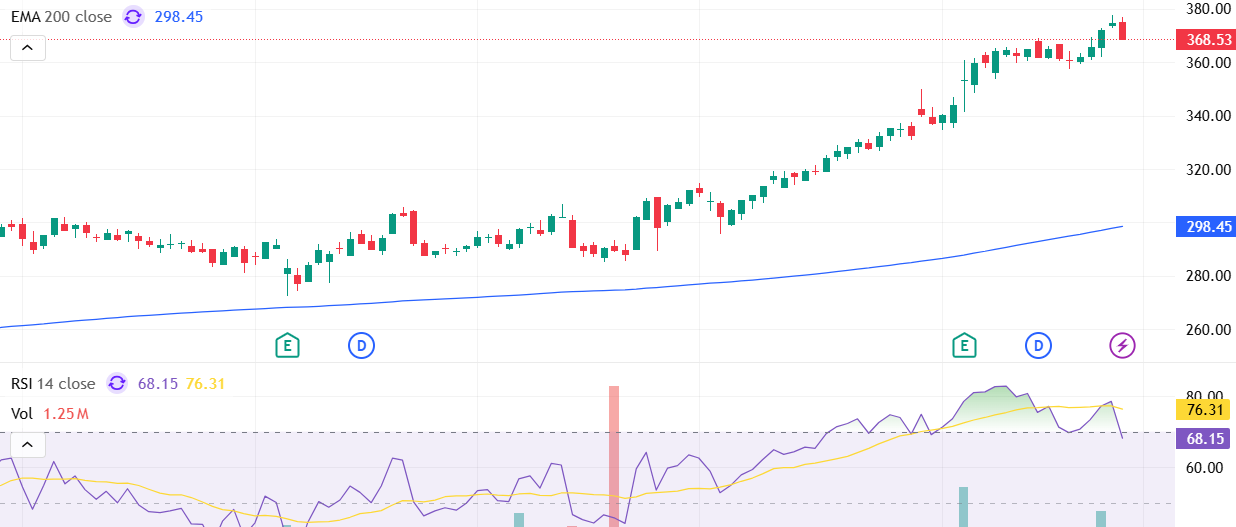
ENOV shares jumped roughly 15% intraday, accompanied by increased trading activity as investors reassessed the company's risk profile following the CMS announcement.
The sharp move suggests that reimbursement uncertainty had been an important component of the stock's valuation.
The reaction also appears consistent with event-driven positioning, as healthcare investors and funds exposed to policy-sensitive medical-technology companies adjusted their positions following the announcement.
Options activity also increased, with greater interest in calls indicating stronger short-term bullish positioning around the policy reversal.
The size of the move is important because it shows that investors were not simply reacting to a routine regulatory update. The market had previously been pricing in the possibility of a meaningful financial impact from the reimbursement cuts.
Analyst and Industry Perspective
Healthcare analysts and market commentators focused primarily on the practical implications of the restored reimbursement framework.
The reversal reduces the downside scenario for the bone stimulator business and preserves the economics supporting existing hospital and provider relationships.
However, the policy reversal does not automatically translate into higher earnings.
Investors still need evidence that preserved reimbursement levels are translating into:
- Stable or increasing unit volumes
- Sustained revenue growth
- Healthy gross margins
- Strong provider utilization
- Improved earnings expectations
The next major confirmation point is therefore likely to come from Enovis management's earnings guidance and commentary.
Analysts may also reassess their forecasts once the company provides additional information about the effect of the reimbursement decision on expected volumes and margins.
What Investors Should Watch
Several metrics and developments become particularly important after the CMS reversal.
Bone Stimulator Unit Volumes
The most direct confirmation would be continued or improving demand for Enovis's bone growth stimulators.
If reimbursement stability results in stronger utilization, the positive effect could extend beyond the initial stock-price reaction.
Revenue Contribution
Investors should examine the company's latest filings to understand how significant the bone stimulator business is within total revenue.
The larger its contribution, the more meaningful the reimbursement reversal could be for the company's overall financial outlook.
EBITDA and Margins
Preserved reimbursement removes one potential source of pricing pressure, but investors still need to determine whether that translates into stronger profitability.
Margin trends will therefore remain important.
Management Guidance
The next earnings call should provide an important test of the market's interpretation.
Investors will want to hear whether management expects the CMS reversal to affect:
- Revenue
- Unit volumes
- Gross margins
- EBITDA
- Full-year guidance
Future CMS Policy
The reversal removes the immediate problem, but reimbursement policy remains an ongoing regulatory risk.
Future CMS rulemaking could again affect payment rates for medical devices and orthopedic treatments.
Valuation After the 15% Rally
The stock's sharp increase also creates an important distinction between fundamental improvement and valuation expansion.
The CMS reversal clearly improves the near-term risk profile. However, some of that improvement may already be reflected in the stock after a roughly 15% move.
Investors therefore need to compare Enovis's updated valuation with comparable orthopedic and medical-device companies.
Key measures include:
- Forward P/E
- EV/EBITDA
- Revenue growth
- EBITDA growth
- Free cash flow
- Gross margin
- Organic growth
The question is no longer simply whether the CMS announcement is positive. It is whether the company's valuation after the rally appropriately reflects the improved reimbursement outlook and the remaining operational risks.
Broader Risks Remain
Although the CMS reversal removes an important headwind, Enovis continues to face risks across its broader business.
These include:
- Competitive pressure in orthopedic devices
- Product development and innovation costs
- Hospital spending conditions
- Supply-chain challenges
- Margin pressure
- Integration and execution risks
- Changes in healthcare reimbursement
- Competitive pricing
- Shifts in orthopedic procedure volumes
The company's overall performance will therefore continue to depend on execution across its broader product portfolio rather than solely on the bone stimulator business.
Investor Takeaways
The CMS decision represents a meaningful change in Enovis's near-term risk profile.
The earlier reimbursement cuts had created a clear potential headwind for the company's bone growth stimulator business. Reversing those cuts removes that pressure and gives hospitals, physicians and investors greater visibility into the economics of the products.
The roughly 15% share-price increase reflects that change in expectations.
However, the next stage of the story depends on whether the improved reimbursement environment translates into measurable financial results.
Investors should focus on bone stimulator unit volumes, revenue contribution, margins, management guidance and future CMS policy developments rather than treating the one-day share-price reaction as confirmation of a longer-term earnings trend.
Conclusion
Enovis shares surged roughly 15% after CMS reversed planned Medicare reimbursement cuts for its non-invasive bone growth stimulators, removing a significant near-term policy and revenue risk.
The decision restores the previous reimbursement framework, improves visibility for providers and supports the economics of Enovis's bone stimulator franchise. The market's strong reaction indicates that investors considered the proposed reimbursement cuts a meaningful risk to the company's outlook.
The next question is whether the improved reimbursement environment produces measurable improvements in utilization, revenue, margins and earnings guidance. Management's upcoming commentary and operating results will be important in determining whether the CMS reversal represents a temporary sentiment catalyst or a more durable improvement in Enovis's fundamental outlook.