Southern Co. Falls 2% as Utilities Lag Amid Market Rally This Session
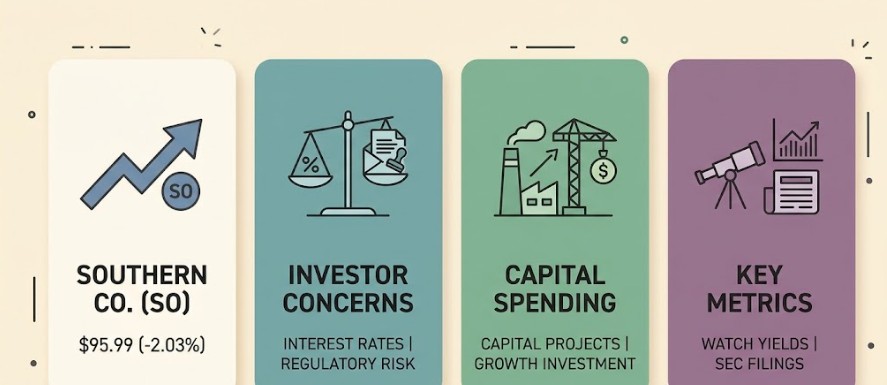
Southern
Company (SO) Stock Falls as Rising Treasury Yields Weigh on Utility Sector
Meta Description: Southern
Company shares fell more than 2% despite a broader market rally as investors
rotated away from utilities. Here's what the move means for long-term
investors.
Utility stocks came under pressure in the
latest trading session as Southern Company (NYSE: SO) declined 2.03%
to close at $95.99, even as major U.S. equity indexes finished higher. The
divergence highlights how investors continue rotating away from defensive,
interest-rate-sensitive sectors in favor of higher-growth opportunities.
The decline does not appear to be driven by
any company-specific announcement. Instead, it reflects broader market
dynamics, particularly the impact of rising Treasury yields on regulated
utility companies that are traditionally valued for their stable dividends
rather than rapid earnings growth.
Southern
Company Continues to Face Interest Rate Headwinds
Southern Company is one of the largest
regulated electric utilities in the United States, providing electricity to
millions of customers across the Southeast through its regulated subsidiaries
while also operating a wholesale generation business through Southern Power.
The company has spent recent years investing
heavily in:
- Modernizing
transmission and distribution infrastructure
- Expanding
natural gas generation
- Completing
large-scale nuclear projects
- Increasing
renewable and lower-carbon power generation
- Strengthening
long-term grid reliability
These investments are expected to expand
Southern's regulated rate base over time, supporting steady earnings growth.
However, they also require significant capital expenditures, making the company
more sensitive to borrowing costs and interest-rate movements.
As Treasury yields rise, investors often shift
capital away from dividend-paying utilities toward fixed-income investments
offering increasingly competitive yields.
Why
Southern Company Stock Declined
The latest weakness appears to be largely
driven by sector rotation rather than deteriorating company fundamentals.
When markets become more optimistic about
economic growth, investors typically move capital into cyclical sectors such as
technology, financials, industrials and consumer discretionary companies while
reducing exposure to traditionally defensive sectors like utilities.
Higher Treasury yields create additional
pressure because utilities often trade similarly to long-duration income
assets. As bond yields increase, utility dividend yields become relatively less
attractive, compressing valuation multiples.
Southern Company also remains exposed to
several operational factors that investors continue monitoring:
- Large
ongoing capital investment programs
- Timing
of regulatory rate approvals
- Interest
expense associated with infrastructure spending
- Weather-related
operating risks
- Environmental
compliance costs
- Long-term
financing requirements
Although none of these issues changed
materially during the session, they remain important considerations when
investors reassess utility valuations.
Market
Reaction Remained Orderly
Unlike sharp selloffs triggered by earnings
disappointments or regulatory developments, Southern's decline appeared
relatively measured.
Trading activity suggested normal portfolio
repositioning rather than widespread liquidation. Market participants largely
viewed the move as part of the broader shift away from defensive sectors during
a risk-on trading session.
Analysts covering regulated utilities continue
to emphasize that the sector's biggest challenge remains the interest-rate
environment. Rising yields generally pressure valuation multiples, while
declining yields often provide meaningful support for utility stocks.
Despite near-term weakness, many analysts
continue to view Southern Company's regulated business model and predictable
cash flows as attractive characteristics for long-term income-oriented
investors.
What
Investors Should Watch Next
While the latest decline may not signal any
deterioration in Southern's underlying business, investors should continue
monitoring several important catalysts.
Interest rates remain the biggest driver. Changes in
Treasury yields will likely continue influencing utility valuations over the
coming months.
Upcoming earnings reports will
provide insight into:
- Earnings
growth
- Capital
expenditure progress
- Rate-base
expansion
- Operating
margins
- Cash
flow generation
- Dividend
coverage
Regulatory decisions are
equally important. Southern's long-term returns depend heavily on receiving
timely approval for rate increases that allow recovery of infrastructure
investments.
Investors should also monitor:
- Federal
Reserve policy expectations
- Inflation
trends
- Utility
sector fund flows
- Financing
costs
- Grid
investment updates
- Weather-related
operational impacts
Investment
Perspective
For income-focused investors, Southern
Company's recent weakness may represent an opportunity to reassess valuations
rather than a reason for concern.
The company continues to benefit from:
- A
stable regulated earnings base
- Predictable
cash flows
- Long-term
infrastructure investment opportunities
- Historically
consistent dividend payments
- Essential
utility services with relatively resilient demand
However, investors should recognize that
higher-for-longer interest rates could continue limiting valuation expansion
across the utility sector.
Those with shorter investment horizons may
prefer sectors benefiting directly from stronger economic growth, while
long-term dividend investors may view periodic pullbacks as opportunities to
gradually build positions.
Diversification also remains important.
Combining regulated utilities with sectors that benefit from rising rates—such
as financials or selected industrial companies—can help reduce overall
portfolio sensitivity to changes in interest rates.
Outlook
Southern Company's 2.03% decline to $95.99
reflects ongoing investor rotation away from interest-rate-sensitive utilities
rather than any material change in company fundamentals.
Looking ahead, the stock's performance will
largely depend on the direction of Treasury yields, regulatory outcomes,
execution of its capital investment program and continued earnings stability.
If interest rates begin to stabilize or
decline while Southern successfully expands its regulated asset base, investor
sentiment toward the stock could improve. Conversely, a prolonged period of
elevated yields may continue weighing on utility valuations despite the
company's fundamentally stable business model.
For long-term investors seeking dependable dividend income and lower portfolio volatility, Southern Company remains a stock worth monitoring, though patience may be required until the interest-rate backdrop becomes more supportive.